Israel has stepped up its preparations for “the day after” the toppling of Hamas in the Gaza Strip, despite officials’ view that there is still a way to go before that objective is achieved.
Two taskforces were established in the National Security Council and the Foreign Ministry to work separately to evaluate the pros and cons of various options for governance of the coastal enclave after the war. The underlying principle for all these alternatives is that Hamas will no longer control Gaza.
This increased activity on the diplomatic aspects of what would emerge in the aftermath of the fighting follows explicit statements by U.S. President Joe Biden and Arab leaders that they expect the establishment of a Palestinian state in Judea, Samaria and Gaza after the war.
However, in Israel, there is still a desire to avoid dealing with the diplomatic component of the situation that would emerge after the war. A senior Israeli official said: “There is complete agreement in the War Cabinet and Security Cabinet regarding the political goal of the operation, which is the removal of Hamas.
“However, dealing in the post-war political framework may lead to internal disputes within Israel and with international actors, which could hinder the achievement of war objectives. Therefore, we seek to avoid confronting this combustible matter as much as possible. We need to handle this wisely.”
Nonetheless, there is an understanding that ignoring the political aspects of the post-war reality could have Israel face a fait accompli on various matters down the road. That is why the two task forces have started preparing.
In the frequent calls with Israeli Prime Minister Benjamin Netanyahu, U.S. President Joe Biden dedicated much of the conversation to the post-war political solutions. To make sure this remains at a low profile, the planning is conducted separately in each ministry, and for now, there is no interagency process.
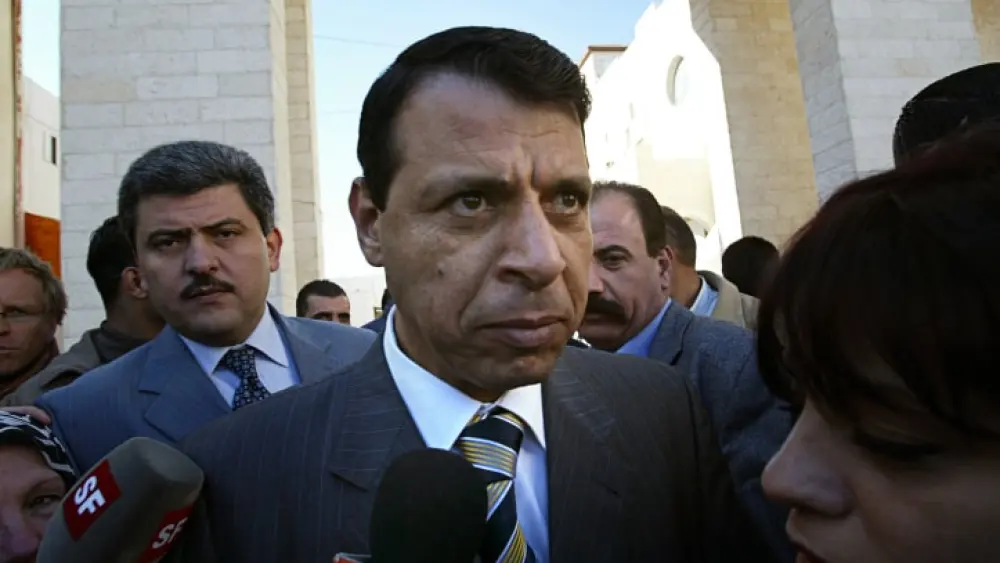
Cabinet ministers have come up with various ideas, some of which are creative, regarding who will control Gaza after Hamas. One option is an international administration in various formats, another is a joint Egyptian-Israeli mechanism, and so on. One proposal was to have former Fatah strongman Mohammed Dahlan rule Gaza, but he has rebuffed that option in various media outlets.
The suggestion that the Palestinian Authority would return to Gaza has been met with fierce opposition from most of the senior ministers. However, it appears that this option has created some disagreement, as Ministers Benny Gantz and Gadi Eisenkot do believe in strengthening the P.A. Nevertheless, at this stage, there is a consensus in the Cabinet on the need to maintain unity, so members have not been discussing concrete plans.
The senior Israeli official added that despite the increased focus on the political sphere and Monday’s rescue mission that freed Pvt. Ori Megidish, “the road ahead is still long.”
According to the official, “Perhaps we’ve covered about 10% of the distance required to achieve the goal of toppling Hamas. Patience, unity, and stamina are needed to reach our objectives.”
Originally published by Israel Hayom.