Middle East
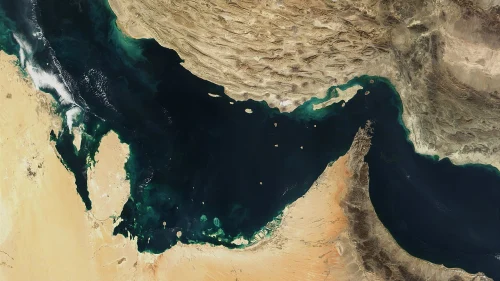
Fears of a potential military conflict with Iran may have opened the door to a Saudi-Iranian dialogue against the backdrop of a rethink of U.S. military logistics.
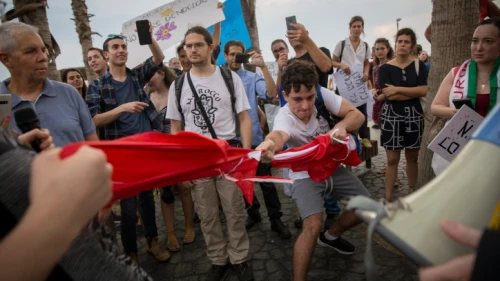
Hundreds of protesters decry the aggression by Turkey and demand that the Israeli government provide humanitarian aid to Kurdish forces.
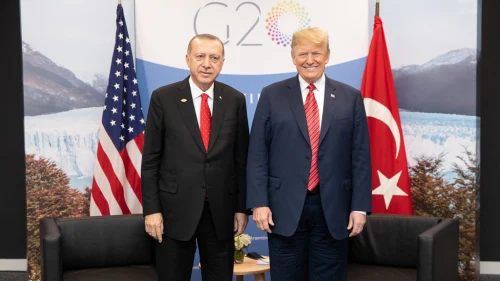
Sanctions target Turkey’s defense, interior and energy ministries • U.S. also raises tariffs on Turkish steel imports to 50 percent and cancels negotiations on “$100 billion” trade deal.
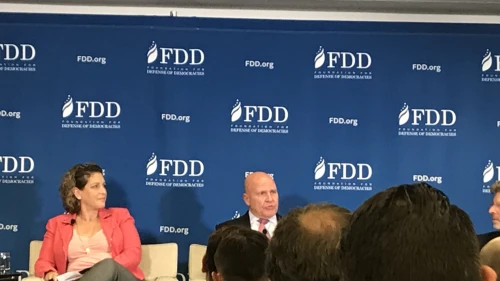
“The troop commitment in northeastern Syria was immensely helpful to U.S. security and U.S. interests,” he continued. “Terrorists groups, as you know, after you defeat them on the physical battlefield, they just don’t go away,” said former U.S. National Security Advisor H.R. McMaster.
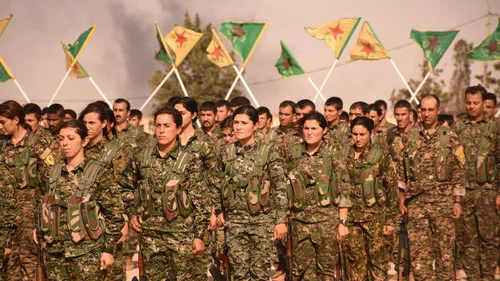
The Trump administration said that 50 to 100 U.S. special forces troops would withdraw from northeastern Syria; however, the United States isn’t entirely withdrawing from the country.

‘Trump’s withdrawal from Syria is a betrayal of our allies and a boon to our adversaries. It’s not ‘America First’ in any respect. Rather, it’s an ‘Iran and Russia First’ policy,’ ” said Jewish Democratic Council of America chairman Ron Klein, a former Florida Democratic congressman.

U.S. President Donald Trump’s decision to pull out of northern Syria will contribute to a regional power vacuum that Islamists, both Sunni and Shi’ite, will promptly look to fill.

In an agreement between Turkey and the United States, joint U.S and Turkish ground and air patrols had created a security area that spans more than 78 miles along the Syria-Turkey border.
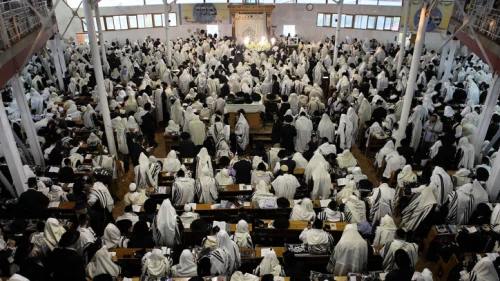
“Working here with 50,000 to 70,000 people—seeing them pray, dance and being happy—is so exciting,” said United Hatzalah EMT and full-time logistics coordinator Moshe Feuer. “There is an amazing feeling in the air [centered around] Rabbi Nachman.”

“The Israelis are attacking parts of Iraqi military, official military,” Iranian Foreign Minister Mohammad Zarif tells CBS Sunday.

The development comes ahead of a meeting between British Prime Minister Boris Johnson and Iranian President Hassan Rouhani at the U.N. General Assembly in New York.
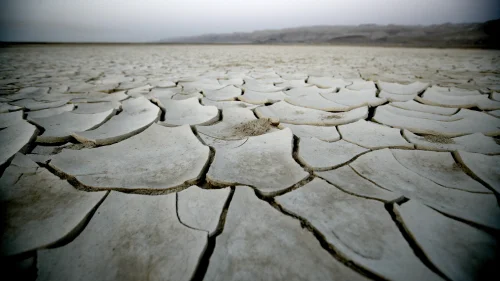
Regional states contend with growing droughts and conflicts, and for political reasons won’t necessarily to turn to Israel for help.