Middle East

“We just had our revolution, we are trying to be the voice of the people,” Ahmed al-Sharaa told attendees at a summit in New York City.

Israel claims Egypt’s troop buildup and construction in Sinai breach the 1979 peace treaty, and has requested that the Trump administration intervene diplomatically.

The department told JNS that it is committed to “reinvigorating” enforcement of a law requiring that U.S. schools report their foreign funding.

Al-Sharaa said that negotiations could lead to results “in the coming days.”
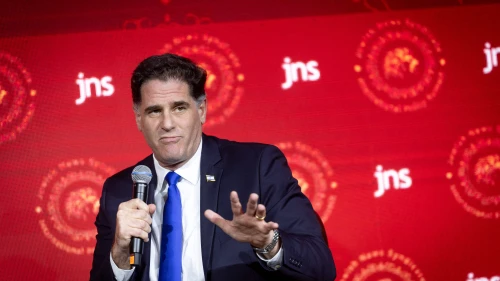
Sources familiar with the talks said they have seen progress but that no deal between Jerusalem and Damascus appeared imminent.

This refusal is not just bureaucratic hesitation; it reflects Lebanon’s political DNA and, more broadly, a regional approach shared across the Arab world.

Israeli Defense Minister Katz stated that the attack ensures “the continuation of the maritime and air blockade” on the terrorist group.

“Donations from Arab states have quietly flowed into American universities,” according to research from Jewish Virtual Library.

The Gulf state’s policy of supporting Hamas has advanced moves that could have led to an Islamic Middle East, hostile to the U.S. and the West.

President Ahmed al-Sharaa said negotiations are taking place aimed at renewing the 1974 ceasefire agreement.

Adm. Brad Cooper and Tom Barrack, U.S. special envoy to Syria, thanked the president for “continuing efforts that support U.S. goals in the Middle East.”

“Presence is power,” Sen. Joni Ernst told JNS. “If you don’t have a seat at the table, you are not able to shape and influence the outcome.”