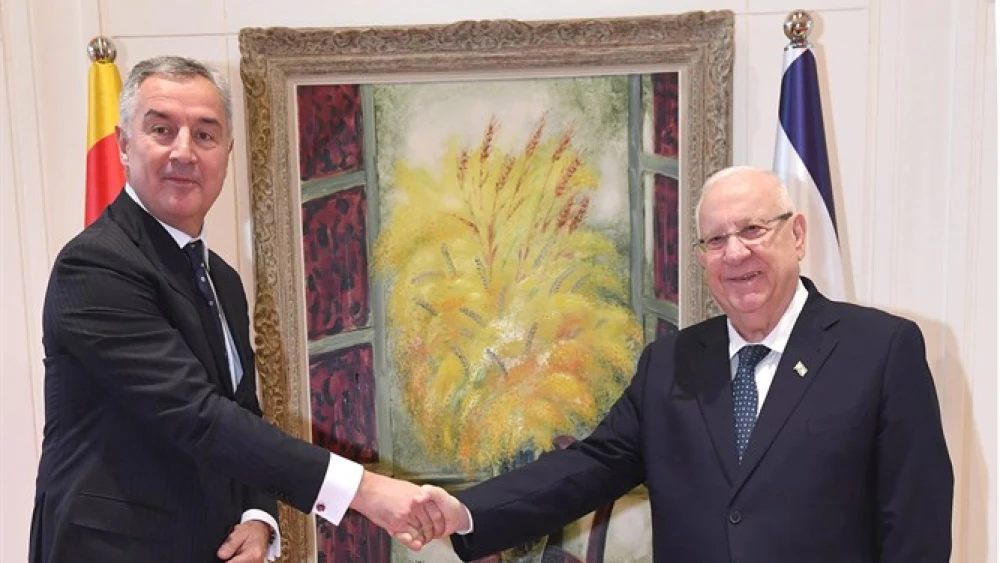
Montenegro President Milo Đukanović has been in Israel over the past few days meeting with the country’s leadership, including Prime Minister Benjamin Netanyahu and President Reuven Rivlin, to discuss economic, diplomatic and tourism projects between the two countries, in addition to talking about the current state of Montenegro Jewry.
“Welcome to Israel and to Jerusalem, our capital,” Rivlin told Đukanović on Wednesday. “Thank you for your support for the Jewish community in Montenegro, and thank you for your leadership in opposing rising anti-Semitism across Europe.”
Đukanović thanked Rivlin and said, “We have built close and deep relations through continuity of our contacts, and so I am delighted to invite you to visit Montenegro. The cooperation between us is flourishing, and I would be happy to widen and deepen it in additional fields.”
Đukanović was shown a special Israeli invention—a wheelchair developed at Alyn Hospital to aid children with limited physical mobility and to develop their range of free movement.
Dozens of these light wheelchairs were presented to Montenegro as a gift from Israel to improve the quality of life of children with disabilities.
Montenegro was one of the few European countries where the Jewish population had actually increased after World War II.
Đukanović also met with the Euro-Asian Jewish Congress, whose president, Mikhail Mirilashvili, expressed appreciation for earmarking a plot of land for the construction of Montenegro’s inaugural Jewish center and the government’s role in improving the local Jewish community.