


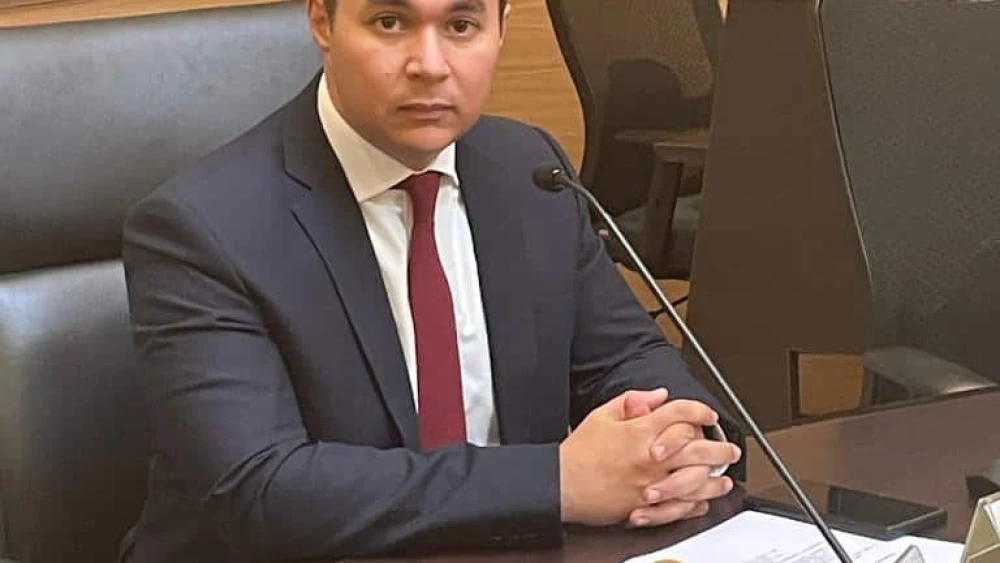
“It’s a ceasefire deal, not a peace treaty or an agreement in which Israel needs to give-up territory,” the Prime Minister’s Office explained when asked why the ceasefire deal with Lebanon would be brought to the narrow Security Cabinet for approval.
But when speaking with Likud lawmakers and ministers, you understand: If Prime Minister Netanyahu had to bring it to the Knesset or the full Cabinet, he would have a problem.
“It might bring calm to Israel for a few years. But they [Hezbollah] will use this time in order to rebuild themselves,” Knesset member Dan Illouz, who opposes the deal, told JNS.
“All of the IDF and Israeli tactical gains in the war need to be translated into serious strategic gains. And I feel that this current deal doesn’t do this right now. To be frank, the fact that we have a letter from the U.S. allowing us a freehand in enforcing the deal doesn’t really impress me, because I remember what happened in the past,” Illouz said.
MK Moshe Saada agrees.
“There has been an incredible achievement by Israel vis-à-vis the State of Lebanon. We are giving up the entire thing for an imaginary peace. It is clear that it will be immediately violated—as soon as we leave the villages, Hezbollah will move in,” Saada told JNS.
On Tuesday, Netanyahu spoke with several ministers and MKs from the coalition to try and convince them to support the deal, in a reflection of how much anger there is inside the Likud Party regarding the proposed deal.
“The agreement is a bad agreement, because it legitimizes Hezbollah’s status in Lebanon,” Likud MK Amit Halevi told JNS. “The deal needs to be with the country of Lebanon. Iran still controls Lebanon. We need a deal like the Abraham Accords, and to get there, we need to get rid of Hezbollah.”
U.S. pressure
The Likud MKs this writer spoke with agree with the prime minister that the pressure from the U.S. was enormous. “Both in terms of the arms embargo, and also in terms of [a possible anti-Israel vote in] the Security Council,” said Saada. “The pressures was and is great. But I think that Netanyahu, who has resisted pressure in the past, can do it again. Moreover, in January there will be a different president in the U.S.”
Illouz added, “I understand that the prime minister is under a lot of pressure from all over the world. My job as an MK is to look at the situation and push for the right path for Israel. That doesn’t mean that I don’t respect the prime minister’s position.”
Halevi went a step further and said there has been a colossal failure: “I believe Netanyahu had to choose between two bad options—and he chose the less bad one. But in the end, Iran has succeeded in controlling Lebanon, and now it stays there. And the people of Lebanon, who wanted to be free, are still under Iranian control.”
The Knesset members had yet to the full text of the agreement, but they said it probably wouldn’t change their minds, adding that it would only be a temporary ceasefire because it allows Hezbollah to rearm.
“I trust the prime minister very much. But it is very complicated,” Illouz told JNS. “Because international pressure will be applied [on Israel not to respond to Hezbollah violations]. We were there.
“And most of all, I fear that Hezbollah will get more ammunition, regroup and surprise us with the next massacre. We all know that they are investing a lot of energy and resources to destroy us. We are lying to ourselves when we say that this agreement will prevent the restoration of Hezbollah.”
Amichai Stein is the diplomatic correspondent for Kan 11, IPBC.



