


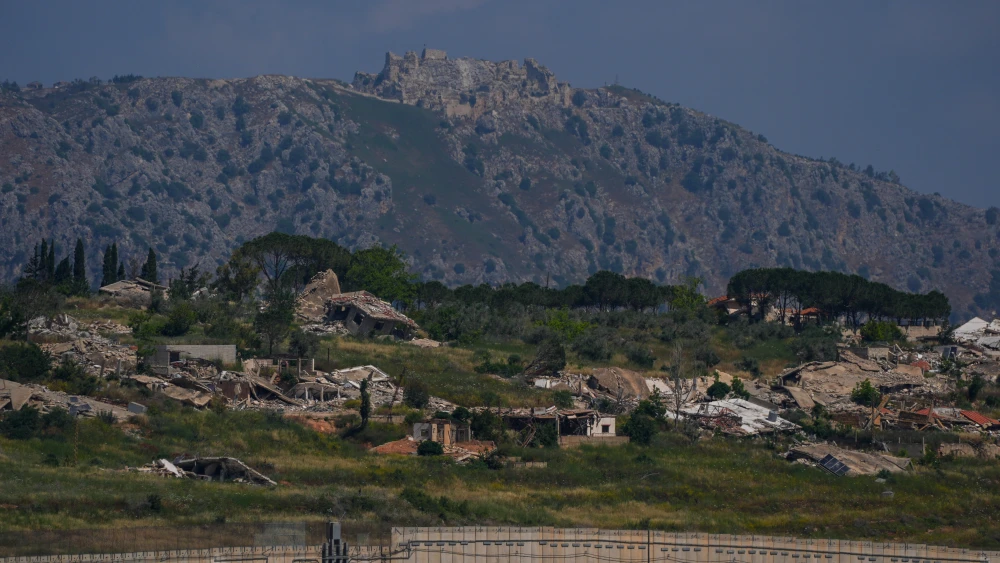
Prime Minister Benjamin Netanyahu reiterated on Monday that Israel will “insist” on remaining in the security zone in Southern Lebanon “for as long as necessary.”
“I firmly insist that we remain in the security zone in Southern Lebanon for as long as necessary in order to protect the residents of the north and every citizen of the state,” Netanyahu said in Hebrew remarks shared by the Prime Minister’s Office.
“My directive, together with that of the defense minister, to the IDF is clear and has not changed: Our fighters in Southern Lebanon have complete freedom of action to thwart any direct or emerging threat against them or against the residents of the north,” he said.
“The IDF has no restrictions in this regard,” Netanyahu added. “I stand behind them, and the entire nation stands behind them.”
ראש הממשלה בנימין נתניהו:
— ראש ממשלת ישראל (@IsraeliPM_heb) June 22, 2026
״ההנחיה שלי ושל שר הביטחון לצה״ל היא ברורה והיא לא השתנתה: ללוחמים שלנו בדרום לבנון יש חופש פעולה מלא לסכל כל איום ישיר או מתהווה עליהם או על תושבי הצפון. אין לצה״ל שום הגבלה בעניין זה.
אני עומד מאחוריהם, העם כולו עומד מאחוריהם.
אני עומד איתן על כך… pic.twitter.com/BRrpe5RUNn
Earlier on Monday, Defense Minister Israel Katz said the Jewish state will not withdraw from its positions in the security zone, including the Beaufort Ridge, which he said is vital to defending northern communities and Israeli forces.
“Israel has no intention of withdrawing from the Beaufort, which is an integral part of the security zone in Lebanon and essential for the defense of the Galilee communities and IDF forces,” Katz wrote on X. “As Prime Minister Netanyahu and I have made clear—Israel will not withdraw from the security zone in Lebanon,” the post continued.
Israeli Foreign Minister Gideon Sa’ar told his New Zealand counterpart, Winston Peters, over the phone on Monday that Jerusalem will respect the ceasefire in Lebanon as long as Hezbollah does not breach it.
“We don’t have territorial ambitions in Lebanon, but we will not withdraw from the security zone and expose our citizens to Hezbollah’s attacks and possible invasion,” Sa’ar wrote on X.
Israel’s top diplomat stressed that Iran has violated Lebanon’s sovereignty for decades and “to this very day” via Hezbollah’s indirect occupation.
“It’s the interest of both Lebanon and Israel that Hezbollah’s terror state will be dismantled,” Sa’ar stated.
The Israel Defense Forces will remain in Southern Lebanon “as long as we need to protect our people” from Iranian-backed Hezbollah terrorists, Prime Minister Benjamin Netanyahu stressed on Sunday at the JNS International Policy Summit in Jerusalem. “The reason is perfectly understood; no country would be asked to do otherwise.”
In May, Israeli forces retook the historic castle and the surrounding Beaufort Ridge from Hezbollah as part of an expanded ground offensive.
Five Israeli soldiers were killed in clashes with Iran’s proxy group over the weekend, prompting the Israel Defense Forces to respond via wide-scale airstrikes against Hezbollah operatives and terrorist infrastructure sites.
Israeli security forces hold about 10% of Lebanon, north of the Israeli border. Israeli officials have reiterated their position that the security zone is critical for the safety of Israeli civilians and the communities adjacent to the border, and therefore they will not order troops to withdraw.
IDF Chief of Staff Lt. Gen. Eyal Zamir said on Sunday that the military will maintain high readiness along the border despite the ceasefire with Hezbollah.
“Our objective remains clear, defending the communities in northern Israel and Israeli civilians,” Zamir said, adding that ongoing operations in the Ali al-Taher and Beaufort areas are intended to support that goal.
He warned that the ceasefire “is fragile” and said the IDF is prepared to quickly resume combat operations if required, with all resources allocated to the mission.


