


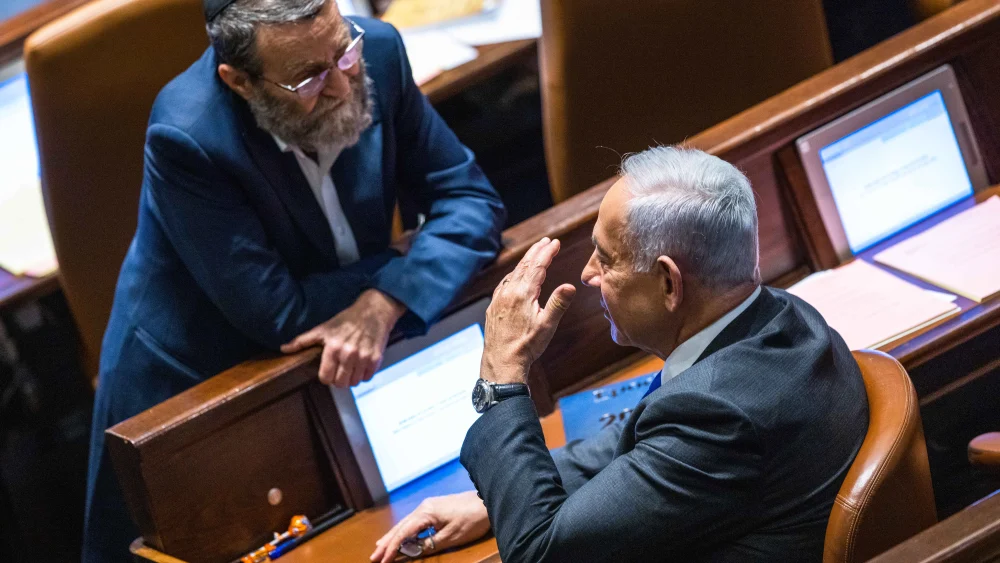
Israeli lawmakers were expected to advance a bill to dissolve the Knesset on Wednesday, a move that would lead to early elections.
Ahead of Wednesday’s session, all other bills were removed from the Knesset plenum agenda for a second consecutive day. With no legislation available for debate, lawmakers are expected to focus instead on symbolic speeches marking Jerusalem Day, Ethiopian Jewish immigration and National Students Day. The exact timetable for advancing the dissolution bill remains uncertain, but the early stages are expected to move quickly.
The governing coalition has been strained by its failure to pass controversial legislation enshrining conscription exemptions for ultra-Orthodox yeshivah students, a long-standing issue.
Haredi political figures rejected claims from Israeli Prime Minister Benjamin Netanyahu’s office that a Knesset majority had been secured to advance the bill before the end of the current term.
On Tuesday evening, a senior official in Netanyahu’s office said, “We achieved the necessary majority and that is what is important,” adding that the message had been relayed the message to Haredi leaders.
Haredi representatives dismissed the assertion, with a spokesman for the Degel HaTorah faction of the United Torah Judaism Party saying they had not received any such message.
“He doesn’t need to give notice. He should just bring the bill to a vote,” the spokesman said.
Regardless of the coalition’s status, general elections are required by October 27. Haredi parties are pushing for early elections in September.
An estimated 80,000 Haredi men eligible for military service have not enlisted. Coalition leaders, dependent on support from Haredi parties to remain in power, have repeatedly struggled to find a compromise acceptable both to Haredi leadership and to Israelis demanding equal military service obligations.
The military began making plans to draft yeshiva students after Israel’s High Court of Justice ruled in 2024 that exemptions for the Haredi community were illegal.
Military service is compulsory for all Israeli citizens. However, Israel’s first prime minister, David Ben-Gurion, and the country’s leading rabbis agreed to a status quo that deferred military service for Haredi men studying in yeshivas, or religious institutions. At the time, no more than several hundred men were studying in yeshivas.


