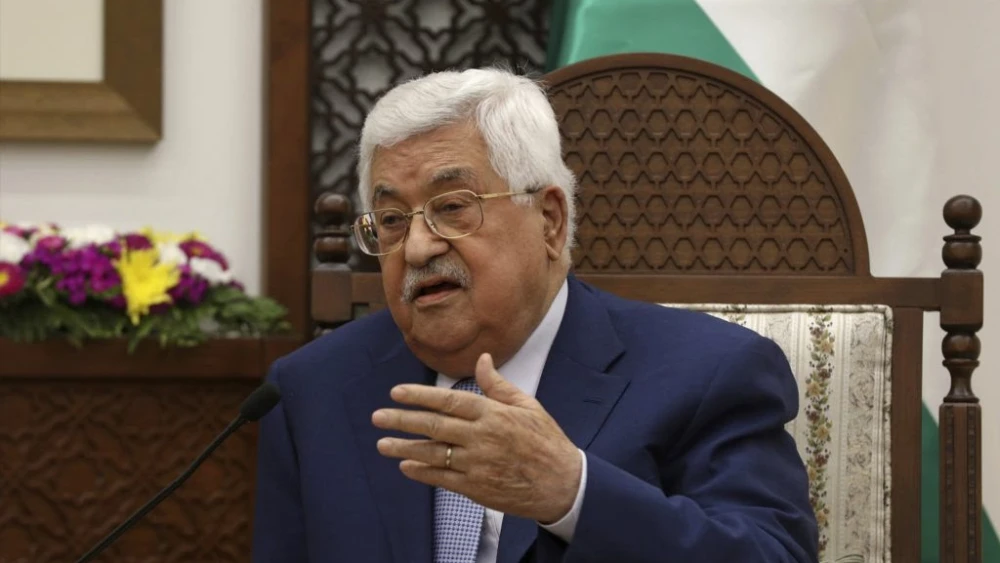
A series of recent U.S. steps against the Palestinian Authority have infuriated the Palestinian leadership, but the outrage directed at the U.S. administration has been amplified by growing criticism directed at P.A. leader Mahmoud Abbas, who has made “every possible mistake” since U.S. President Donald Trump entered the White House, according to a senior Palestinian official who spoke to Israel Hayom.
The official said that Abbas—fearing additional American sanctions on the P.A.—has instructed the Palestinians to “stop attacking [U.S. President Donald] Trump and the administration in Washington and to moderate statements against the U.S.”
Following the American decision last week to close the PLO mission in Washington, as well as the latest decision to stop funding projects that bring Israelis and the Palestinians together, Abbas has decided to shelve his plan to criticize the actions of the Trump administration at the U.N. General Assembly in New York at the end of the month.
“The closure of the PLO offices in Washington was shocking,” the official told Israel Hayom. “We didn’t think Trump would go so far as to shut down the official Palestinian [diplomatic] mission in the U.S.”
He added that many officials in the Palestinian leadership were deeply critical of the way Abbas is handling the ongoing crisis between the Palestinians and the White House.
“[Abbas] needs to rethink his path. He has made every mistake possible since Trump entered the White House,” the official said. “What infuriated President Trump was Abbas’s instruction to his representatives in Washington not to meet with [Special Envoy to the Middle East Jason] Greenblatt. What more needs to happen for the office of the rais [president] to realize that Trump doesn’t just make promises or threats, he carries them out?”
The Palestinian official listed the steps Trump has taken against the Palestinians and expressed Ramallah’s disappointment at the response, or lack thereof, from Arab states.
“He [Trump] moved the U.S. Embassy to Jerusalem; canceled aid to UNRWA; and cut aid money wherever he could. The Arab world said that the attack on Jerusalem and the status of [Palestinian] refugees would lead to a world war, but it is only the Palestinians who are paying the price. Arab states like Egypt, Saudi Arabia and Jordan are giving Abbas the cold shoulder because they are not interested in a confrontation with the Trump administration—certainly not over the Palestinian issue,” he said.
“Our basic premise is that if [Palestinian] relations with the U.S. worsen, it will lead to more blows, which we might not be able to recover from. With all due respect to the support of the European Union, both diplomatically and financially, it’s no substitute for American support. Even the Arab states’ contribution is largely declarative, and most of the donations that Arab countries promise to send the Palestinians never arrive,” the official told the paper.
Abbas’s directive to his staff to moderate the tone when discussing Trump and the United States was plainly evident in an interview that senior P.A. official Saeb Erekat gave to Reuters last week.
“I don’t think they will ever introduce a plan,” Erekat said in an interview with Reuters in Jericho. “The whole world is rejecting their ideas,” he said.
Erekat added that the recent U.S. decisions about Palestinian matters indicated that its support of Israel was complete and biased.
“The Kushner truth and the Netanyahu truth is that Jerusalem is Israel’s capital, no right of return to refugees, settlements are legal, no Palestinian state on 1967 [borders] and Gaza must be separated from the West Bank and this is absolutely unacceptable,” said Erekat, adding that Washington’s actions were delaying regional peace and making no contribution toward regional peace.