Hundreds of Jewish college students gathered in major campus sports venues this year for large-scale Passover seders, reflecting a growing trend toward communal holiday celebrations on an expanded scale.
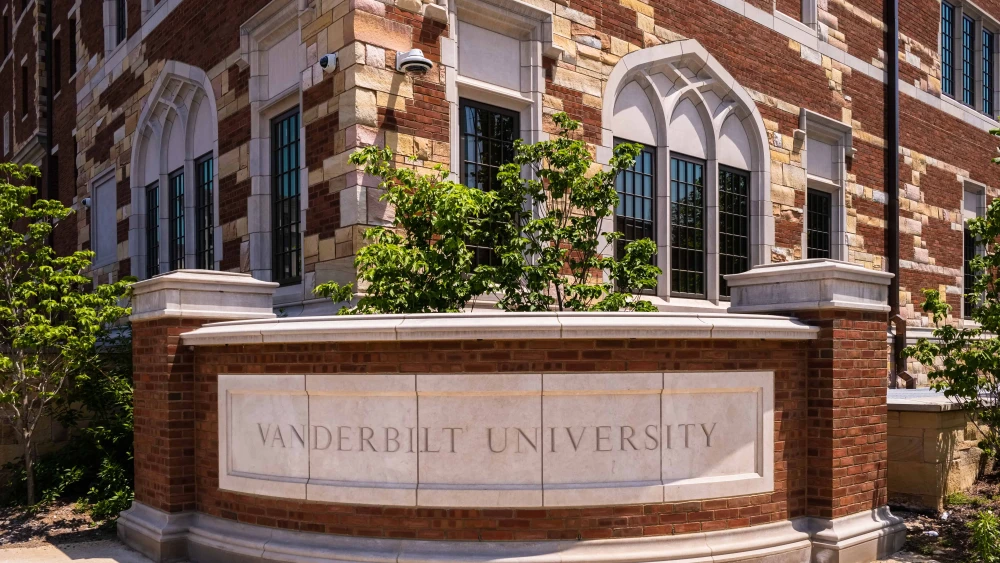
At Vanderbilt University in Nashville, Chabad hosted its annual seder on April 1 at the university’s FirstBank Stadium, drawing about 600 participants, according to The Vanderbilt Hustler, a student publication.
The event featured roughly 50 tables set up on the football field, each with prayer books, matzah, seder plates and a bowl for hand-washing, the paper reported. Rabbi Shlomo Rothstein, director of the Rohr Chabad House at Vanderbilt University, “encouraged discussion as he helped complete the rituals with each table.”
Chabad.org described such events as part of a broader trend of seders held in sports arenas to accommodate “the massive crowds of proud and confident Jews.”
The Lubavitch Chabad Jewish Student Center at the University of Florida in Gainesville also moved its annual seder into the campus’s multipurpose arena this year, renting out the Stephen C. O’Connell Center and attracting more than 1,000 people.
Organizers there described the “Gator Seder” as the largest single-seated Passover seder in the United States, part of an effort to ensure that Jewish students who remain on campus for the holiday can participate in a communal celebration.