


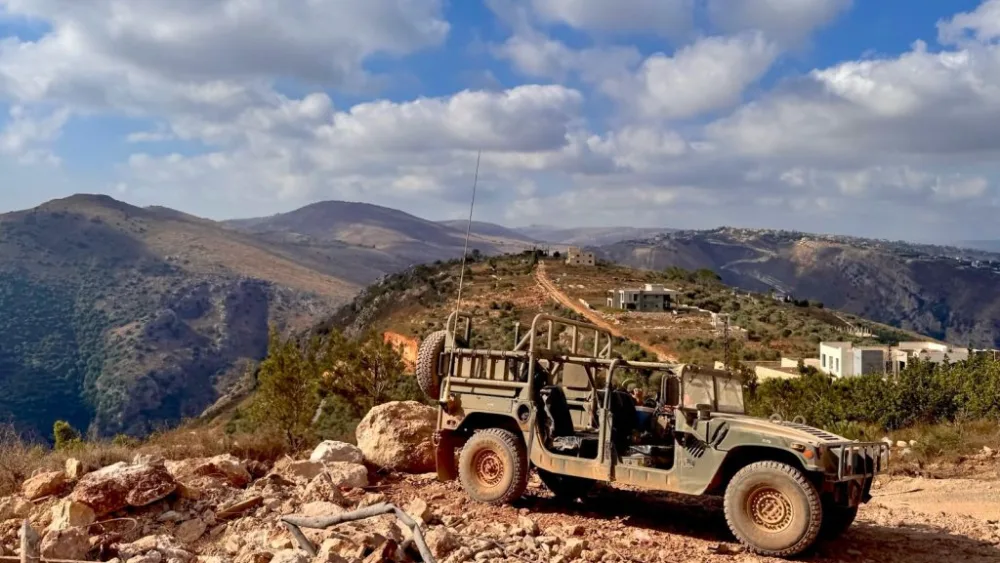
The Israel Defense Forces on Monday night confirmed the launch of a “Safe Zone” pilot program in Southern Lebanon that will see Israeli troops redeploy from designated areas.
“In accordance with the directives from the political echelon, the ‘Safe Zone’ pilot program began today (Monday) in southern Lebanon, in cooperation with the U.S. military (CENTCOM) and the Lebanese Armed Forces,” the IDF stated.
“As part of the pilot, teams from the IDF, the U.S. military, and the Lebanese Armed Forces are conducting coordination and planning for the continued implementation of the agreement,” it continued.
“The IDF will respond forcefully to any violation of the agreement.”
The U.S. State Department said on Monday that the Lebanese military launched its first operations to take over control of villages near the Israeli security zone in Lebanon.
“Pilot zone operations began in the villages of Froun, Srifa and Zawtar al-Gharbiya in accordance with the Trilateral Framework and under the auspices of the Military Coordination Group for Lebanon,” State Department spokesman Tommy Pigott stated.
“This milestone is a direct outcome of last week’s discussions between Israel and Lebanon in Rome,” he said.
The three villages straddle the Litani River at the edge of the security area that Israel established within Lebanon to combat Hezbollah.
Under the agreement that Israel, Lebanon and the United States signed in Washington in June, the establishment of Lebanese-controlled pilot zones is the first step to allow Israel to “progressively redeploy out of the Lebanese territory.”
Those redeployments will require “mutual consent” and “the confirmation of successful disarmament of non-state armed groups and dismantlement of their infrastructure” in the pilot zones, per the agreement.
Likud lawmaker Moshe Saada told JNS on Wednesday, “We are doing a pilot and it may succeed or it may not, we are monitoring it. From our perspective, Israel would be happy if the Lebanese army were able to get Hezbollah to disarm. I doubt that they can, but that’s why we are conducting this experiment.”
“We are running this pilot on three villages. I think as long as the U.S. is involved, it might work,” he added.
Israel’s red line, Saada said, is that Hezbollah will not rebuild its power in Southern Lebanon.
“In the past, Hezbollah was on the Lebanese side of the [border] fence with tunnels that crossed under the fence, and Israel allowed it and we could have been destroyed on Oct. 7 because of that. That’s why it will not happen again,” he said.
“There won’t be anyone there that is carrying a Hezbollah weapon, and whoever is there will be neutralized, it’s simple,” Saada added.


