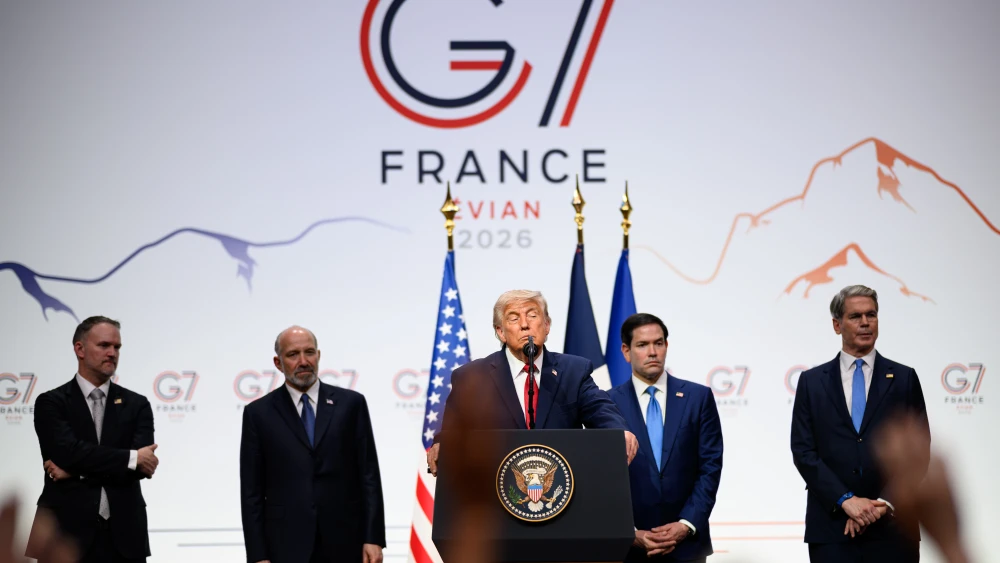
Jeb Bush, chairman of United Against Nuclear Iran, and the group’s CEO Mark D. Wallace stated on Thursday that the organization cannot endorse the U.S.-Iran Memorandum of Understanding “in its current form.”
In a statement released after the Wednesday night signing of the agreement at the Palace of Versailles in France, Bush and Wallace praised U.S. and Israeli military operations against Iran, noting that the Islamic Republic is “no longer on the cusp of a nuclear weapon.”
“The American and Israeli militaries have neutralized the Iranian regime’s nuclear enrichment capability, eroded its defense industrial base, degraded its missile and drone programs, diminished its oppressive security apparatus, and killed regime officials and commanders with the blood of Americans, our allies and brave dissenting Iranians on their hands,” they wrote. “America and Israel achieved more militarily than diplomacy has ever produced with the Islamic Republic since 1979.”
At the same time, they urged caution and “understanding of the true nature of the Islamic Republic’s leadership.”
“The men running the Iranian regime, like their predecessors, are brutal murderers, and when they have previously called for ‘Death to America’ and ‘Death to Israel,’ they meant it,” Bush and Wallace wrote.
UANI outlined several concerns with the memorandum, including that it could “risk recognizing and legitimizing Hezbollah,” complicate U.S. efforts to support the Iranian people’s “democratic aspirations” and lack “meaningful enforcement mechanisms.”
The organization also stated that its ship trackers will monitor the Strait of Hormuz to “ensure the free flow of commerce” and called for a final agreement that guarantees the waterway remains free of “tolls, fees or any other interference from the Iranian regime.”
UANI called for “transparency regarding the amount of money being released” to Iran and the mechanisms and safeguards that will prevent the funds from being used to support proxy groups.
The group also urged that any final agreement be submitted to Congress for approval before it is sent to the U.N. Security Council for endorsement.
The American Israel Public Affairs Committee agreed, stating on Thursday that “as negotiations commence on a final nuclear agreement, Congress must receive complete information on the deal and play a critical role in ensuring a final deal meets President Trump’s stated objectives for the war: ‘Obliterate Iran’s ballistic-missile arsenal and production capability, annihilate its navy, sever its support for terrorist proxies and ensure the world’s leading state sponsor of terrorism never acquires a nuclear weapon.’”