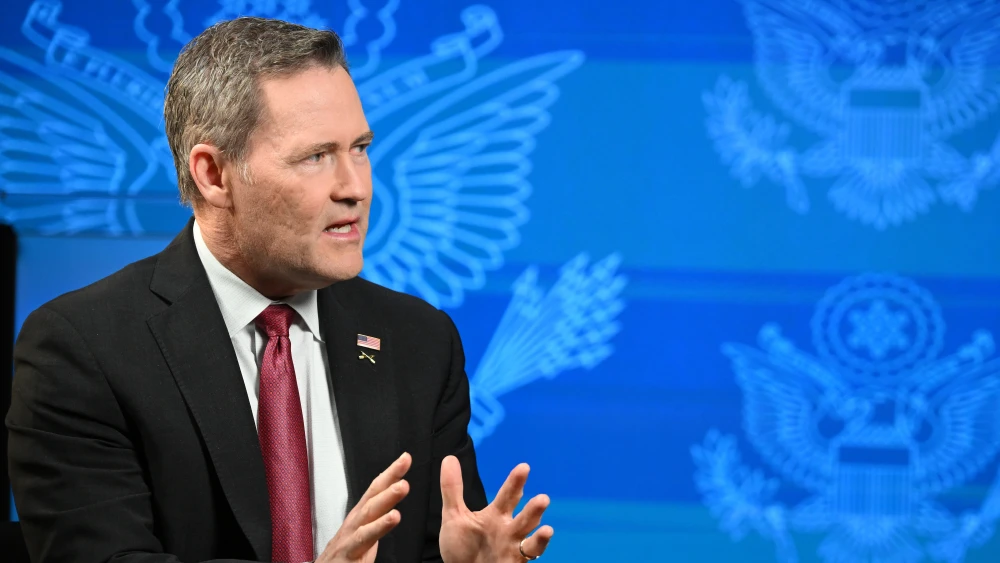
Mike Waltz, U.S. ambassador to the United Nations in New York, condemned a recent media profile of controversial U.N. official Francesca Albanese, calling it a “fawning celebrity profile” of an “antisemitic bomb-thrower.”
Waltz’s remarks followed a Politico Europe feature on Albanese, the U.N. special rapporteur on human rights in the Palestinian territories, whom the United States sanctioned in July 2025.
He wrote that the article “manages to ignore all the ways she’s sabotaging the U.N.’s mission of peace, from trying to debank Americans to eliminating their jobs, all just for doing business with Israel.”
The United States imposed sanctions on Albanese last year, citing what officials described as a campaign of “political and economic warfare” tied to her efforts to press for international legal action against Israel and corporations linked to it. The measures freeze any U.S.-based assets, bar financial transactions with her, and prohibit her from entering the United States.
Waltz questioned the outlet’s editorial judgment, writing: “Why is Politico running cover for this anti-American, antisemitic zealot?” (JNS sought comment from the outlet.)
Separately, the Politico Europe article drew scrutiny after UN Watch, a Geneva-based watchdog group, highlighted past social media posts by its author, Karl Mathiesen, including a 2014 tweet in which Mathiesen asked, “Can someone explain the U.S. reluctance to stand up to Israel? Is it the Jewish lobby? How powerful can it be?” Mathiesen later deleted his X account.
On March 31, Waltz wrote that he had “got a heads up” that Albanese, whom he deemed “the U.N.'s leading in-house Hamas propagandist,” had again “sent baseless threats to American companies using U.N. letterhead threatening ‘criminal liability’ (as if she had that authority) for merely working with a U.S. ally.”
A spokesperson for the U.S. mission to the United Nations told JNS it wasn’t immediately clear whether the new threats to which Waltz referred were new or related to Albanese’s earlier efforts.
“What an abuse of the U.N.'s resources that could be better spent helping people and resolving conflict,” Waltz wrote. “This is why she is sanctioned.”