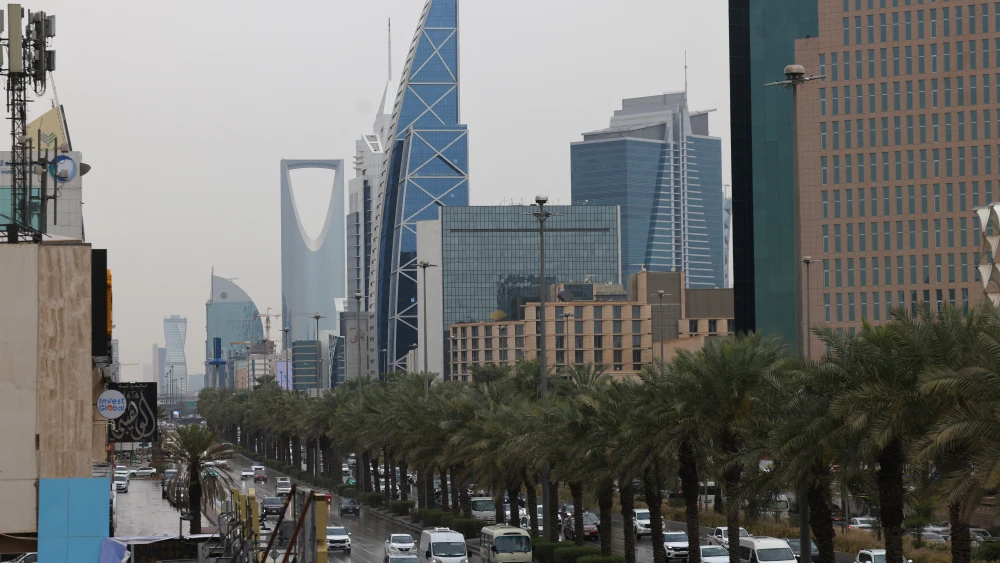
The Saudi military intercepted three drones that entered the country’s airspace from Iraq on Sunday, Riyadh’s Defense Ministry announced.
Ministry of Defense Spokesman Maj. Gen. Turki al-Maliki said the kingdom “reserves the right to respond at the appropriate time and place” and would take “all necessary operational measures” against attempts to threaten the country’s sovereignty and security.
While Iran’s attacks have largely subsided since it agreed to a ceasefire with the United States on April 8, drones have continued to be launched intermittently from Iraq toward Gulf countries, including Saudi Arabia.
The Saudi Foreign Ministry summoned the Iraqi ambassador on April 12 over what it described as ongoing attacks and threats targeting Gulf states with drones launched from Iraq.
The United Arab Emirates on Sunday night “strongly” condemned the drone attack targeting its neighbor.
The statement expressed Abu Dhabi’s “full solidarity” with Saudi Arabia and its support for “all measures aimed at preserving its security and stability.”
Earlier on Sunday, a drone strike sparked a fire outside the Barakah Nuclear Power Plant in Abu Dhabi, according to UAE authorities. It was the first time the nation’s only nuclear plant was targeted. No one as yet has taken responsibility for the strike.
The International Atomic Energy Agency confirmed that the UAE reported the incident, which caused a fire in an electrical generator but did not impact radiological safety levels.
Rafael Grossi, the IAEA’s director, said “military activity that threatens nuclear safety is unacceptable.”