U.S. Secretary of State Marco Rubio said on Monday that Washington and its partners are prepared to ensure the Strait of Hormuz reopens “one way or another” amid the ongoing war with the Islamic Republic of Iran, while acknowledging uncertainty about Tehran’s leadership and outlining coordination with Israel.
In an interview with Al Jazeera, Rubio said the critical waterway would be reopened after military operations conclude, and that either Iran “agrees to abide by international law and not block the commercial waterway, or a coalition of nations from around the world and the region, with the participation of the U.S., will make sure that it’s open.”
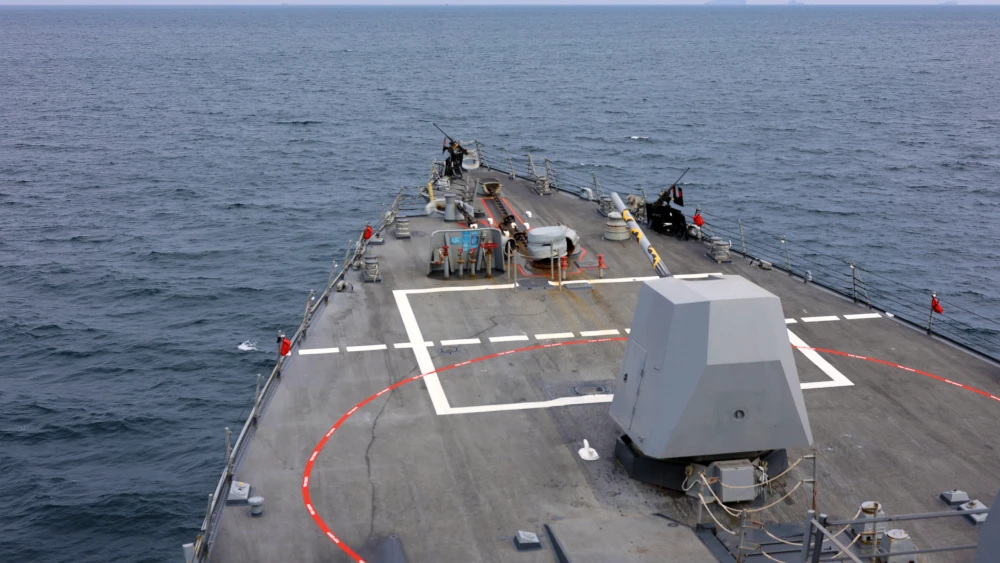
His remarks come as diplomats at the U.N. Security Council debate a Bahraini proposal that would authorize countries to use “all necessary means,” including military force, to ensure freedom of navigation through the strategic waterway.
The Strait of Hormuz, through which roughly 20% of global oil supplies typically pass, has been largely shut down during the conflict, disrupting shipping and driving up energy prices. Commercial traffic in the Persian Gulf has been severely curtailed, with vessels idled or rerouted amid security threats and insurance concerns tied to Iranian attacks and warnings against transit.
He also pointed to uncertainty surrounding Iran’s leadership following the reported elevation of Mojtaba Khamenei, saying it remains unclear who is making decisions in Tehran.
“We don’t even know if he’s in power,” Rubio said. “I know they say he’s in power. No one has seen him. No one has heard from him.”
Rubio added that U.S. forces continue to coordinate closely with Israel despite differing operational priorities.
“They are focused on the mid-range missiles in the northern part of Iran that target them,” he said. “We’re not critical of it. Those things are threats to them.”
The United States and Israel “deconflict so that our objectives and theirs don’t run into each other,” Rubio said, adding that Washington expects to achieve its military objectives “in a matter of weeks.”