Newsletter
Newsletter Support JNS

Norwegian man held for Nepal Chabad House vandalism

The suspect smashed and threw around furniture in an apparent antisemitic incident, according to a local rabbi.

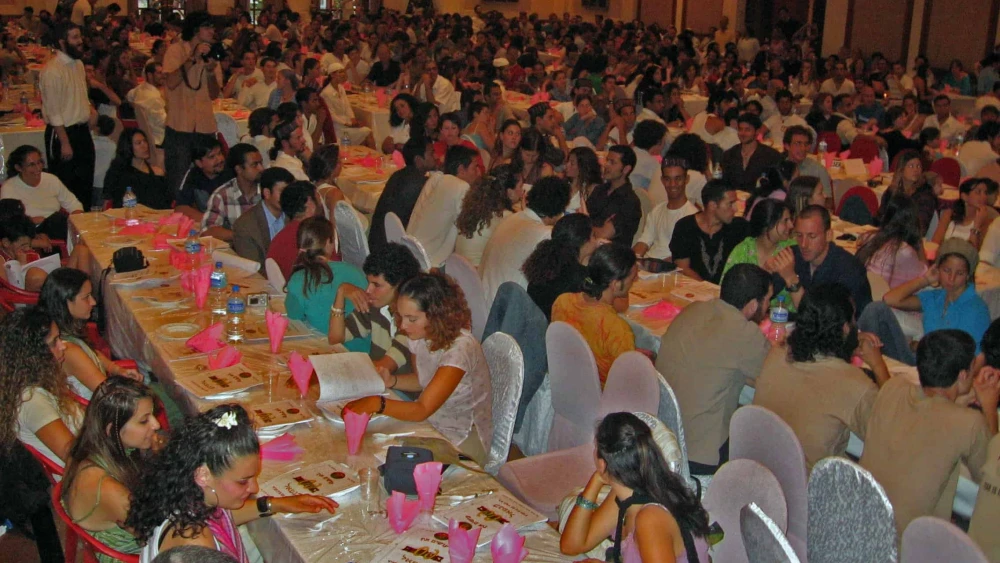
Jews celebrating Passover seder in Kathmandu, Nepal on April 6, 2012. Courtesy Eyal Keren.

Authorities in Nepal on Saturday arrested a Norwegian man whom they said broke into the Chabad House of Kathmandu and vandalized the place in a suspected antisemitic hate crime, the local rabbi told JNS.

“The perpetrator’s in custody and we’re still learning about the details of the case,” said Rabbi Chezki Lifshitz, who added that no one was hurt in the incident.

Police arrested the suspect shortly after he broke into the building, where thousands of Jews celebrated Passover last week, and broke glass and threw around furniture, according to Lifshitz. Security at the Chabad House has been beefed up, he said, but the institution’s activities will continue as scheduled.

At last week’s Passover Seder dinner, some 2,500 Jews, mostly from Israel, participated in what is often dubbed the largest Seder in the world. Attendance has grown gradually since Lifshitz and his wife, Hanni, established the Chabad House 20 years ago as emissaries of the Chabad-Lubavitch Hasidic movement to the Asian country.

Antisemitic attacks are rare in Nepal, where many young Israelis travel. Israel’s National Security Council has no specific warnings regarding Nepal, which is estimated to be at the lowest risk level for Israelis.

Canaan Lidor is an experienced journalist and international correspondent for JNS, covering Europe, Australia and global Jewish affairs.
The United States and Israel commenced formal negotiations to replace the expiring defense memorandum with a new framework.
“The dehumanization of Jews in rhetoric, through the use of violence, attacking Jews at synagogue or yeshiva—too many people think it’s okay,” said Rep. Mike Lawler.
CENTCOM stated that the strikes are “in response to Iran’s unwarranted and continued aggression.”
“The graduating student’s display included imagery that many people associate with antisemitism and that caused pain and concern,” a university spokesman told JNS.
“If CAIR does not meet the criteria for designation, it is difficult to understand why specially designated global terrorist sanctions exist,” stated the groups led by the Middle East Forum.
Haji Najibullah, who led Taliban fighters in Afghanistan’s Wardak Province, admitted to helping kidnap a New York Times reporter and supporting attacks that killed three American soldiers.