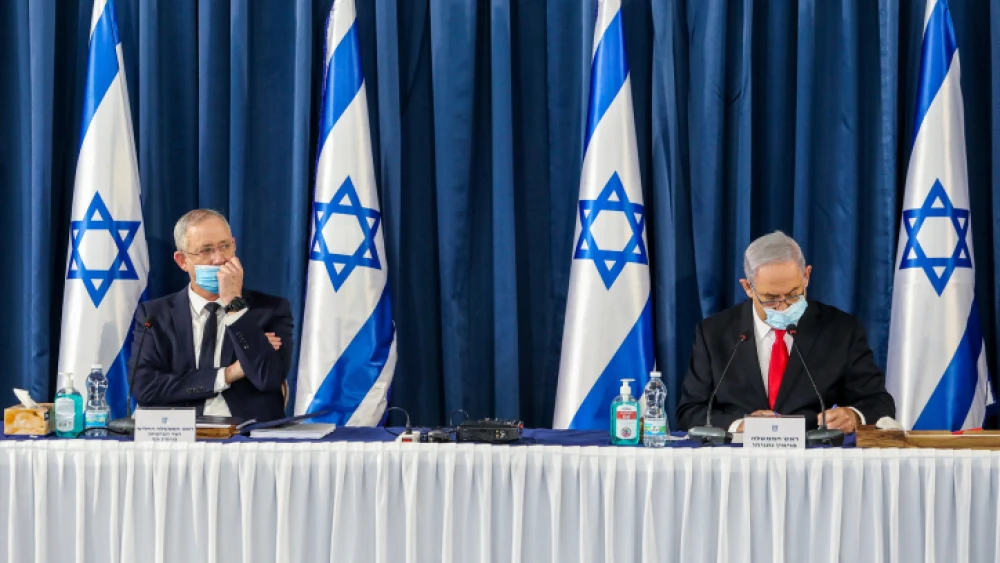
Israel’s current political reality is a complicated one. Three undecided elections have led to an unprecedented solution. The inherent complexity of a coalition with two leaders is now aggravated by the coronavirus, which has changed global priorities.
The Likud and Blue and White joining forces is like an organ transplant, complete with a system for rejection. The bloated number of ministers, mainly at the expense of the Likud, and the mutual suspicion among the coalition members make it difficult to handle domestic and international diplomatic challenges. The opposition is also an odd mutation that includes Yamina, the Joint Arab List, Avigdor Lieberman’s Yisrael Beiteinu Party, and Meretz.
In the past few months, Israelis have suffered a number of upheavals. Looming health threat aside, there is almost no family that hasn’t been hurt financially. An enormous number of Israelis have lost their jobs or been furloughed without pay, and the health care and school systems are being forced to operate in conditions of uncertainty. Special times require special leadership. The world is full of people who have 20/20 hindsight, but the real responsibility falls on those who have to confront events in real time.
The media outlets that broadcast depression and desperation are constantly trying to incite more criticism of the people in charge, even by giving a platform to delusional experts. The media behaves as if the heads of the health care system were right-wing voters who made decisions based on their political leanings, or as if the directors of the Finance Ministry’s Budgets Department were radical capitalists, deaf to the distress that coronavirus has caused families and individuals.
It’s a shame that much of the criticism being voiced stems from petty, populist political considerations. The needs of the people are many and there isn’t enough to go around. A great deal of thought is needed to find the proper balance while distributing limited resources, as well as the proper balance between public health and the economy. Thus far, Israel has done wonderfully well and is the envy of the world when it comes to dealing with the coronavirus crisis.
It’s also very important that MKs, especially from the Likud, who are disappointed at not having been appointed to ministerial positions refrain from harming the public’s faith in the government’s decisions. There are better ways to criticize and contribute. There is no need to use the media. Anyone who thinks that criticizing the government’s decisions from inside the coalition will help him or her get a leg up in the future does not understand how right-wing voters think.
The biggest challenge of all is sovereignty. I do not use the term “annexation,” because no one can annex what already belongs to them. This Saturday, we will read the Torah portion “Shelach,” in which Moses sends spies to the Land of Israel. The spies see a bountiful land but still report back with a message of despair. As a result, “the people wept that night.” Their punishment was 2,000 years of weeping, until the State of Israel was established.
Now we have a historic opportunity to declare sovereignty over parts of our homeland in Judea and Samaria. We must not weep, we need to take advantage of this opportunity. To do that, we need unity. Jewish history will not forgive anyone who let a bird in the hand go because they wanted the two in the bush.
This article first appeared in Israel Hayom.