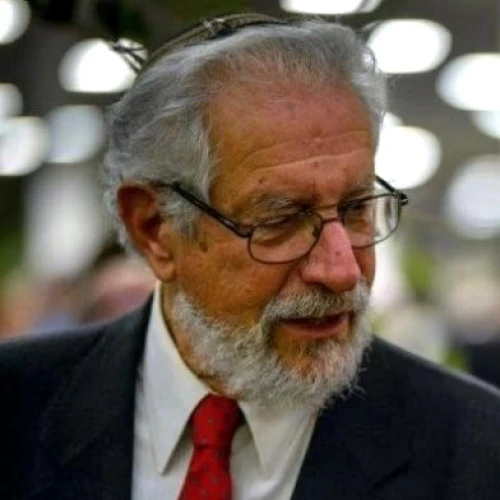
The last survivor of the 1929 Hebron massacre has just died at the age of 100. Yitzhak Ben-Hebron was 4 years old when Arab rioters murdered 67 Jews and wounded dozens more.
Born Yitzhak Halali in 1925, Ben-Hebron survived because his mother had pushed a heavy sewing machine across the door of his family’s home to keep out the rioters. They fled to the neighboring Avraham Avinu synagogue. From there, they escaped through the upper windows to avoid the mob.
The massacre targeted a community that had been living there for centuries.
The Hebron massacre is the most notorious of the 1929 Palestine riots, and it tends to overshadow other deadly attacks. But the trouble began in Jerusalem and spread to Safed, a town high up in the Galilee hills.
Together with Hebron, Jerusalem and Tiberias, Safed is one of the holy cities of Judaism. It was settled in the 15th and 16th centuries by refugees from the Spanish Inquisition. Rabbis Isaac Luria, Joseph Caro, Solomon Elkabetz and Moses ben Jacob Cordovero helped make it a leading Kabbalistic and spiritual center.
In later centuries, the Sephardi Jews were joined by ultra-Orthodox Ashkenazim. Today, the city boasts at least 15 synagogues.
Visiting Safed in northern Israel, you’d never guess that the city—with its picturesque cobbled streets, narrow alleys and ubiquitous steps climbing the hillside—had ever been other than peaceful.
But the silence of picture-postcard Safed is deceptive and conceals a violent history. The Arabs of Safed are known for their extremism and cruelty towards Jews. Already in 1834, Safed’s Jews suffered a pogrom. The godfather of the 1970s Palestinian hijackings was the (Christian) terrorist Wadie Haddad, a founding leader of the Popular Front for the Liberation of Palestine. He long led Israel’s list of wanted terrorists, dying in 1978. His house still stands there.
On that fateful day in August 1929, Arab rioters, incited by the Mufti of Jerusalem, Haj Amin al-Husseini, rampaged through the Jewish quarter of Safed with axes and knives.
An eyewitness reported: “They looted and set fire to houses, urging each other on to continue with the killing. They slaughtered the schoolteacher, Aphriat, together with his wife and mother, and cut the lawyer, Toledano, to pieces with their knives. Bursting into the orphanages, they smashed the children’s heads and cut off their hands. I myself saw the victims. Yitshak Mammon, a native of Safed who lived with an Arab family, was murdered with indescribable brutality: He was stabbed again and again, until his body became a bloody sieve, and then he was trampled to death. Throughout the whole pogrom, the police did not fire a single shot.”
Although honorable Arabs saved Jews, some 20 Jews were slaughtered, and 80 were injured.

Less than two decades later, the strategically important city dominating the Eastern Galilee was the scene of a fierce battle—one of the first of Israel’s 1948 War of Independence. The police station, still today pockmarked with bullet holes, stands as a silent witness to the hostilities, which broke out in April 1948 between Arabs and Jews even before the British mandate for Palestine had ended.
The Jews, numbering 1,200, faced 12,000 Arabs, both Muslims and Christians. They were hopelessly outnumbered; the British authorities advised them to evacuate their women and children. But the British could not guarantee the Jews’ safety, and so, the Jews decided to stay put.
They turned their balconies into low, concrete defensive walls. Some 200 Haganah and Palmach men and women drove back an Arab attack. They lost 42 fighters. The Jews only had one home-made mortar known as the “Davidka.” These guns (the Palmach had six) weren’t very effective, but they made a huge noise. The Arabs panicked at the sound, which blended with the thunderclaps and lightning flashes of a storm. It was thought that the Jews had a secret weapon, possibly even an atomic bomb.
Incredibly, 12,000 Arabs fled overnight, never to return. Among them were the families of Mahmoud Abbas, the present leader of the Palestinian Authority, and Queen Rania, the spouse of King Abdullah of Jordan.
Safed became a Jewish city. Contrast that with Hebron, where the remaining survivors heeded advice by the British authorities to evacuate their homes. Hebron would remain Judenrein until 1967.
Yitzhak Ben-Hebron changed his name from Halali to indicate his association with his birthplace. He was one of a few hundred Jews to return to Hebron after Israel reconquered the city during the Six-Day War in June 1967. Still, the Jews remain a besieged minority in an Arab town, in need of army protection.
Two massacres, two holy cities, two very different destinies.