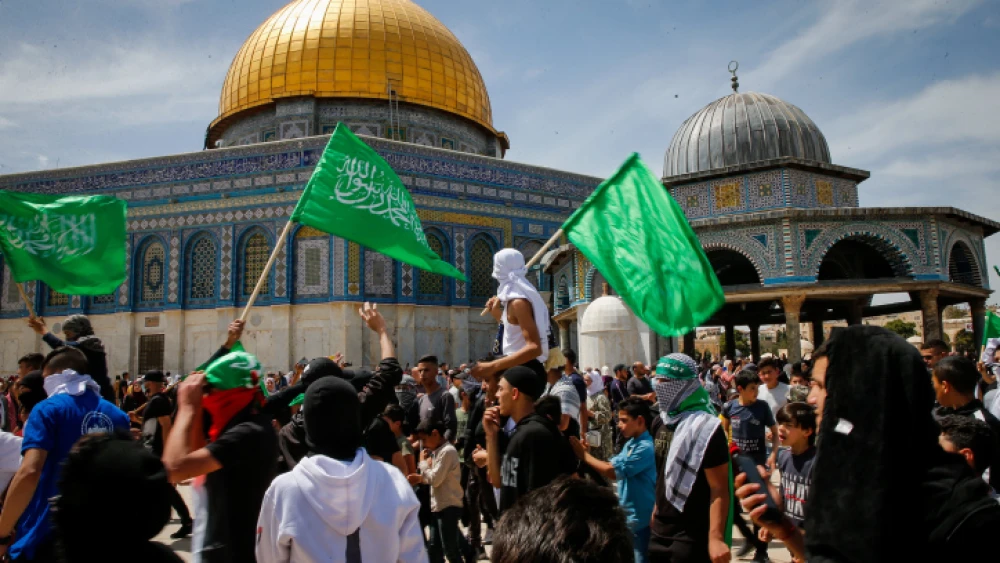

Israel has set the elimination of Hamas as a military threat and a political entity in the Gaza Strip as its primary objective in the current war. But vanquishing Hamas in Gaza is not enough, because Hamas’s tentacles stretch far beyond the Strip. In fact, Hamas’s ideological center and active secondary arena is Jerusalem.
Hamas employs a precise methodology in order to spread its ideology and recruit terrorists. It imitates the practices of the Muslim Brotherhood, which has long incubated radical Islamic movements, including Hamas itself. Now almost a century old, the Brotherhood seeks to win the hearts and minds of Arabs by providing legitimate social and cultural services, and then using them a stepping stone to political power.
Hamas used this tactic to take over Gaza. It won the 2006 legislative elections in Gaza by promising to crack down on crime, clean up the corruption that typified the Palestinian Authority’s governance, improve social services and provide economic opportunities to the beleaguered population. After it took power, however, and then seized control of Gaza in a coup, Hamas did nothing to end corruption or improve social services. The only economic opportunity it provided was by enlisting tens of thousands of Gazans into its terrorist army.
Hamas has employed this tactic in Jerusalem for years, right under the nose of the Israeli government, which to date has been ineffectual in countering it. As a result, Hamas’s influence is growing in Israel’s capital with a corresponding increase in terrorist activities.
In Jerusalem, many Hamas-affiliated groups are funded by Turkey and Qatar, which remain the primary foreign hosts for Hamas. For example, a group called Bureij Al-Laklak is funded by Turkey, operates sports clubs in Jerusalem and incites terrorism. It has disseminated a board game to children in which they compete to see who can murder the most Israeli soldiers. TIKA, financed directly by the office of Turkish President Recep Tayyip Erdoğan, provides financial assistance as a cover for its nefarious activities. It was expelled from Jerusalem in 2018 but has now returned. Kulana Maryam, in theory an educational group, recruits anti-Israel Arab Christians. Miratana provides educational services. None of these organizations’ activities are innocuous.
Altogether, there are more than 300 Arab non-profit organizations in Jerusalem, some of them enjoying tax exemption, which function with minimal monitoring by the Israeli government. Many of them allegedly funnel money directly to Hamas for terrorist purposes.
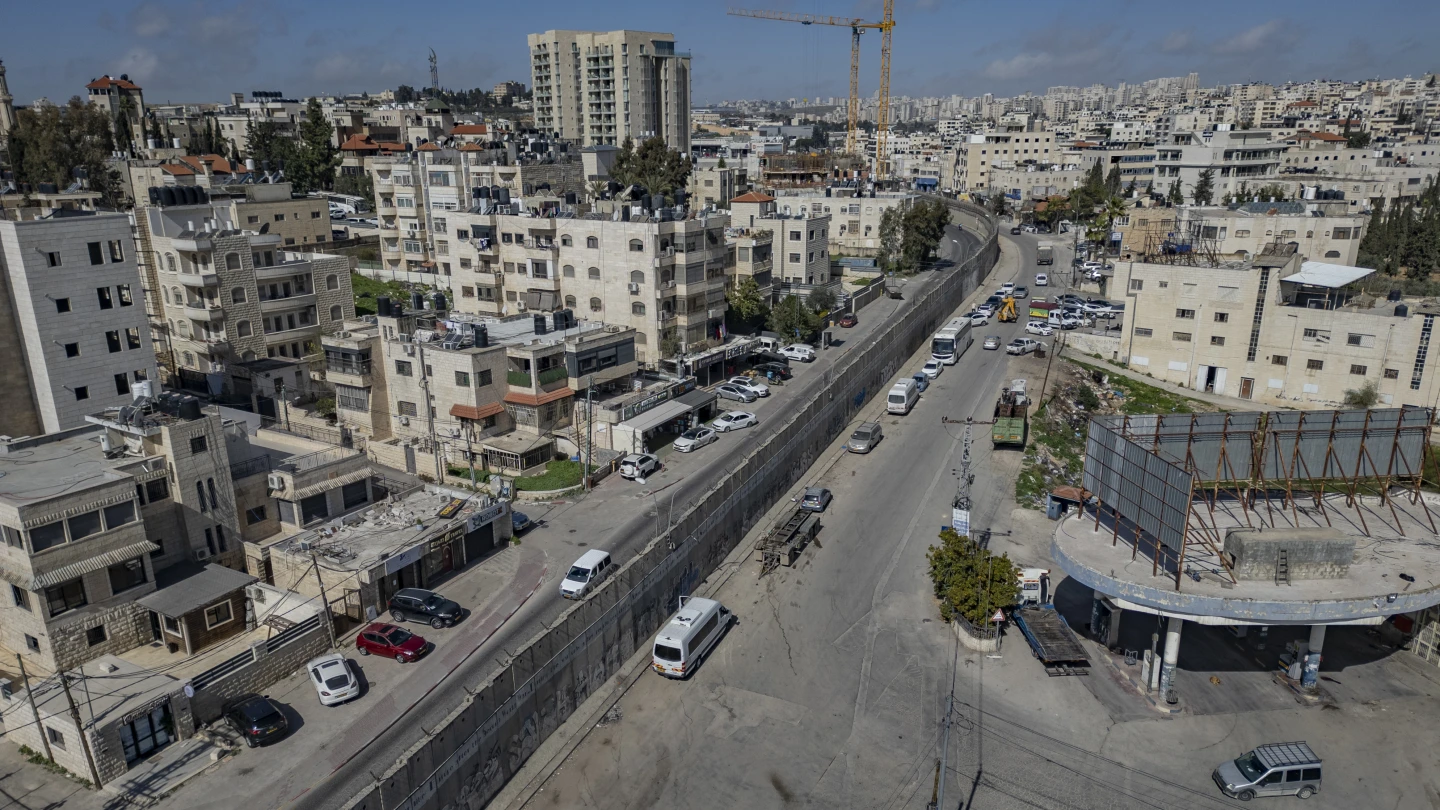
As a result of Hamas’s activities, the 350,000 Arab residents of Jerusalem have become increasingly radicalized, which leads to an increase in terror attacks. Many, if not most, of the terror attacks committed in Jerusalem over the last several years have been perpetrated by young people nurtured in organizations affiliated with Hamas.
Israeli law is currently ill-equipped to deal with these threats. Unfortunately, Hamas’s covert activities are shielded by laws that protect legitimate cultural, educational and charitable endeavors. These laws must be amended so as to allow the authorities free rein to shutter terror-connected groups.
Terrorist organizations around the world exploit the liberties and freedoms of democracies to their own benefit. They have discovered loopholes in the laws of many nations that allow them to operate under the radar and wreak havoc across the world. This cannot be allowed to continue, especially in Israel’s capital.
The Jerusalem Center for Applied Policy (JCAP) makes the following recommendations for how to counter this threat:
- Israel must close private Arab schools in Jerusalem whose curriculum incites terrorism.
- Israel must closely monitor the curricula in Jerusalem’s government-funded schools that serve the Arab sector. It must withhold funding from schools and fire educators and principals guilty of incitement.
- Schoolbooks need to be closely monitored. If they do not recognize Israel or incite terrorism, they must be banned from all schools.
- Incitement by religious institutions, imams and non-profits must be stopped and the perpetrators jailed or expelled. Funding for these institutions must be cut off.
- Terror-sponsors and their supporters must be stripped of their Israeli citizenship or Jerusalem residency.
- Moderate elements in the Arab sector should be cultivated as the next generation of the sector’s leaders.
- Surviving perpetrators of terrorism should spend the rest of their lives behind bars and their families should be expelled from Israel after their homes have been demolished.
Hamas is already in Jerusalem. Just as in Gaza, now is the time to eliminate it.