
Who in Israel isn’t familiar with that singular Hebrew word that directs us where to seek shelter when there is a security threat?
Miklat.
It can be a bomb shelter or a specially protected room to protect us against rockets falling around us.
Like almost everything in Israel, its name comes from the Bible. I wonder how many people are aware that even the name El Al (literally “upward” or “skyward”) derives from the book of Hosea 11:7.
The word miklat means “refuge.” It originates in the second of this week’s Torah readings, Massei (Numbers 35). The Torah demands that arei miklat, “Cities of Refuge,” be established as safe havens for those who have committed manslaughter.
If someone did not commit premeditated murder but caused someone to lose his life accidentally, the victim’s family members might seek revenge against the perpetrator. Thus, he was given refuge in one of the specially designated cities, which were strategically placed throughout the Land of Israel.
Leaving his home and going into “exile,” was also a form of penitence for the perpetrator. Taking a life is a serious offense. Though it was done inadvertently, it usually involved some degree of negligence and thus required some form of atonement.
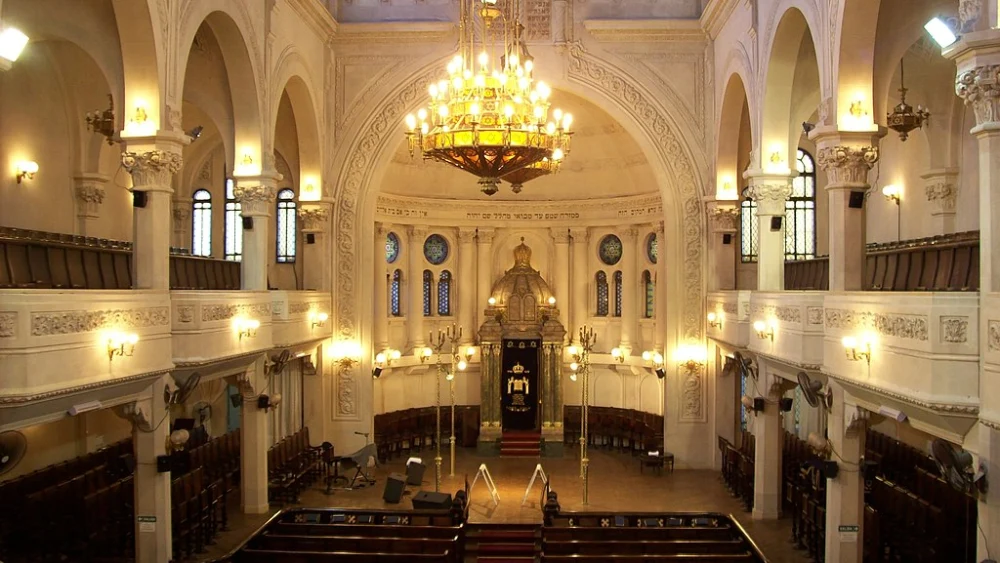
I was wondering how the idea of miklat is relevant today, beyond the bomb shelters in Israel. I know that as a congregational rabbi for many years I may be somewhat biased, but I’d like to suggest that the synagogue is a very real place of refuge. It can truly be a sanctuary, a safe haven to escape the tumult of our tempestuous society, the ravages of the rat race (and, as someone once said, “in the rat race, even if you win, you’re still a rat!”).
With all the leisure opportunities readily available to us today, with all our escapist entertainment centers and casinos in every corner of the city, we are still the most stressed-out generation in history.
Sure, it’s good to go to gym and exercise. It’s very nice to enjoy a therapeutic massage. Regular vacations are important and wonderful. But where can one go weekly, daily or even two or three times a day to escape the pressures of our hectic lifestyles and become human again? To talk to God, feel better after the chat and come out refreshed and energized spiritually and emotionally?
That’s what the synagogue is all about. Of course, it is essentially a house of prayer. The aron kodesh, the Holy Ark housing the Torah scrolls, manifestly declares it a house of God. But it is also a place of refuge and respite from the junk we must deal with all week long.
For well over 30 years at our shul, I would watch hundreds of people come in on a Friday night or Shabbat morning, often feeling frustrated and frazzled, even depressed and miserable. But after one or two hours of “shul therapy,” they would walk out with a smile on their faces, standing tall, proud and happy. Yes, we enjoyed good chazonus and an excellent choir, and I did spend many hours preparing the best sermons I could, but I believe that the sanctuary effect applies to all shuls.
In fact, I worked out why some people fall asleep regularly during a rabbi’s sermon. It’s not that it’s boring or because he may speak in a monotone. It’s because they feel so relaxed in shul. Taking a deep breath from the workweek, entering the serenity of the synagogue, the peacefulness of prayer and the tranquility of Torah are all de-stressing factors. So, it’s actually quite natural to fall asleep.
The synagogue has many benefits. We can communicate and connect with the Almighty and get it off our chests. We can learn much about our faith and about life. We can socialize and meet up with friends on a regular basis. We can sense that we are not alone but are part of a community. We may even get a tasty kiddush and some good whisky.
But, very importantly, it is the sacred sanctuary that provides just what its name means: A place of refuge and relief, a comforting home away from home to revive our inner selves and emerge enlightened, uplifted and rejuvenated.
May we all take advantage of the opportunity.