
In recent days, my colleagues and I have been closely monitoring the fallout from two major events:
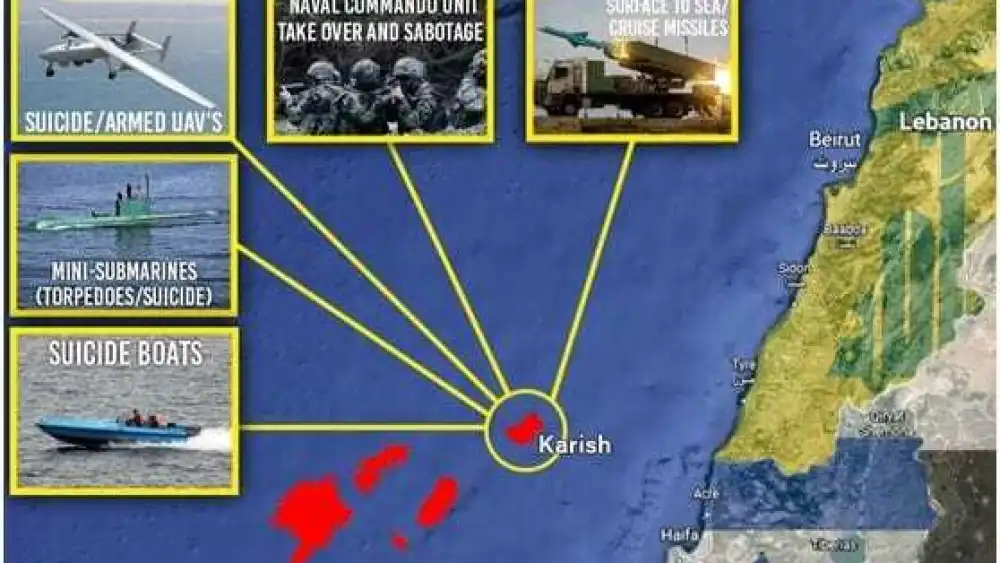
- Israel’s surrender to demands made by Hezbollah, Lebanon and, ultimately, Iran regarding the Israel-Lebanon maritime border and the right to extract natural gas from the Karish gas field.
- Israel’s weak and fearful response to the many terrorist attacks in Jerusalem and Samaria (a.k.a. the northern part of the “West Bank”).
In the Middle East, when one party to a dispute caves to the other’s demands, the winner ups the ante. No one respects those who meekly submit to their opponents. Instead, people mock, shame and often attack the loser.
The current Israeli government may try to rationalize its actions, but almost everyone in the Middle East knows that both these events represent huge losses for Israel. And because Israel showed weakness and fear, its enemies will almost certainly “up the ante” and escalate their attacks on the Jewish state.
This also damages the Abraham Accords process, because no one in the Middle East respects or wants to be friends with a loser. Bahrain and the UAE, for example, both of which see the present Iranian government as their existential enemy, view the Israeli government’s decision to accept what amounts to a surrender to Iran—and America—as a warning sign that, if Israel’s present leadership stays in power, they cannot rely on the Jewish state as a solid ally against Iranian aggression. This makes it much less likely that more Middle Eastern countries will normalize relations or make a formal peace with Israel.
In only a few weeks, Israelis will go to the polls in the latest of many recent rounds of elections. We are now detecting a major, if quiet, backlash against this Israeli government and the left in general.
The 2016 American presidential election could be indicative of what might happen: America had been going downhill for eight years. Clearly, many were fed up with the harm to America caused by former President Barack Obama. In the run-up to the vote, a significant number of Americans quietly told only their most intimate associates that they would vote for Trump. They would never divulge this in public, because they feared their friends would abandon and shun them.
In Israel, increasing numbers of Israelis seem to be telling their most intimate friends that they expect to vote for Itamar Ben Gvir—a sort of Israeli Donald Trump. These are people who would never have considered voting for such an “extremist” in the past. Will they actually do so?
Harold Rhode received a Ph.D. in Islamic history and later served as an adviser on Islamic culture for 28 years in the Office of the U.S. Department of Defense. He is now a distinguished senior fellow at the Gatestone Institute.