Newsletter
Newsletter Support JNS

Passover snow falls on Mount Hermon for first time in 22 years

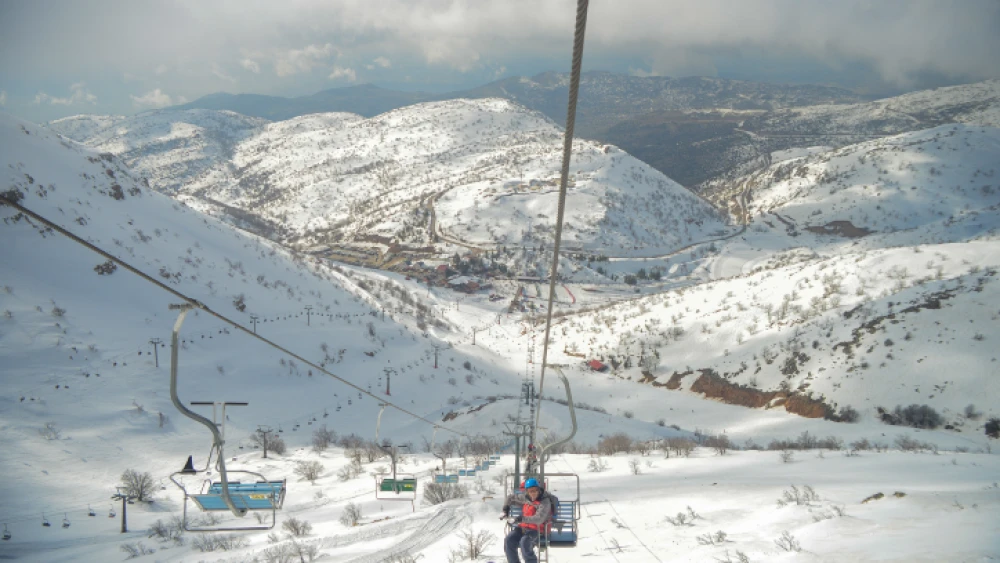
With eight inches already on the ground and snow expected to continue to fall throughout the day, the Hermon ski-resort management closed the site to visitors.

Israelis enjoy the snow on Mount Hermon on Jan. 29, 2019. Photo by Adam Shuldman/Flash90.

Snow fell on Mount Hermon on Sunday during Passover for the first time in 22 years.

With approximately eight inches of snow already on the ground and accumulation set to continue throughout the day, the Hermon ski-resort management closed the site to visitors. Snowfall was also reported in towns in the Golan Heights.

Unseasonable rainstorms drenched the country from north to south, as vacationers tried to find ways to enjoy the Passover holiday indoors. Many parks that were opened for free to hikers and visitors for the holiday were closed, including the Ein Gedi nature reserve. Outdoor events around the country were cancelled or rescheduled for later in the week.

While some local scattered showers were forecast for Monday morning, the day scheduled for the traditional Priestly Blessing ceremony at the Western Wall plaza, temperatures are expected to rise and rains to dry up throughout the week, according to the Israel Meteorological Service.

Massive rainfalls this year broke a five-year drought. Measurements at the Kinneret showed over triple last year’s rainfall.

The Kinneret, Israel’s primary natural water source, rose from just 16 inches away from the Black Line—the point past which the lake becomes ecologically imbalanced—to 11.25 feet from the Black Line as of April 20.

It is now 8.75 feet from its upper limit, after which point it would flood its banks.

Barbara Feingold, a board member at the Republican Jewish Coalition, which spent $5 million supporting Gallrein who defeated Massie, told JNS that voters “don’t want someone who is a blatant antisemite.”
Deena Margolies, of the Brandeis Center, told JNS that antisemitism in healthcare is a bigger problem than a single union or doctor and is becoming “normalized.”
Four Republicans voted with nearly every Democrat to discharge the war powers resolution calling for U.S. President Donald Trump to withdraw American forces from hostilities with Iran.
“I would like to see something that says, ‘And here’s what’s going to be there instead,’” Rep. Adam Smith, ranking member of the House Armed Services Committee, told JNS.
In a report delivered to the U.N. Security Council, the board says the terrorist organization’s refusal to give up its weapons remains “the principal obstacle to full implementation” of the Gaza ceasefire.
“Over time, the members of the Congress, both houses, both parties, are going to understand that this is a cost that is not only affordable but absolutely a necessary investment,” Eric Fingerhut, president and CEO of the Jewish Federations of North America, told JNS.

