Newsletter
Newsletter Support JNS

Report: Iran restricts inspector access to nuclear plant after attack

Diplomats say the dispute is in the process of being resolved but has caused tension in the indirect talks between Iran and the United States to revive the nuclear deal.

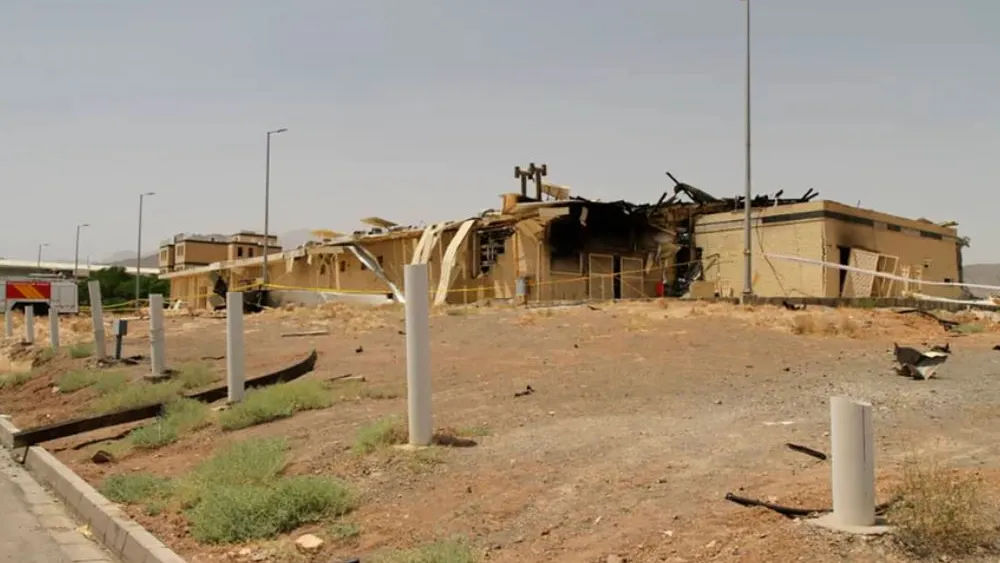
A building at the Natanz nuclear facility in Iran after being damaged in a fire on July 2, 2020. Credit: Atomic Energy Organization of Iran.

Iran is limiting access to inspectors from the International Atomic Energy Agency to its main uranium enrichment plant at Natanz because of what it claims was an attack on the site by Israel, diplomats told Reuters.

According to the exclusive report published on Thursday, one official said the standoff has gone on for weeks. Diplomats say that the dispute is in the process of being resolved, though it has caused tension in the indirect talks between Iran and the United States to revive the 2015 nuclear deal.

“They are provoking us,” said one Western diplomat, predicting access to inspectors would be renewed next week.

The April 11 explosion that tore through the Iranian nuclear site of Natanz, and which the Islamic Republic has blamed on Israeli sabotage, appeared to have taken around 5,000 centrifuges of the IR-1 type offline, a report released by the Jewish Institute for the National Security of America (JINSA) has said.

The report assessed that the blast took Iran’s nuclear clock back by almost two months, “effectively counteracting Iran’s major expansions of its enrichment capacity since November 2020.”

Heritage Minister Amichai Eliyahu said: “After years in which sites were neglected or looted, Israel is making historical corrections.”
Using this phrase against Israel is no less absurd than labeling sport-hooliganism and violence at mass demonstrations in the West as officially sponsored, government-sanctioned violence.
“Nearly eight years after the shooting, our gratitude and admiration for the heroic bravery and selfless dedication of the first responders that day endures,” said U.S. Attorney Troy Rivetti.
Yitzhak Ben-Hebron escaped Arab riots as a child and later returned to rebuild the Jewish community in the city.
Army Maj. Gen. Jasper Jeffers III said that future conflicts will require allied special operations forces to integrate quickly and operate with compatible systems.
“The strength and resilience you and your families demonstrate throughout the recovery and rehabilitation process inspire the entire nation of Israel,” the IDF chief said.