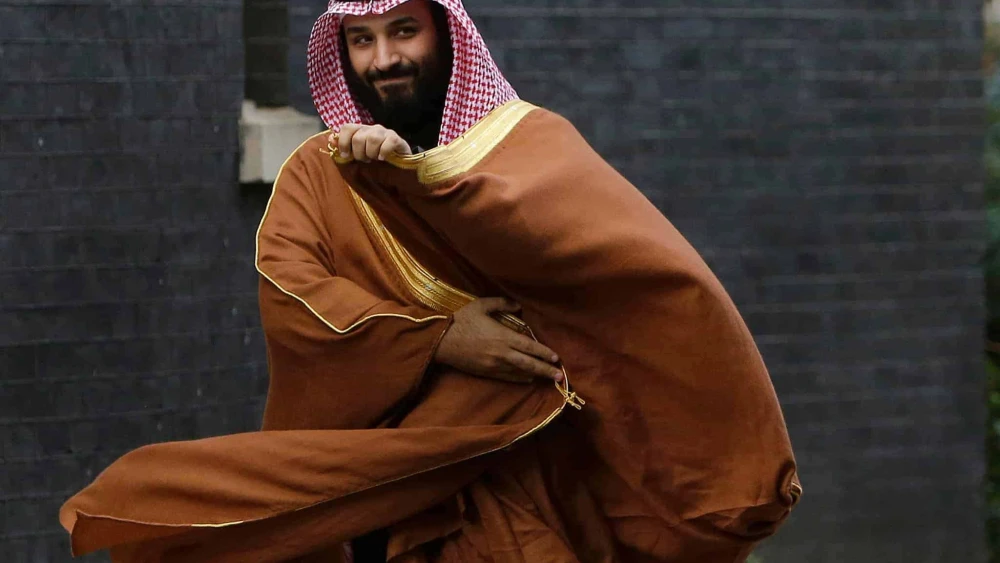
Saudi Arabia needs the war against Hamas in Gaza to conclude—and some framework for a Palestinian state to be articulated, however unrealistic—before it can finalize a normalization deal with Israel, the chairman of a nonprofit promoting Israeli-Arab diplomacy said on Sunday.
“When Saudi Arabia signs a normalization deal with Israel, that will mark the end of the Arab-Israeli conflict in the Middle East,” said Dan Feferman, chairman of Sharaka, speaking at the JNS International Policy Summit in Jerusalem. “At least a dozen other Arab countries will follow.”
Feferman cautioned, however, that Riyadh, as the custodian of Islam’s holiest sites, cannot be seen as abandoning the Palestinian cause—even if Saudi leadership acknowledges that a two-state solution may no longer be realistic.
On Friday, U.S. President Donald Trump said that the kingdom may very well join the four Arab countries that signed the Abraham Accords with Jerusalem during his first term.
“I think Saudi Arabia will go into the Abraham Accords. … We had four countries in there, it was all set. We would have had it packed. Now we’re going to start it again,” he said, referring to the United Arab Emirates, Bahrain, Morocco and Sudan that normalized ties with the Jewish state in 2020.
Although Trump did not say when this diplomatic development might occur, he alluded to a time frame after his trip to the Middle East next month, where he is slated to visit Saudi Arabia, Qatar and the UAE.
“There are seismic changes underway in the Middle East, and we will only see them advance under Donald Trump,” said Victoria Coates, vice president of the Heritage Foundation’s Institute for National Security and Foreign Policy and a former U.S. deputy national security advisor, during a panel discussion on “The New Middle East.”
“The best thing Israel can do is win this war—then peace with these countries will follow,” said Bobby Rechnitz, chairman of the Abraham Accords Roundtable and a Los Angeles-based entrepreneur. He added that economic cooperation would cement regional peace.
“You don’t need to wait for Saudi Arabia; eventually, they will come along,” Rechnitz said.