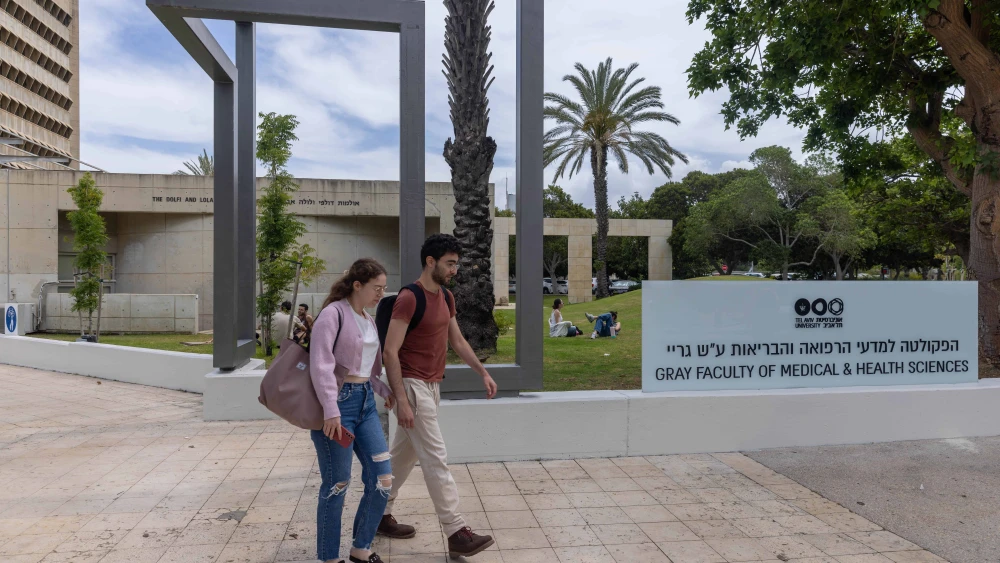
A study conducted by Tel Aviv University’s Gray Faculty of Medical and Health Sciences may pave the way for an improved treatment of eosinophilic esophagitis, a chronic inflammatory condition of the esophagus linked to food allergies, the school said on Monday.
The medical condition, whose prevalence has grown in Israel and across the Western world over the past decade, causes difficulty swallowing, chest and abdominal pain, and, in children, even growth delays.
The findings published in Allergy, the leading research journal in clinical immunology, identified the TSLP protein as a driver of the condition, suggesting that neutralizing it could ease or even prevent symptoms.
Eosinophilic esophagitis results from an abnormal immune response to foods like milk, eggs, wheat, nuts and fish, leading to an accumulation of eosinophils, a type of white blood cell, in the esophagus. The disease is often linked to other conditions like asthma and atopic dermatitis.
Treatments often involve strict elimination diets or, in severe cases, amino acid–based formulas, which can be challenging for patients.
The research was led by TAU Professor Ariel Munitz and doctoral student Anish Dsilva, in collaboration with Dr. Chen Varol of Tel Aviv Sourasky Medical Center (Ichilov Hospital) and Cincinnati Children’s Hospital Medical Center’s Professor Marc Gothenburg.
Building on a previous experimental model of eosinophilic esophagitis developed in Munitz’s Tel Aviv lab, the team focused on epithelial cells, which form the protective outer layer of the esophagus. It found that in the disease, the epithelial cells release high levels of two proteins, IL-33 and TSLP, which can trigger allergic inflammation.
While removing IL-33 showed little effect, eliminating TSLP prevented disease development in mice. Similarly, using antibodies to neutralize the protein significantly reduced eosinophilic esophagitis symptoms.
These results suggest that therapies targeting TSLP, which TAU said were already under development by pharmaceutical companies, could be effective, potentially even for other allergies.
“This study shows that TSLP is a central player in EoE,” Munitz said. “Given that biologic therapies targeting proteins like TSLP are already in the pipeline, we believe they could become an effective treatment option for patients with this increasingly common and debilitating disease.”