U.S.-Israel Relations
News about governmental relations between Israel and the United States
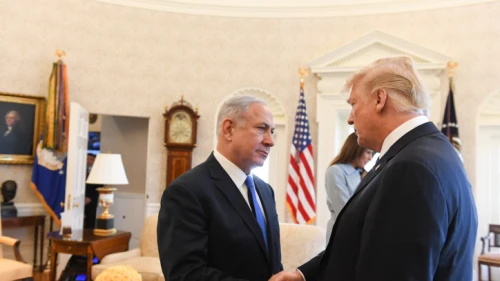
The Israeli prime minister said such developments “we could only dream about, but which now we have the opportunity to implement.”
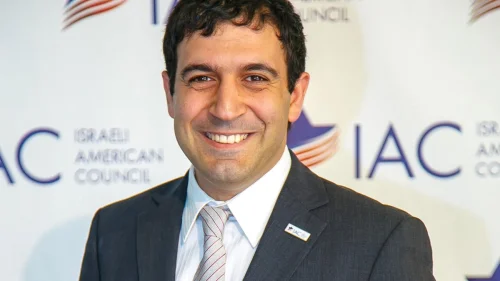
The annual summit of the Israeli-American Council will feature a star-studded lineup, including an address by U.S. President Donald Trump.

U.S. assistant secretary of state for Near East Affairs David Schenker said “we have confidence in the Lebanese army, and we think they are important partners in the fight against Sunni jihadists.”
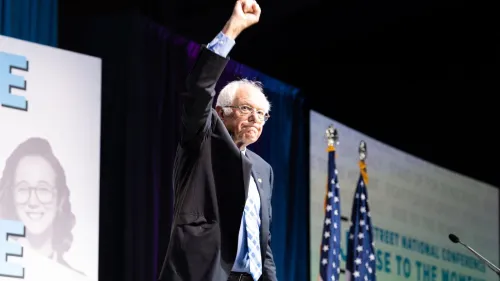
The senator from Vermont accused Trump of “using false allegations” of anti-Semitism to make the U.S.-Israel relationship a divisive issue.

The conference will take place in Southern Florida from Dec. 5-8 and is expected to draw nearly 4,000 attendees from around the world.

“I would push for a one-state solution from Jordan to the Mediterranean. The two-state solution is a fallacy. It’s a pipe dream. I would advocate a one-state—an Israeli state—for the entire region,” says former Illinois congressman Joe Walsh, who is throwing his hat into the 2020 presidential ring for the Republican Party.
“If it’s so important for [Benjamin] Netanyahu, then he should pay the Palestinians $12 million,” U.S. president tells advisers, according to senior White House officials quoted by Israeli media.
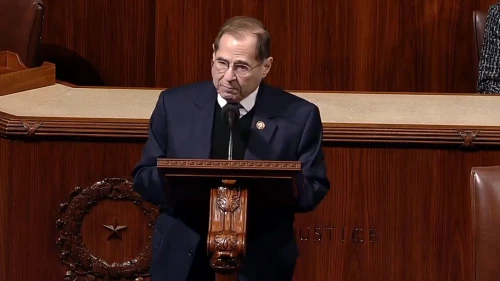
“We have a $38 billion commitment over 10 years for military aid to Israel,” said Rep. Jerry Nadler (D-N.Y.), who is the chairman of the U.S. House Judiciary Committee. “The Israelis need it for defense.”

“What is Judaism? Is it a religion, nation, culture or peoplehood?” posed one session.
The Vermont senator also declared that the government of Israeli Prime Minister Benjamin Netanyahu has been “racist.”
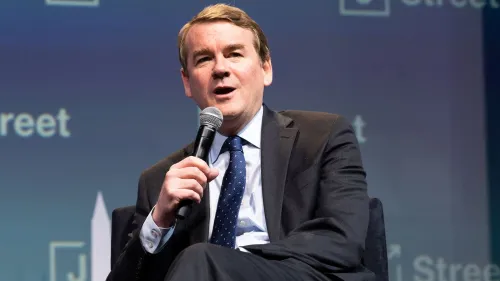
“I would keep the embassy in Jerusalem, although I think the terms of that should have been part of the negotiated two-state solution even though Jerusalem has always been the capital of Israel,” said Sen. Michael Bennet (D-Colo.).
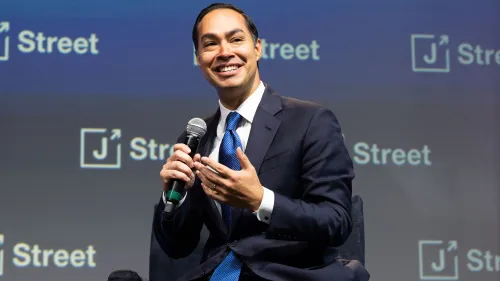
He stressed a two-state solution and the hope of working with a government not led by Israeli Prime Minister Benjamin Netanyahu, whose policies he criticized in his remarks.