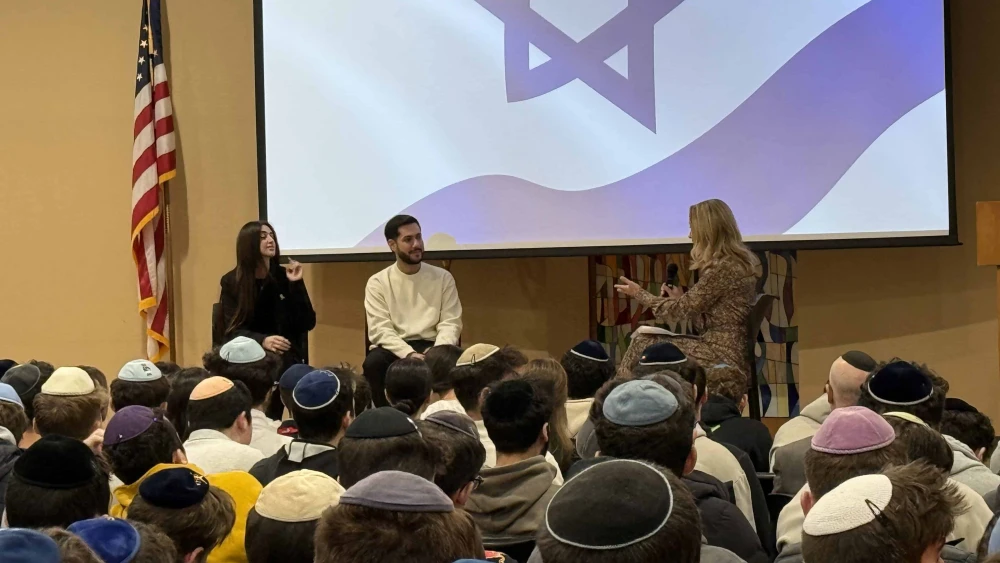
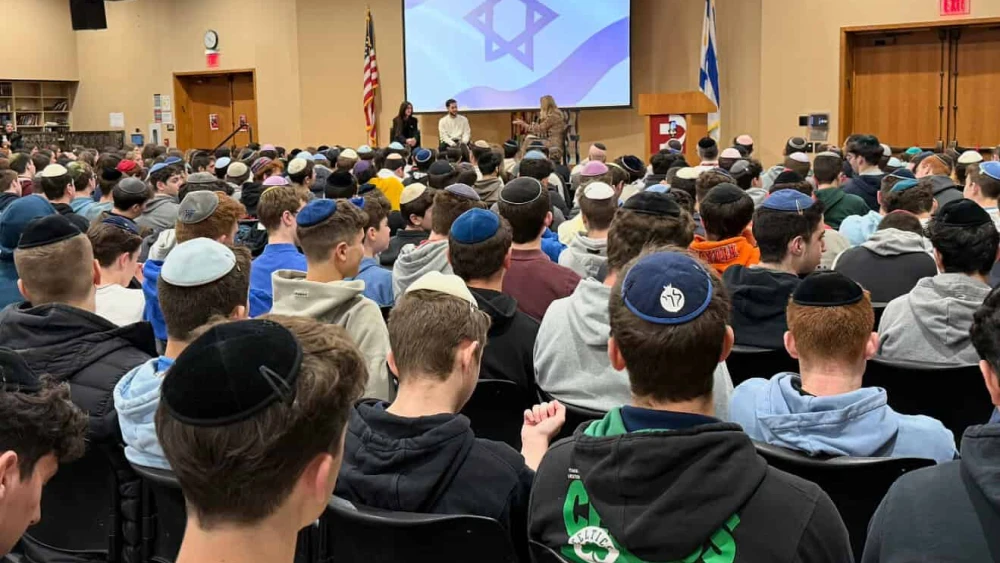
As Thanksgiving approaches, a day filled for many with gratitude, reflection and family, students at The Frisch School experienced a lesson in thankfulness unlike anything they had ever encountered. This week, ahead of the holiday, more than 1,000 students gathered to hear from someone whose understanding of gratitude was shaped in the darkest of places. His name is Eliya Cohen, a former hostage who was held by Hamas in the tunnels of Gaza for more than 500 days. Listening to him speak gave students a perspective that gently, yet powerfully, reshaped the way they think about what it truly means to be thankful.
For many students, Cohen’s talk became the most meaningful Thanksgiving preparation they had ever experienced. His story did not minimize the students’ struggles. Instead, it gave them perspective, depth and purpose. He showed them that gratitude is not something you feel only when life is easy, but something you hold onto even when life feels impossible.
His visit did more than offer a firsthand account of survival. It reshaped how students understood thankfulness, not only when life is good, but when it is unbearably hard. Cohen’s story inspired the Frisch community to approach Thanksgiving with deeper relevance, helping students rethink what blessings look like by listening to someone who spent a year and a half beneath the ground.
A student in the audience connected something Eliya said to a lesson learned in class. Rav Judah Mischel, quoting Kohelet, teaches the verse: “I found that wisdom has an advantage over folly like the advantage of light from darkness.” Students explained that Cohen helped them understand this idea. Sometimes the greatest light comes from the darkest places.
Thankfulness underground
Cohen was kidnapped on Oct. 7, 2023, dragged into the darkness of Hamas’s tunnels and held in horrific conditions. Before being taken hostage, he and his girlfriend hid in a shelter. Eliya recited the Shema prayer while his girlfriend, Ziv, looked at a sticker on her phone that said “Hashem Loves You”.
Cohen described the moment terrorists dragged him from the shelter, forced him onto a truck and took him into Gaza. On that truck, he whispered, “Thank You, Hashem,” simply because he was still alive. Students found it almost impossible to imagine choosing faith in a moment like that.
For many of the students, gratitude had always been associated with comfort, warmth, or stability. Cohen’s story introduced them to a different kind of gratitude, one forged in survival. Even while starving, even while cut off from the world, even while unsure he would ever see the sky again, he tried to hold onto thankfulness for the gift of life itself.
Love, hope and an engagement ring that waited 505 days
Throughout all 505 days of captivity, Ziv Amud, Cohen’s girlfriend, never gave up hope. She advocated for him tirelessly, refusing to believe he was gone. “It is empowering that someone can have so much belief in a loved one,” a Frisch student reflected. “It shows how emunah and faith have no limits.”
Eight months after he was released on Feb. 22, 2025, Cohen proposed to Ziv on a rooftop in Tel Aviv. Surrounded by family, friends and the Mediterranean Sea, he knelt beside a heart-shaped display of white flowers. The photograph spread across Israeli media, symbolizing love, hope and resilience.
Students were deeply moved by this part of his journey because it showed gratitude at its fullest. Gratitude for life. Gratitude for love. Gratitude for the chance to begin again. One student said, “He reminded us that every time you hug your family or see someone you love, you should be thankful. You never know when you will not get that chance again.”
Thankfulness Above Ground
Cohen’s visit came at a time when Jewish students across the country feel the weight of rising antisemitism. Many Frisch students said they often feel pressure simply for being Jewish. Hearing Cohen describe maintaining faith in a Hamas tunnel reframed their view of their own challenges.
One student shared that in public school, classmates treated her differently because she was Israeli. “I am not comparing my experience to his,” she said. “But he showed me that you can keep your faith no matter what is happening around you.”
The most powerful shift for many was realizing how much they had taken for granted. Cohen explained that after being freed, he felt guilty eating or showering, knowing others were still in captivity. Students said this humbled them. One reflected, “It made me realize how thankful we should be for things we do not even think about. Food, water, family, safety. None of it is small.”
A Thanksgiving reimagined
Cohen’s visit transformed how the Frisch community will experience Thanksgiving. Instead of focusing only on abundance, students began thinking about endurance. Instead of thinking about what they have, they began thinking about the miracle of having anything at all.
One student said, “We are so lucky. To wake up freely. To eat whenever we want. To hug our parents goodnight.”
Another reflected, “He taught us that gratitude is not about everything being perfect. It is about finding the little light in the dark.”
For many students, Cohen’s message of gratitude became the most meaningful preparation for Thanksgiving they had ever encountered. His story added perspective, depth and purpose. He showed them that gratitude is not something fragile. It is something strong.
A message for the Jewish world
From the tunnels of Gaza to a classroom in New Jersey, Cohen’s journey offered a message the Jewish world needs now more than ever. Gratitude is not fragile. It is a lifeline. It is how we survive the darkest chapters of our history and how we celebrate the brightest ones.
During the month of Kislev, we are all searching for light in the darkness. As Rabbi Eli Ciner told the students afterward, these heroes, these former hostages, are our chanukiyah. They are our light. They are the ones who embody the brightest flame in a time that can feel dim.
This Thanksgiving, Frisch students will sit around their tables with a new understanding of thankfulness. They will appreciate the sunlight, the freedom, the food before them and the people beside them. And they will remember the man who taught them that gratitude can survive even five hundred and five days underground.
Because if Eliya Cohen could find thankfulness beneath the earth, then surely we can find it above it.
About the author
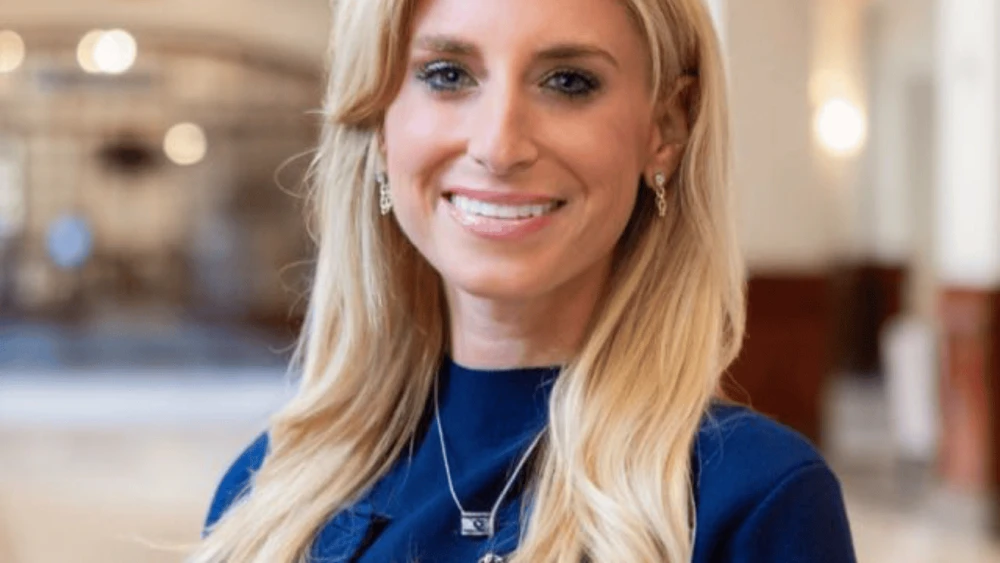
Ariella Noveck is a broadcast journalist and co-founder of BottomLine Media and the nonprofit ShieldGiving. She leads coverage and communications while advancing accuracy in broadcast and print media.