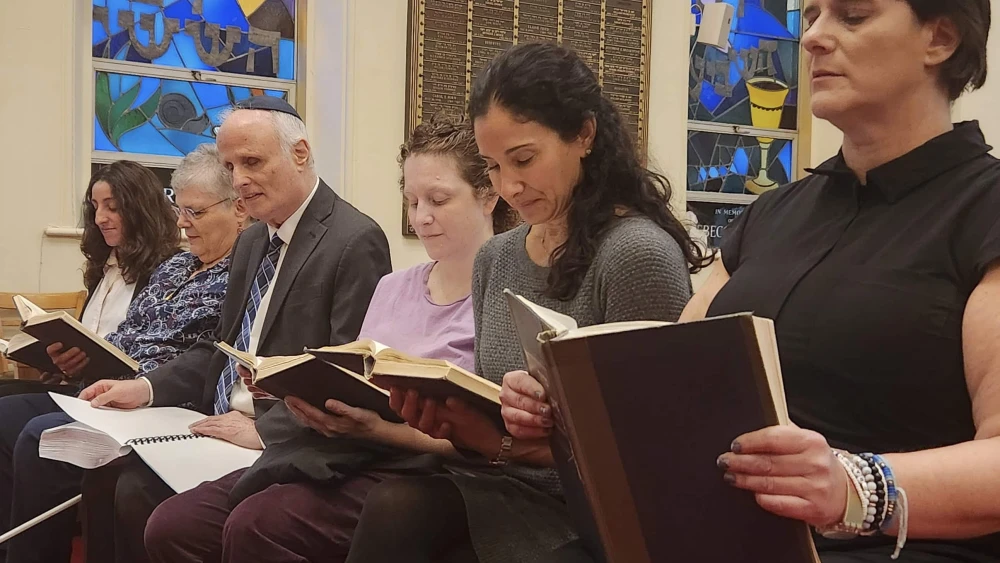
This High Holiday season, JBI Library is deepening its commitment to accessibility and connection with an expanded mix of inclusive programming and free materials for people who are blind, have low vision or have a physical disability or reading disability that makes reading a standard book difficult.
In addition to providing large-print, braille and audio prayer books, calendars, and adult and children’s reads, JBI is hosting virtual workshops, accessible book clubs and other interactive programs, including a new three-part series exploring the fall holidays through sound, taste and touch.
“Our goal is simple,” said JBI executive director Michelle Shapiro Abraham, who took the helm earlier this year. “No one should ever feel like Jewish life is out of reach because of a vision or print disability. Whether it’s reading from a large print or braille prayer book, listening to an inspiring audiobook, or joining a thought-provoking discussion from home, we’re making it possible for everyone to take part in Jewish life in a way that is personally meaningful.”
A new program this year is called “Sensing the High Holy Days,” which series joins JBI’s other ongoing programs, including accessible book clubs in English and Russian. It will take place virtually on Zoom at 5:30 p.m. Eastern Daylight Time, on Sept. 2 (Elul: Sound: Shofar, Awakening); Sept. 16 (Rosh Hashanah: Taste: Apples, Honey, New Fruit, Gratitude); and Sept. 30 (Sukkot: Touch: Sukkah, Lulav, Etrog: Precarity and Responsibility).
Professor Eve Keller of Fordham University will teach how Jews explore and connect with the holidays using their senses. The focus will be on objects central to the celebration. Participants will be invited to bring a treasured object, memory or melody to enhance discussions, as well as share meaning and connection. They will delve into rich themes, progressing from renewal and forgiveness to freedom and, finally, joy.
To register or learn more about JBI Library’s programming for the High Holy Days and beyond, contact https://jbilibrary.org/programs-events or at our direct library line, 212-545-8025.
Free materials
For patrons who are blind, have low vision or are print-disabled, JBI continues to offer free High Holiday audio, large print, and braille materials, including children’s and adult holiday-themed books, Machzorim (prayer books), as well as Selichot and Yahrzeit prayers, and JBI’s Jewish reference calendars. To ensure arrival by Rosh Hashanah, materials should be ordered by Aug. 25 for organizations and by Sept. 8 for individuals.
Browse more at https://jbilibrary.org/our-library/high-holy-day-materials or request by emailing library@jbilibrary.org.