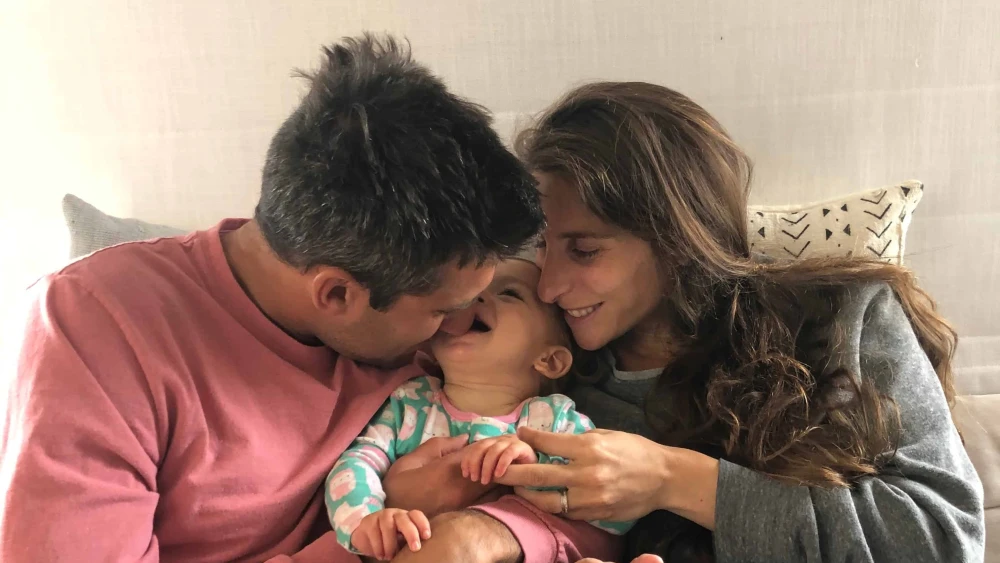
In recognition of Jewish American Heritage Month, the national public health initiative jscreen is celebrating the legacy, cultural richness and collective resilience of the Jewish American community. The history of Jewish Americans continues to evolve, as are the tools through which the community can continue to grow and prosper. Among the most powerful of these is genetic testing, an innovation that can save lives and protect future generations.
For decades, the Jewish community, particularly those of Ashkenazi descent, has been a proactive leader in genetic disease awareness, prevention and education. By championing early carrier screening for conditions like Tay-Sachs, Canavan and cystic fibrosis, the community has significantly reduced the incidence of these disorders. Founded with the mission of identifying and combating these preventable diseases within the Jewish community, jscreen has evolved into a national non-profit public health initiative dedicated to preventing genetic diseases. The jscreen program provides convenient at-home access to advanced genetic testing technology, patient education and genetic counseling services.
Approximately 80% of individuals with Jewish ancestry carry at least one recessive genetic variation. When paired with another individual who carries the same recessive gene, this opens up the potential for future generations to be born with life-threatening diseases. Today, the organization works tirelessly to reduce the incidence of devastating inherited disorders through education and screening.
That mission is deeply personal for the CEO of jscreen, Dr. Matt Goldstein, who lost his daughter Havi to Tay-Sachs disease. His experience underscores both the urgency and the potential of genetic screening—while previous generations may not have had access to timely testing, families today have the opportunity to make informed choices during the family planning process.
“Jewish American Heritage Month allows us to reflect on where those of us with Jewish ancestry come from, as well as how we care for one another,” said Goldstein, CEO of jscreen. “Genetic screening is one of the most meaningful ways we can honor that responsibility. It empowers individuals with knowledge, protects families and helps ensure that fewer children are born with preventable genetic conditions.”
jscreen currently offers affordable, at-home genetic testing for more than 260 genetic conditions. With the help of licensed genetic counselors, jscreen provides individuals and couples with clear, actionable insights into their genetic risks, transforming a once-rare tool into a simple, affordable and widely available resource.

“Jewish history is, in many ways, a story of survival and responsibility across generations,” Goldstein added. “Genetic testing is an extension of that story, allowing us to turn awareness into action and action into protection.”
jscreen’s mission is also deeply personal to its Director of Education and Outreach, Shari Ungerleider, who lost her son Evan to Tay-Sachs disease more than 25 years ago. While these tools did not exist on the same scale back then, today they hold the power to change lives.
“For my family and others like it in our community, this is anything but abstract,” said Ungerleider. “I’ve seen firsthand the impact these diseases can have, but I’ve also seen what’s possible when people are informed. Jewish American Heritage Month is a reminder that we have both the knowledge and the tools to prevent unnecessary loss.”
While Tay-Sachs disease remains one of the most widely recognized genetic conditions affecting individuals of Ashkenazi Jewish descent, it is only one of many. Advances in genetic science have identified a broader range of inherited conditions that may be more prevalent within Jewish populations. jscreen’s comprehensive screening reflects this evolving understanding, offering expanded hereditary cancer tests and reproductive carrier screenings that address the diverse genetic risks present within the community today.
As part of Jewish American Heritage Month, jscreen is encouraging Jewish individuals and families to take a proactive approach to their health by learning about their genetic risks and considering screening as a routine step in family planning. By honoring the past and embracing the tools of the present, jscreen continues to advance a future where preventable genetic diseases are no longer part of any family’s story.
“Jewish health is deeply connected to Jewish continuity,” said Goldstein. “Our ability to thrive as a community depends on how we care for ourselves and for one another. It means choosing knowledge over fear and taking proactive steps to protect future generations. That’s the work of jscreen: empowering individuals with preventive healthcare, guidance and the ability to make informed choices.”
Through its work each day, jscreen helps translate these values into action—supporting healthier families and a stronger, more resilient Jewish future.
For more information or to order a test, visit: www.jscreen.org.