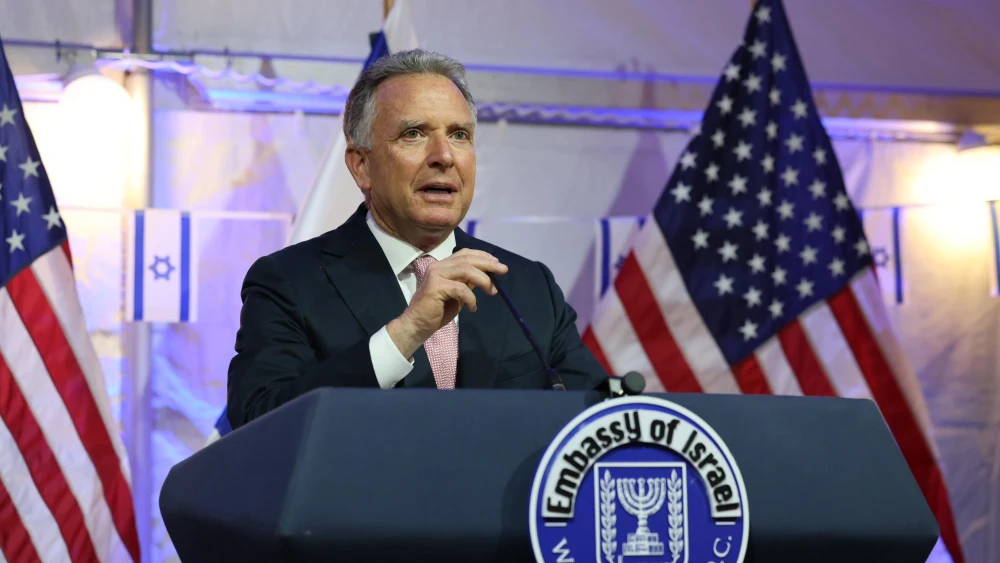
U.S. special envoy to the Middle East Steve Witkoff on Tuesday accused Iran of being “more disingenuous” than its proxy Hamas and of deliberately prevaricating during weeks of negotiations prior to the American and Israeli attack over the weekend.
“The Iranians were pretending to negotiate but were obfuscating the whole time,” Witkoff said in an interview on “The Mark Levin Show.”
The top Trump negotiator who led the high-stakes nuclear talks with Iran noted that prior to the strikes, the Islamic Republic had enough enriched uranium to make 11 nuclear bombs within 10 days.
He said the Iranians took “maximalist” positions, notifying him and Jared Kushner, the president’s son-in-law who is also serving as an envoy, that they had an “inalienable right” to their large stockpile of enriched material, and would not give up at the negotiating table what the Americans did not win in the 12-day war last June.
It is sad day indeed when a news-breaking interview with Steve Witkoff, where he lays out in detail for nearly 40 minutes, the shocking information and events that occurred during the three meetings with the Iranian regime's negotiators, and not a single so-called major news…
— Mark R. Levin (@marklevinshow) March 4, 2026
In the interview, Trump’s special envoy added that the Iranians were “the most disingenuous” of any people he had ever negotiated with, noting that “even Hamas was more reasonable than Iran.”
Beholden to Khamenei, who was subsequently killed in the initial Israeli airstrike on Iran on Saturday, he said that “the negotiators did not have the flexibility or delegated responsibility to make decisions on the spot.”
He said the Iranians sought to disguise their research development program to maintain enrichment flexibility and breakout capacity.
“They were not just hiding what they were doing with enrichment and ballistic assets, but disguising their research development program,” he said.
Witkoff revealed that during the negotiations, the Iranians even refused to hand over a draft paper with their written position.
“How earnest is someone who wants to make a deal and doesn’t want to give you the agreement to read and to share with your decision-making team?” he asked. “The tells were so obvious and just so often.”
After three negotiating sessions, they reported back to Trump: “Mr. President, they are lying to us. There are deceptions all over the place. The facts are unassailable.”