Newsletter
Newsletter Support JNS

Power plant in Isfahan rocked by explosion; plant director blames transformer

At the same time, Iran grapples with the coronavirus, which the Iranian president says has infected 30 percent of the population.

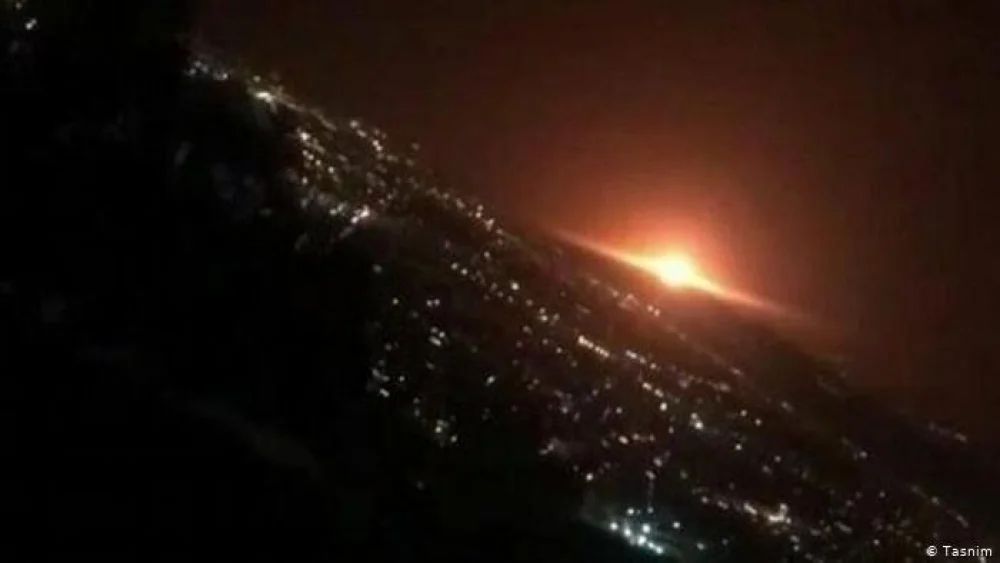
An explosion at the Parchin complex near Tehran on June 26, 2020. Credit: Tasnim News Agency.

A power plant in Iran’s Isfahan province on Sunday became the latest in a string of sites in the country at which mysterious explosions and fires have occurred over the past month, according to Iran’s official IRNA news.

The plant’s managing director told IRNA the explosion had been caused by a worn transformer, according to Reuters.

Separately, Iranian health officials on Sunday tried to soften remarks made on Saturday by Iranian President Hassan Rouhani, who said that around 25 million people in the Islamic Republic had been infected by the coronavirus, according to Reuters. That figure was based on serological tests that indicated whether a person had been exposed to coronavirus based on the presence of antibodies in their blood, the officials said.

“It is not possible to rely on serological tests to diagnose the current state of the disease,” the Iranian Health Ministry said in a statement.

The official number of infections in Iran on Sunday was 273,788, with 14,188 deaths, according to Health Ministry spokeswoman Sima Sadat Lari.

Twenty-three Glock pistols, three Kalashnikov rifles, one M16 rifle and additional weapons were seized.
Two of the operatives were platoon commanders in the PIJ terror group and the other was a deputy company commander in Hamas.
The two nations agreed to hold “a bilateral political dialogue,” Israel’s FM said.
All aerial threats were downed as the waterway remains open for transit, the U.S. Central Command says.
The Mossad reportedly funneled captured terrorist arsenals to Kurdish opposition groups as part of an initiative to destabilize the central government.
“When journalists make these requests, they’re really made on behalf of the public, not to bury the issue and respond 11 months later,” Randy Mastro, a former deputy New York City mayor, told JNS.