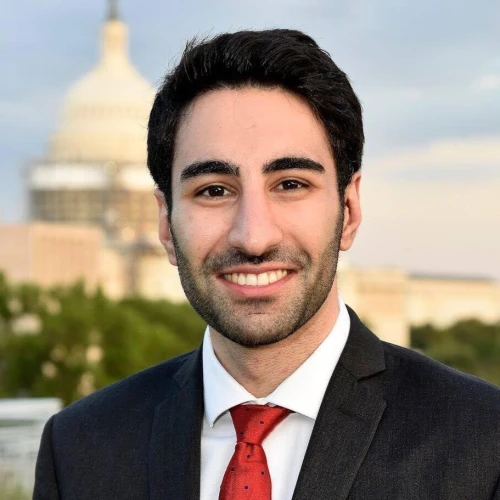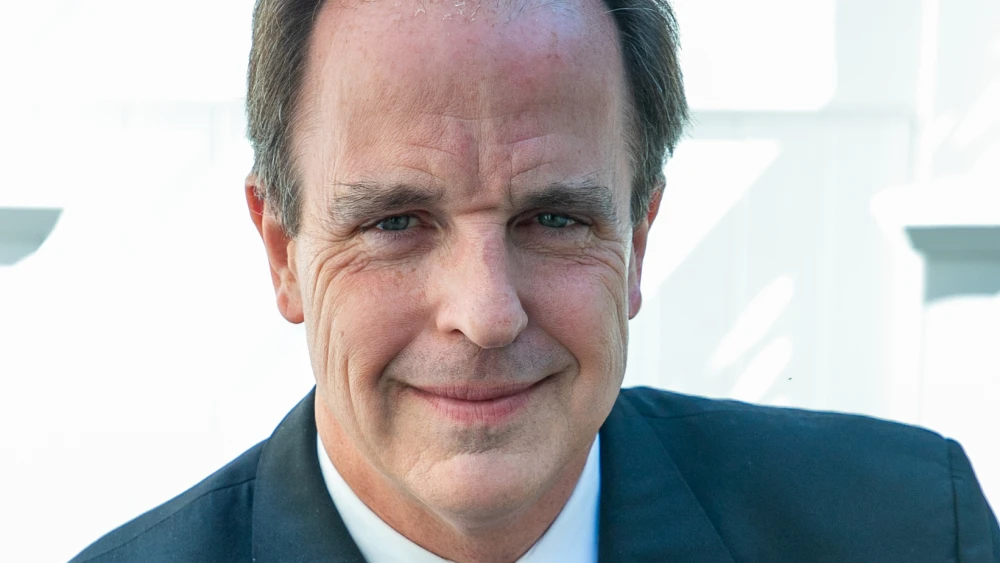
Dean McKay, a psychology professor at Fordham University, and Miri Bar-Halpern, a psychology lecturer at Harvard Medical School, plan to create a program to fight Jew-hatred in their field.
McKay told JNS that the initiative, which the Academic Engagement Network is supporting with a $75,000 grant over three years, will “address issues in professional training that may have antisemitic components to it, which is growing increasingly common in the profession.”
Anti-Zionism is embedded in the “decolonial psychology movement,” which teaches that Zionism is a “settler-colonial” movement and that “Zionism is associated with a lot of other social ills,” according to McKay.
“These all ignore and usually distort, if they do address it at all, what Zionism is actually about, which is, in a nutshell, that Jews have a right to a homeland in their native Israel,” he told JNS.
The movement also “ignores, usually, archaeological evidence showing that Jews have occupied that land in one way or another for millennia,” he said.

“The decolonial approach, we feel, is an applied version of what has been present in academia for many years in some of the non-applied disciplines, and it’s just made this transition now, basically into the therapy room,” McKay told JNS.
The new initiative is intended to “educate people, among our colleagues, to understand what Judaism is, what Zionism is and, of course, of what it isn’t, to dispel some very widely held misconceptions that are present in academia in general as well as in clinical psychology in particular,” McKay said.
“That would serve as the basis for beginning to help dispel this among other trainers in different programs,” he told JNS.
Both McKay and Bar-Halpern have experienced Jew-hatred in their professional circles, according to the Fordham professor.
McKay has dealt with “intimidating rhetoric online,” was “tossed off of a social media network for expressing concerns out of open requests for anti-Zionist therapists” and was subject to a protest outside of a conference he attended in November 2023, where protesters donned keffiyehs and chanted “from the river to the sea,” he said.
His seniority has “shielded” him more from the Jew-hatred, while his colleagues have experienced more severe instances of antisemitism, he thinks.
Bar-Halpern told JNS that among the stories she has heard include a patient telling an Israeli therapist that “Hitler should have finished the job” and that a Jewish patient hoped to talk to her therapist about her friends being murdered on Oct. 7 and her fear of Jew-hatred, but was “met with political whataboutism instead of compassion.”
“Again and again, I heard the same heartbreaking message: ‘I no longer feel safe bringing all of myself into the therapy room,’” she said. “For many Jewish clinicians and patients, the deepest wound was not only antisemitism itself, it was the traumatic invalidation of having their suffering questioned, minimized or erased by the very profession entrusted with helping them heal.”
Bar-Halpern added that “the foundation of trauma-informed care is simple: before we can help people heal, we must first help them feel seen.”
The initiative will start in doctoral programs in New York, Massachusetts and Connecticut.
“We know faculty at many of the programs in those three states, and we’re going to begin by contacting people who we are confident would be receptive to this and train them directly,” McKay said. The two would then “begin the process of spreading the word outward from that.”
“It will all include workshops, it will include both Miri and I speaking publicly to members of those programs, including people that might be more skeptical,” he told JNS.
The next steps will be for the professors involved in the program to “educate their colleagues within their respective programs,” and McKay and Bar-Halpern hope to “disseminate this and implement this more broadly,” McKay said.
“Our aim is, of course, to make it scalable with some recorded materials and also some ongoing direct contact with faculty at other institutions,” he told JNS. “Our hope is that, potentially, this would include other mental health training programs that are not in psychology, so social work and licensed clinical mental health workers.”
“Every mental health discipline is really going through this exact issue,” he added.