Newsletter
Newsletter Support JNS
Yaakov Lappin

Yaakov Lappin

Yaakov Lappin is an Israel-based military affairs correspondent and analyst. He is the in-house analyst at the Miryam Institute; a research associate at the Alma Research and Education Center; and a research associate at the Begin-Sadat Center for Strategic Studies at Bar-Ilan University. He is a frequent guest commentator on international television news networks, including Sky News and i24 News. Lappin is the author of Virtual Caliphate: Exposing the Islamist State on the Internet. Follow him at: www.patreon.com/yaakovlappin.


Despite significant degradation, Israeli observers warn that Hezbollah retains the capability for localized cross-border raids.
Mon4t’s technology makes use of a smartphone’s built-in sensors, such as its accelerometer, gyroscope, touch screen, microphone and GPS to closely monitor brain conditions from the comfort of a patient’s home, says Ziv Yekutieli, co-founder and CEO of Mon4t.
Senior terrorism researcher Michael Barak warns that the West is not doing enough to deradicalize “the next generation of jihad” growing up in Syrian camps. He also notes that the location of Abu Ibrahim Qurayshi raises more questions than answers.
“Lebanon has been out of the economic waters game for a long time. The Syrians have ‘taken a bite’ from gas reserves to the north—and the maritime border between Syria and Lebanon has never been finalized,” Maj. (res.) Tal Beeri tells JNS.
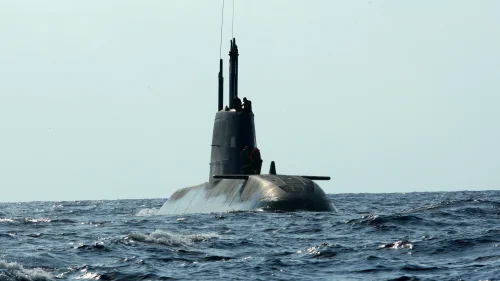
Israeli Defense Minister Benny Gantz said the new vessels “will upgrade the capabilities of the navy and contribute to Israel’s security superiority in the region,” hinting at their multiple abilities.
According to Col. (res.) David Hacham, a longtime adviser on Arab affairs, Cairo has been able to delay an ultimatum that would have expired at the end of December.
Riyadh’s economic, political and military capabilities mean that its entry into a normalization agreement with Israel would be a regional game-changer.
Former defense officials say the development is an indication of Moscow’s desire to back the sovereignty of Syrian President Bashar Assad and that this may not be good news for Iran; the messaging could also be relevant for current Russian-American tensions regarding Ukraine.
Professor Rear. Admiral (Ret.) Shaul Chorev says Israel needs a more thought-out strategy when it comes to dealing with the Iranian threat at sea, as well as combat that has become “increasingly asymmetric.”