Newsletter
Newsletter Support JNS
Yaakov Lappin

Yaakov Lappin

Yaakov Lappin is an Israel-based military affairs correspondent and analyst. He is the in-house analyst at the Miryam Institute; a research associate at the Alma Research and Education Center; and a research associate at the Begin-Sadat Center for Strategic Studies at Bar-Ilan University. He is a frequent guest commentator on international television news networks, including Sky News and i24 News. Lappin is the author of Virtual Caliphate: Exposing the Islamist State on the Internet. Follow him at: www.patreon.com/yaakovlappin.

Terrorism threatens both Israeli and Palestinian civilians. The coming weeks will see whether Israel and the Palestinian Authority will be able to contain an escalating situation and roll back the violence, or whether the region will slide into a new and dangerous phase.
Seventy years later, Israeli army combat officers have been meeting with veterans of the nation’s first war in 1948, who are telling their stories to the soldiers of 2018.
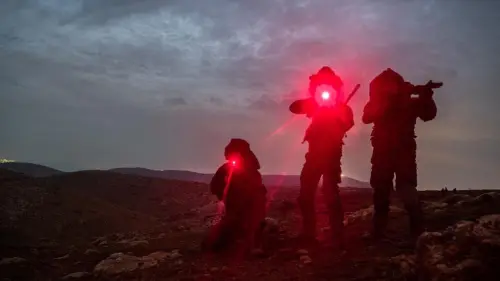
They will be equipped with their own arsenal of high-tech weaponry and can be expected to receive missions to attack the most sensitive enemy targets.
Hezbollah’s special forces, combined with Iraqi Shi’ite militias, were supposed to infiltrate Israel, traveling through the tunnels along various routes on the Israeli-Lebanese border, from the Mediterranean Sea to Mount Dov.
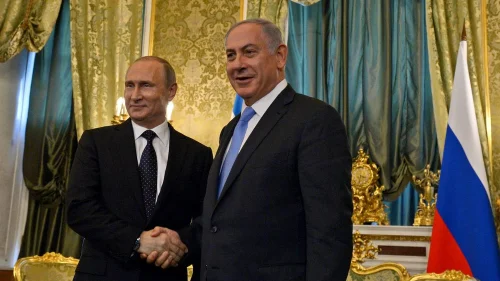
It remains unclear whether Russia is willing or able to apply effective pressure on Iran to scale back its military infrastructure construction in Syria, which can later be used to attack Israel.
Hezbollah seems to have interpreted recent developments as a signal of Israel’s determination to enforce its red lines, raising the organization’s concern over what may come next.
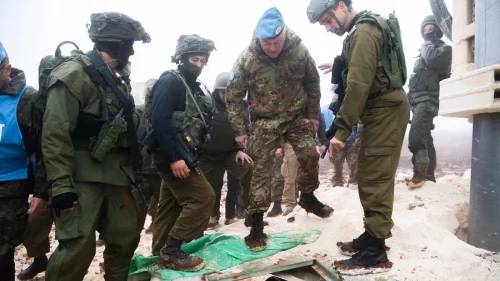
The exercise, dubbed “Sky Angels,” attracted air-force search-and-rescue teams from the United States, Canada, Croatia, Italy, Holland and the Czech Republic.
The Meitav Unit is primarily focused on the massive task of recruitment, reception and sorting of Israeli IDF cadets, said Lt.-Col. Tzachi Revivo.
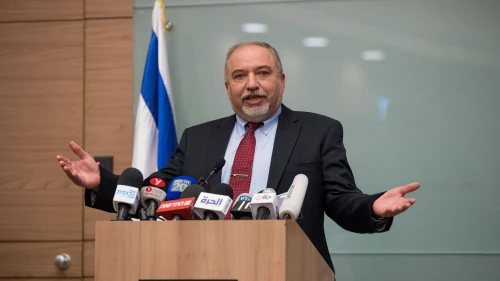
Benny Miller, professor of international relations at the University of Haifa, said “this is a classic case of tension between the view of the professional security chiefs, supported by the prime minister, and public sentiments, supported by the defense minister, following a bombing of civilian population by a hostile force.”
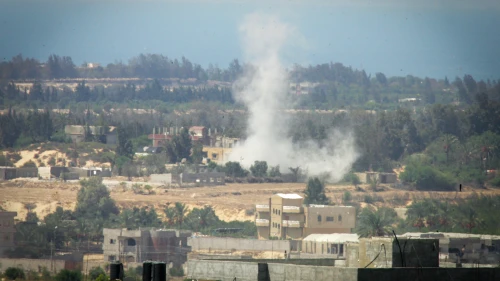
For now, the threat from Gaza in the south is less of a force to be reckoned with, as political and military eyes are focused on burgeoning threat from Iran and Hezbollah up north.
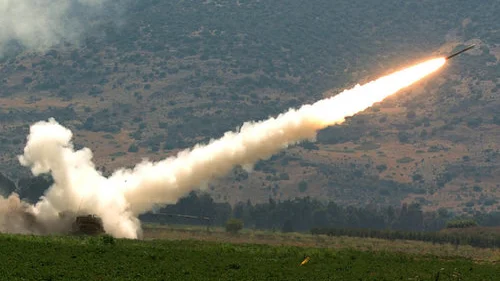
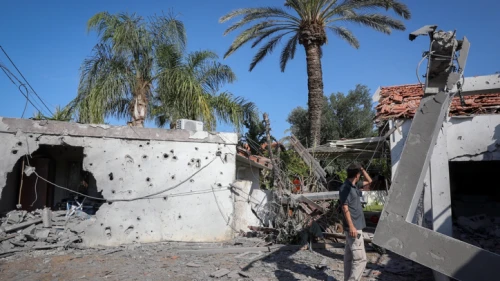
In what they perceive as a calculated risk, terror factions launch a widespread rocket and mortar assault aimed at civilians.
The Israeli Air Force struck nearly 100 targets in Gaza in retaliation. The attack was something that both Iran and the PIJ leadership at its Damascus headquarters wanted, Israeli officials said.