Newsletter
Newsletter Support JNS
Yaakov Lappin

Yaakov Lappin

Yaakov Lappin is an Israel-based military affairs correspondent and analyst. He is the in-house analyst at the Miryam Institute; a research associate at the Alma Research and Education Center; and a research associate at the Begin-Sadat Center for Strategic Studies at Bar-Ilan University. He is a frequent guest commentator on international television news networks, including Sky News and i24 News. Lappin is the author of Virtual Caliphate: Exposing the Islamist State on the Internet. Follow him at: www.patreon.com/yaakovlappin.

Hamas is not the only entity trying to set things on fire. Iran and its proxies, such as Palestinian Islamic Jihad and Hezbollah, have sought to infiltrate the West Bank and create armed cells there.
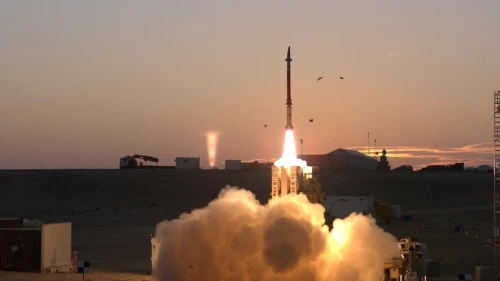
Crews sprang into action, intercepting mortar shells headed to Israel’s southern areas to save lives, many of them putting their training into practice for the first time in their military service.
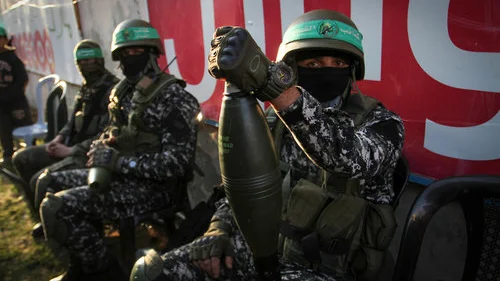
It launched a large-scale mortar-shell attack two days after losing three of its armed members to an Israeli airstrike in response to a gun attack on an IDF unit patrolling the Gazan border. Is Palestinian Islamic Jihad responding to the killing of its operatives or acting under Iranian instructions?
The Kerem Shalom crossing was attacked by mobs three times this past month acting under instructions by Hamas. According to Israeli intelligence assessments, these actions are part of a wider effort by Hamas to ramp up the pressure on Israel and the international community to get them fresh funds for the collapsing Palestinian economy.
“The risks are all around us—whether it is instability in Syria or in Lebanon, where Hezbollah is a forward [Iranian] division, or Hamas, which gets its support from Iran. Iran is all over, offensively trying to operate against Israel, and we have to weigh and asses the risks constantly as we operate against this aggression,” a senior IDF source said.
While Israel Defense Forces’ soldiers sit in armored vehicles able to withstand projectile fire, civilians in towns and cities throughout the Jewish state are exposed to enemy fire, senior ex-commander says
“This is the forefront of technology. These abilities give us superiority and real operational advantages,” said Maj. Liad Kalvo, Technology and Maintenance Officer in the Nahal infantry brigade’s 50th Battalion.
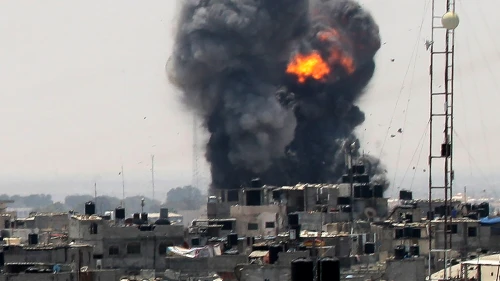
The escalating tensions along the Israel-Gaza border, which have led to the largest number of Palestinian deaths since the 2014 “Operation Protective Edge,” is not a show of strength by Hamas, but a desperate move by a terror organization with dwindling options.
Iran tried to force Israel to accept its presence in Syria, and the effort failed. It ended up losing more than 50 military targets, and Israel’s message to Tehran—to exit Syria immediately—received a powerful boost.
It’s risky, to be sure, but optimism lingers. “An arrangement will discernably minimize our control of Palestinians [and] decrease hostility, and suitable security arrangements can be made,” Yoram Cohen told participants at the Annual Herzliya Conference.
Providing an alternative view to PM Benjamin Netanyahu’s support for America’s withdrawal from the Iran nuclear deal, Maj.-Gen. (Res.) Amos Gilead says at the annual Herzliya Conference. “In Israel, we supported the cancellation of the deal, and everyone is satisfied. Why are we satisfied? What are the options?”
The secretive and sensitive Unit 9900, which specializes in visual intelligence and plays an essential role in the activities of the Israel Defense Forces, has received some 100 autistic volunteer soldiers so far.