


Benjamin Netanyahu

In an interview with Israel Hayom, Education Minister Naftali Bennett explains why he withdrew his demand to be made defense minister • According to game theory, the first one to blink loses.
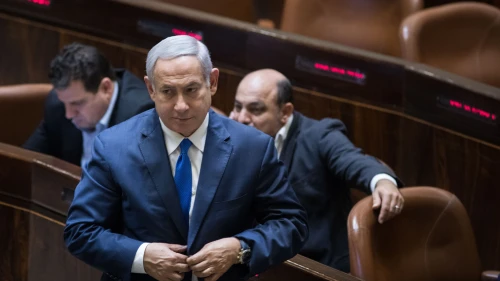
Early elections remain a likely scenario if Israeli Prime Minister Benjamin Netanyahu fails to stabilize his now-narrow coalition, following the resignation of Defense Minister Avigdor Lieberman and a threat by Education Minister Naftali Bennett to bring down the government if he didn’t receive the vacant defense post.

Israeli Prime Minister Benjamin Netanyahu rejected Education Minister Naftali Bennett’s demand and appointed himself defense minister, thereby nearly guaranteeing Likud a bump in the polls in the next elections, scheduled for November 2019.
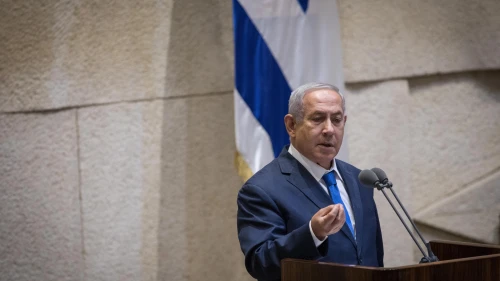
After Defense Minister Avigdor Lieberman’s resignation sparks a potential political crisis, Israeli Prime Minister Benjamin Netanyahu names himself defense minister and explains that early elections would be unwise at this time, given the complex security threats facing Israel.
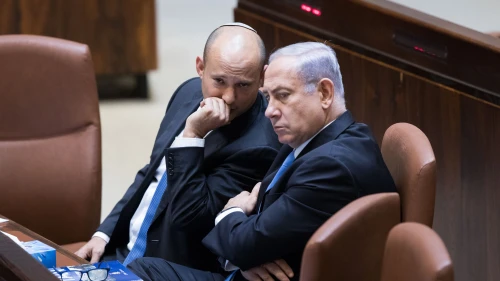
The threat of early elections is seemingly lifted as Habayit Hayehudi leader Naftali Bennett pulls his demand to be named defense minister and says he will stand by Israeli Prime Minister Benjamin Netanyahu.
Ongoing speculation revolves around the Jewish Home Party, headed by Education Minister Naftali Bennett, leaving the governing coalition.
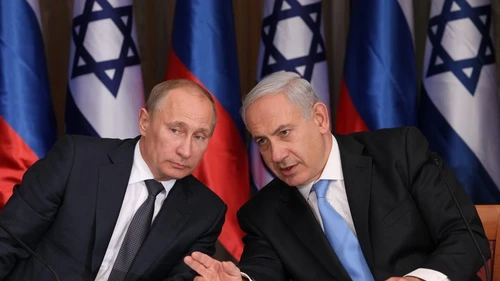
Israeli Prime Minister Benjamin Netanyahu said that the “conversation was very good and to the point; I would say it was very important.”

“[It] is littered with new stuff about the Iranian nuclear-weapons program,” said Institute for Science and International Security president David Albright. “It’s unbelievable how much is in there.”

Hours after Defense Minister Avigdor Lieberman announces his resignation, Israeli Prime Minister Benjamin Netanyahu begins intense talks to ensure government stability.

“I hear what is being said,” noted the prime minister, “and I can’t share [the information] with the public. I wish I could tell citizens everything I know.”
His move to pull his six-member Yisrael Beytenu Party out of the government leaves Israel Prime Minister Benjamin Netanyahu with the slimmest of ruling majorities, with a coalition of only 61 members out of 120.
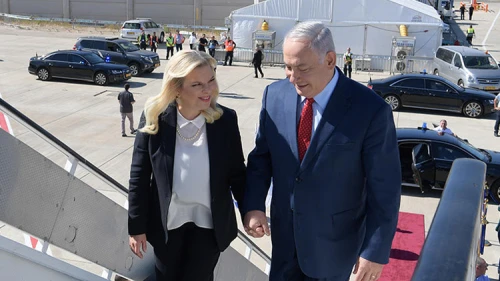
Israel Prime Minister Benjamin Netanyahu said that while sitting at the top table with heads of European states in Paris, he made it clear how important it is for them to connect and have strong ties with Israel—in the political, economic, technological and security arenas.



