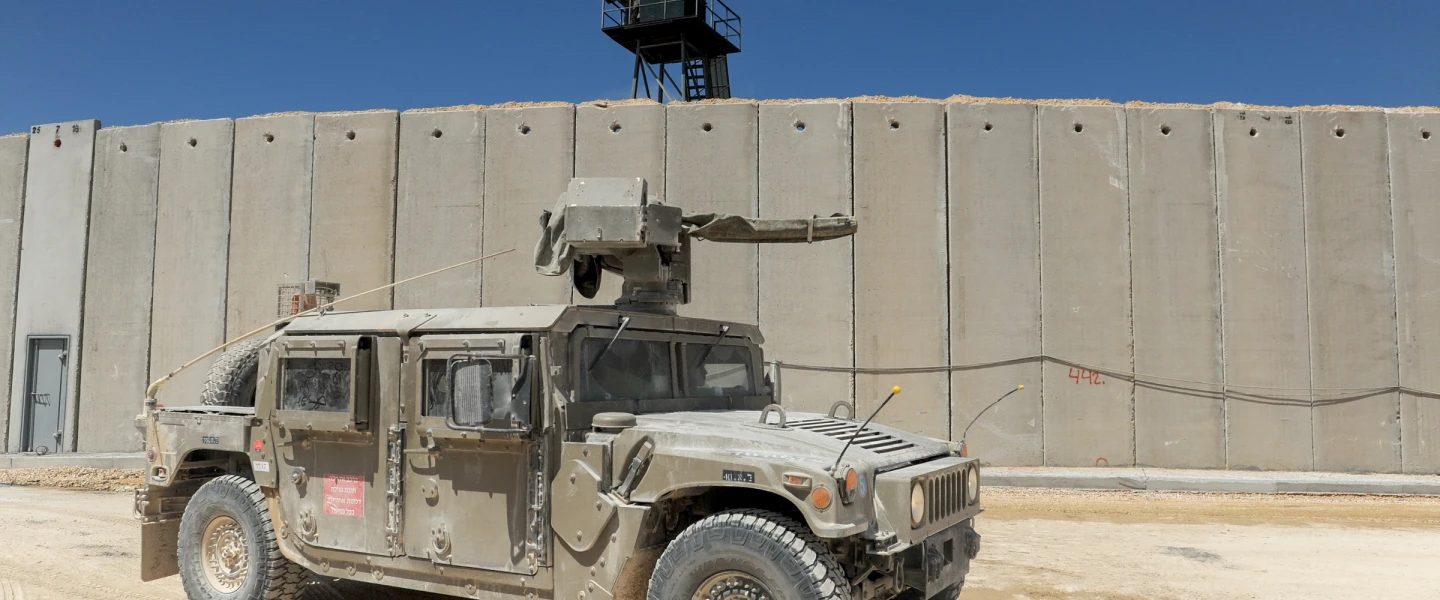
Residents of Kibbutz Rosh Hanikra in the Upper Galilee have been living for months with a constant sense of danger, even after a ceasefire was declared with Hezbollah.
A drone that recently exploded in the parking lot of the kibbutz’s tourist site, wounding four civilians, has only reinforced residents’ feelings that there is no real “ceasefire.” Some are torn between the desire to remain in their “dream home” and leaving for somewhere quieter.
Eli Ben-David, a kibbutz resident, described daily life there. “We hear explosions and interceptions. This morning, there were at least two launches toward Lebanon [for defense]. But every time those interceptors are fired, it feels as if a fighter jet is flying right over your house.”
Despite Hezbollah fire, there has been no change in IDF Home Front Command directives, although specific events, such as Shavuot celebrations, have been canceled. “Officially, there is some kind of ceasefire. However, a drone hit at our tourist site. We live with the feeling that we are in a very dangerous area right now,” said Ben-David
He stressed that residents were still trying to maintain a daily routine. “Whoever must go to work goes. Whoever must drive children to school drives them. With all kinds of fears, of course, because there could be a[n air raid] siren on the way.
“We need to receive security from our state so that we can conduct our lives. My wife calls it ‘Operation Ceasefire,’ because every few weeks they extend it, he added.
Amit Barzilai, a mother of three, driving instructor and kibbutz member, returned to Rosh Hanikra after the start of the first Iran war last June. She said she and her family built their “dream home” there, with a view of the sea and the lookout point. However, on the road to her children’s school, there is not even a roadside bomb shelter.
“There is no ceasefire,” she said. “There is stress when the children get on the bus to school. The state did not shut down my business. They said, ‘You can keep working as usual,’ but it is not simple. I am responsible for other students too, and there is fear for the children, that if a siren happens to go off and there are no protected spaces here in the area, they must lie flat on the side of the road.”
Barzilai described the moment the UAV exploded. “The boom was paralyzing. I jumped out of bed with no warning. It is impossible to live like this.”
Worse than the missiles
She added that the interceptions overhead were even more frightening. “Those interceptors are even worse than the missiles. They also fall and scatter without any warning.”
Barzilai, whose husband is a member of the local rapid response squad, expressed constant fear for her children. “The boys are always at basketball practices; my daughter is in artistic gymnastics. I am constantly driving them around. What mother should have to worry all the time that things will fall on them from the sky?
“Our tourist site is constantly defined right now as green, because if they declare any other color, it will cost the state money.
“Enough with the normalization of drones. Every time there is a siren or a missile, this cannot continue. If it continues like this, people will simply leave. My friends and I will simply leave in the end, and that would be a shame. You cannot live like this with children, worrying all the time, being anxious all the time,” she said.
“It hurts me to see our soldiers risking their lives like sitting ducks,” she added.
Barzilai called on the decision-makers not to forget the north. “People don’t come near here.”
T., who formerly held a security role in the kibbutz, echoed the remarks and stressed that there was no real ceasefire at all. “Right now, this is a battlefield. We are trying to maintain civilian life inside a military operation. There are only drones and drones here. There is gunfire and explosions. Hezbollah does not recognize this agreement, and it is still firing here all the time.”
There had been five air-raid sirens in the area since morning. He said the situation required a clear decision. “I don’t see a scenario in which this changes. I think we need to go to all-out war. That is not happening, and there is no other choice.”
T. has two daughters. “Every day when you put them in kindergarten, you worry. The kindergarten is still under construction. There are only walls and no safe room. There is a bomb shelter far away, but you can’t reach it in time.”
Originally published by Israel Hayom.