Hassan Nasrallah

The drone attack served as a “deterrent” that tilted negotiations over the maritime border in Lebanon’s favor, says Michel Aoun.

Hezbollah chief Hasan Nasrallah voiced approval for the prospective agreement, saying, “We all know that that the enemy fears war more than the Lebanese do.”

Netanyahu: Pressure from Israeli opposition forced Lapid to withdraw from maritime deal with Lebanon
“Nasrallah threatened - and Lapid folded,” tweeted opposition leader Benjamin Netanyahu on Thursday.
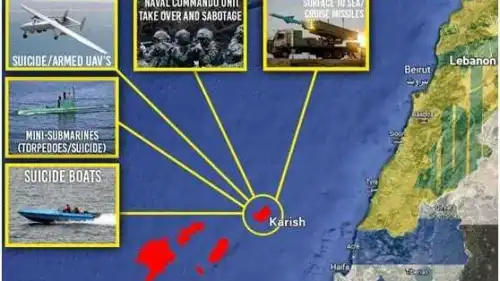
Hezbollah chief, who has threatened war over the border dispute, calls the proposal a “very important step.”
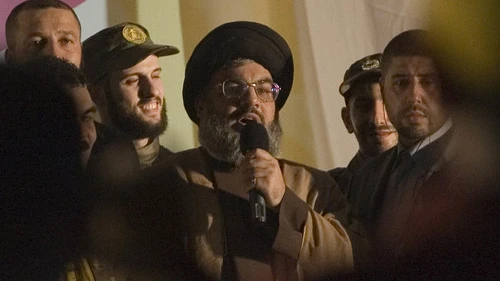
Offshore natural gas a “golden opportunity” for Lebanon, Hezbollah chief says.
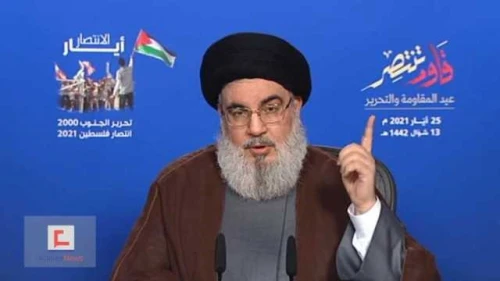
Analysts tell JNS that Jerusalem must take Hassan Nasrallah’s threats seriously, and explore Iran’s role in shaping its Lebanese terror proxy’s aggressive rhetoric and actions.

As tension again spikes between the Iranian-backed proxy and Israel, observers flag key milestones in the evolution of the most heavily armed terror entity, and its leader, Hassan Nasrallah.

Hezbollah is losing support in Lebanon, and Nasrallah could choose war “to exit his trap,” according to the document.

The heads of the two terrorist groups discussed the recent fighting with Israeli forces in the Gaza Strip in early August.
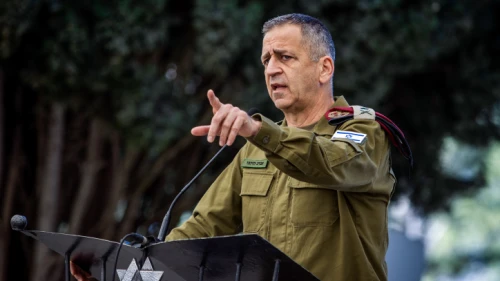
IDF Chief of Staff Lt. Gen. Aviv Kochavi was reportedly among senior officials warning that extracting gas from the Karish field in the absence of a resolution could prompt the Iranian terrorist proxy to launch a days-long military exchange.

Amos Hochstein’s trip comes just days after media cited Israeli officials as saying that the longstanding border dispute was “on the verge of a solution.”
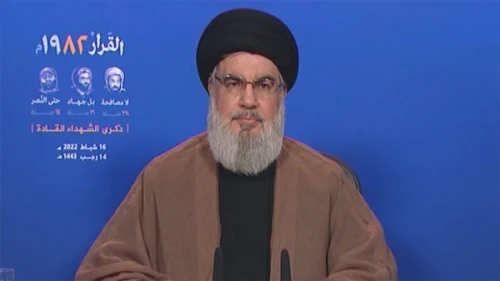
“No Israeli target at sea or on land is out of the reach of the resistance’s precision missiles,” said the Hezbollah chief.