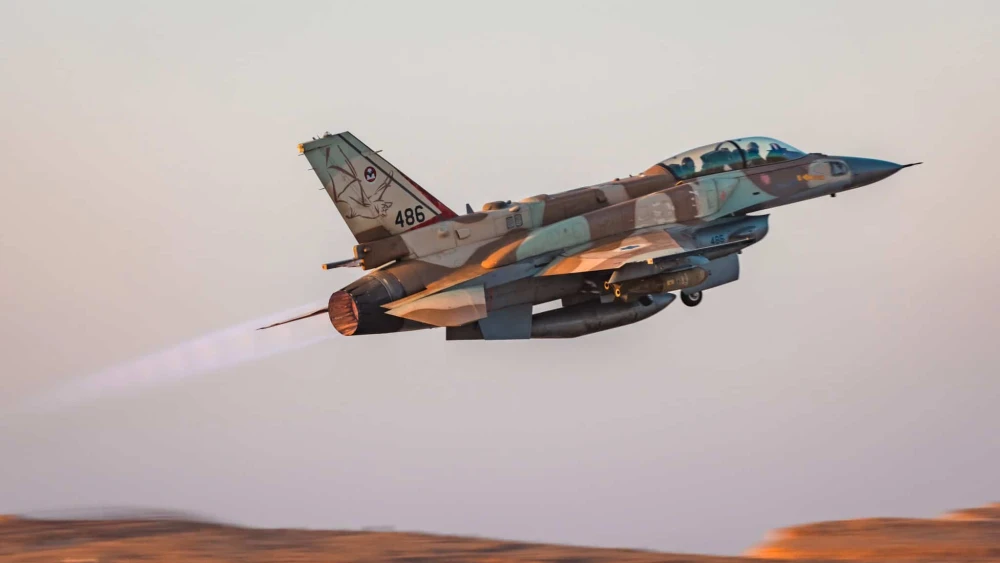
The Israel Defense Forces on Thursday struck Hezbollah rocket launchers in Southern Lebanon and underground infrastructure belonging to the Iranian proxy in the Beqaa area in the Land of the Cedars.
“The IDF will continue to operate to remove any threat to the State of Israel and prevent any attempt by the Hezbollah terrorist organization to rebuild its forces,” according to the military.
On Sunday, the IDF struck a command-and-control center in Southern Lebanon used by Hezbollah’s Radwan Force.
The presence of such terrorist infrastructure “constitutes a blatant violation of the understandings between Israel and Lebanon,” said the army.
Earlier on Sunday, the IDF confirmed that a parked vehicle near Moshav Avivim in northern Israel had been hit by gunfire likely from Lebanon. No injuries were reported.
Last Friday, Defense Minister Israel Katz confirmed that IDF troops will remain at five strategic outposts in Southern Lebanon “indefinitely.”
The five outposts are located at a hill near Labbouneh, opposite the Israeli border town of Shlomi; on the Jabal Blat peak, opposite Moshav Zar’it; on a hill opposite Moshav Avivim and Kibbutz Malkia; on a hill opposite Moshav Margaliot; and on a hill opposite the town of Metula.
Days earlier, Israel and Lebanon initiated negotiations toward settling the border disputes between the countries. Representatives of the IDF, the United States, France and Lebanon agreed during a meeting in Naqoura in Southern Lebanon to establish three joint working groups aimed at stabilizing the region.