Newsletter
Newsletter Support JNS

Indian Air Force to buy SPICE bombs from Israeli defense contractor Rafael

The system is used by the Israel Air Force, where it is nicknamed “steel hailstones.”

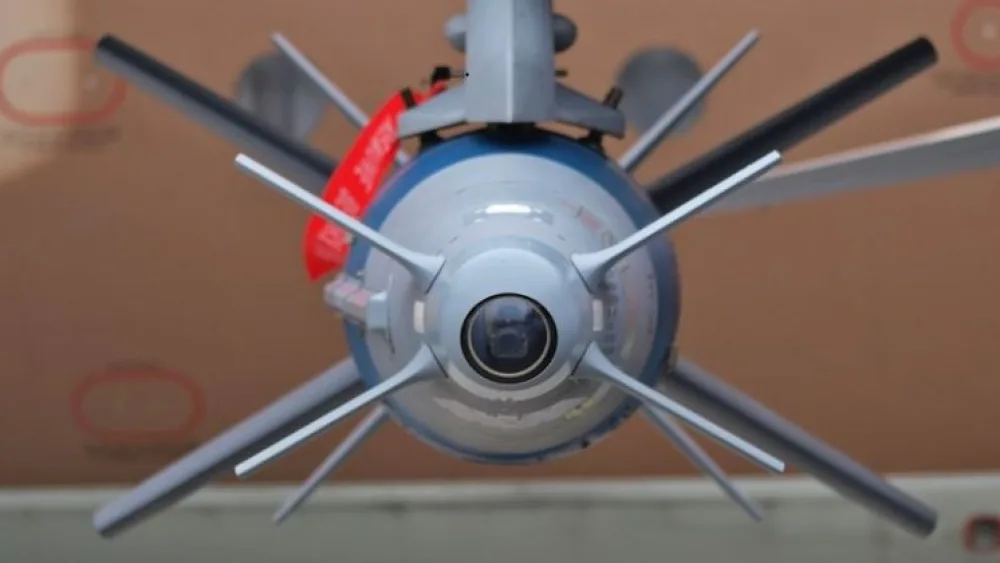
A Rafael Advanced Defense Systems-made SPICE bomb. Credit: Wikimedia Commons.

The Indian Air Force has signed a deal with Israel’s Rafael Advanced Defense Systems to procure some 200 advanced SPICE 2000 bombs for some $30 million, Indian media reported on Monday.

“SPICE,” which stands for “smart, precise impact, cost-effective,” is an Israeli electro-optic and GPS kit for converting unguided munitions into precision-guided ones.

Designed for air-to-ground missiles weighing 900 kilograms, it is considered especially advanced. The system is used by the Israel Air Force, where it is nicknamed “steel hailstones.”

The Indian Air Force has used SPICE bombs in counter-terrorism operations in Pakistan as recently as Feb. 26.

According to local media reports, the deal was classified as an “emergency procurement,” placed under the special financial powers given to the military by the Indian government.

Rafael is expected to supply India with the bombs within the next three months.

In 2014, the Indian Air Force brought a large number of SPICE bombs for about $100 million.

This article first appeared in Israel Hayom.

Sen. Jeanne Shaheen discussed lifting remaining U.S. sanctions on Syria, implementing an agreement with the Syrian Democratic Forces and removing Syria from the U.S. list of state sponsors of terrorism.
The report concluded that leading chatbots frequently failed to recognize antisemitic tropes in Persian and called on developers to improve the accuracy and quality of multilingual responses.
The Radwan Force is Hezbollah’s commando unit that specializes in cross-border infiltration operations.
A state report finding Jews were targets of three-quarters of hate crimes in California in 2025 “should be a gut-check for our entire society,” Nathan Hochman told JNS.
The Israeli military would have “no contact” with civilians and “no role” in separating the zones from the rest of Gaza, a source tells JNS.
“They just couldn’t figure out how to represent 11% of the city,” stated the writer Avital Chizik-Goldschmidt.