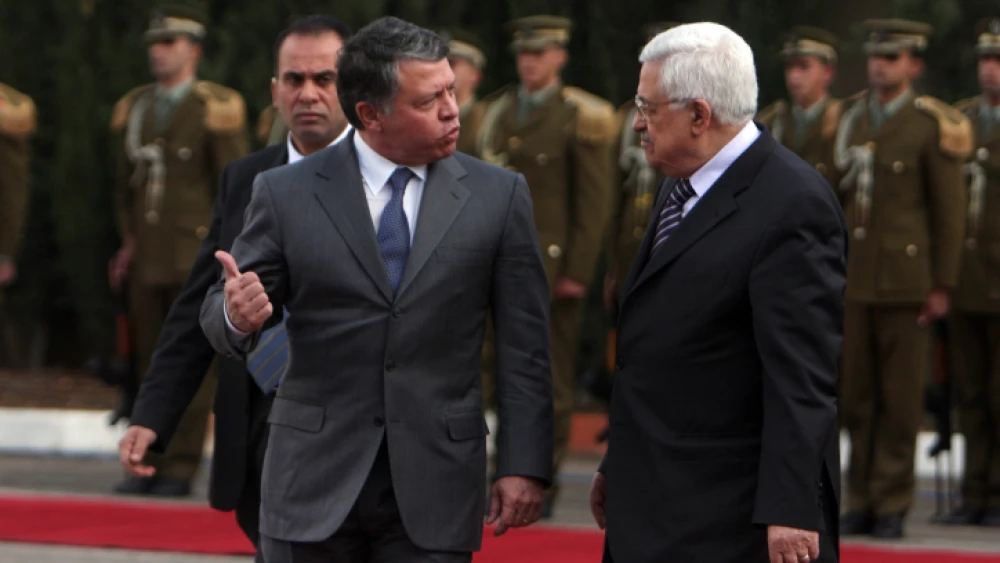
The Trump administration dismissed on Sunday Palestinian Authority President Mahmoud Abbas’ recent claim that U.S. peacemakers had proposed a confederation comprising the Palestinian Authority and Jordan as part of much-touted efforts to mediate a peace agreement between Israel and the Palestinians.
During a meeting with Israeli lawmakers MK Mossi Raz (Meretz) and Ksenia Svetlova (Zionist Union) and left-wing activists, Abbas said Trump administration officials raised the idea of establishing a Jordanian-Palestinian confederation as the basis for a regional peace plan with Israel.
“President Donald Trump’s envoys – his son-in-law Jared Kushner and [Special Representative for International Negotiations] Jason Greenblatt – asked me if I would be in favor of a confederation with Jordan, and I responded that would support this only if it included Israel as well,” Abbas said.
Abbas accused the Israeli government of being “rejectionist when it comes to resuming the peace process and returning to the negotiating table.”
Abbas also said he “met with Trump four times, and he said he was in favor of the two-state solution, but my problem is with [Israeli Prime Minister Benjamin] Netanyahu, not the Likud and not with the Jews.”
In response to Abbas’ claims, Greenblatt said: "Over the past 19 months, we have probed all relevant parties about many ideas and possibilities. The plan, when it is released, will reflect ideas that we think are realistic, fair and implementable that will enhance the lives of the Israeli and Palestinian people. We will not discuss any specific ideas or private conversations that may or may not have been had with leaders in the region.”
Jordan also rejected the idea. Jordanian government spokeswoman Jumana Ghuneimat said Sunday that the matter “is not open for discussion,” stressing that the kingdom was in favor of a two-state solution that would be negotiated between Israel and the Palestinians.
Abbas said he occasionally meets with Israeli Shin Bet security agency chief Nadav Argaman, noting that “we and the Israelis are in total agreement on 99% of the issues.”