Newsletter
Newsletter Support JNS

IRGC commander killed in ‘Israeli-US’ attack on Iraqi base

According to Iranian media, a senior Quds Force commander was killed when a missile fuel-storage facility exploded during a July 19 strike on an Iraqi military base.

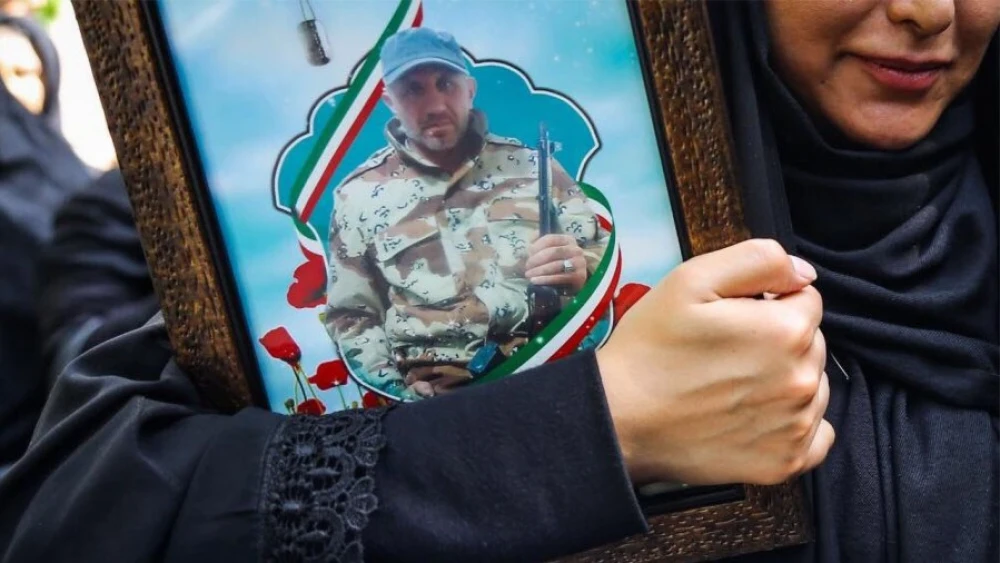
A photograph of Iranian Islamic Revolutionary Guard Corps officer Abu Alfazl Sarabian is displayed at a funeral service in Tehran before Sarabian’s body was returned for burial in his hometown of Kermanshah. Source: Iranian Press.

A senior commander of Iran’s Quds Force, Abu Alfazl Sarabian, was killed in Iraq in an attack by “Israel and the United States” on July 19, according to Iran’s Young Journalists Club news agency. A funeral service was held in Tehran before Sarabian’s body was returned for burial in his hometown of Kermanshah.

The attack targeted the Iraqi Popular Mobilization Force (Hashd al-Shaab) in Armeli in the Salah a-Din governorate of Iraq, north of Baghdad. Iraqi sources said Sarabian was killed as a result of an explosion in a storage area for solid fuel for missiles.

The announcement by Iran of the death of an IRGC officer in an “Israeli-American” attack on an Iraqi army base may raise regional tensions.

The attack is part of a campaign Israel is reportedly conducting against Iranian presence in Syria in general and along the Israel-Syria border in particular. Israel is also reportedly targeting Iranian logistical bases in Iraq, away from the front.

Israel is accused of assassinating Mashur Zidan, a senior Hezbollah official, near Damascus on July 27. Zidan, like his former associate (now dead) Samir Kuntar, was tasked with recruiting for and planning attacks along Israel’s border in the Golan Heights.
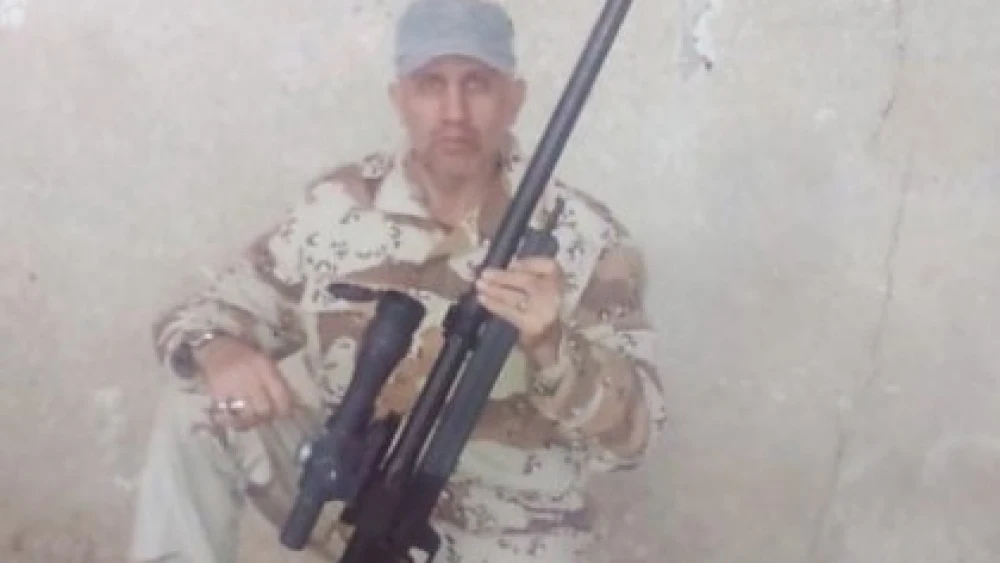
Abu Alfazl Sarabian, pictured holding an Austrian Steyr HS 50 sniper rifle. Iran copied the design, renamed it the Sayyad AM-50 and provided it to Hamas and Islamic Jihad in the Gaza Strip. Syria produces its own version, the Golan S-01. Credit: Iranian Media.
Abu Alfazl Sarabian, pictured holding an Austrian Steyr HS 50 sniper rifle. Iran copied the design, renamed it the Sayyad AM-50, and provided it to Hamas and Islamic Jihad in the Gaza Strip. Syria produces its own version, the Golan S-01. Credit: Iranian media.

Asharq al-Awsat, a pan-Arab publication based in London, quoted unnamed Western diplomatic sources as saying that the July 19 strike was carried out by an Israeli F-35 stealth fighter and “targeted Iranian ‘advisers’ and a ballistic missile shipment that had recently arrived from Iran to Iraq.”

Iran and Hezbollah continue to plan for a possible conflict with Israel that could erupt in the shadow of the crisis between Iran and the United States.

Iran is attempting to find alternative storage sites—Iraq being considered as one of them—for the missiles, rockets and other materiel it transfers to Syria following repeated attacks on its Syrian depots. Now, according to foreign reports, even the infrastructure Iran is attempting to establish in Iraq is vulnerable.

It is not clear how Iran will react to the actions against its interests in Iraq.

This article first appeared on the website of the Jerusalem Center for Public Affairs.

In a report delivered to the U.N. Security Council, the board says the terrorist organization’s refusal to give up its weapons remains “the principal obstacle to full implementation” of the Gaza ceasefire.
“Over time, the members of the Congress, both houses, both parties, are going to understand that this is a cost that is not only affordable but absolutely a necessary investment,” Eric Fingerhut, president and CEO of the Jewish Federations of North America, told JNS.
The U.S. secretary of state cited “overwhelming support” for a U.S.-Bahrain resolution demanding Tehran halt attacks and remove sea mines from the strategic waterway.
“At their core, sanctions are not acts of aggression,” Scott Bessent said at an annual terrorism funding conference. “They are instruments of peace.”
Prosecutors said that he tried to bring a man, who was hiding under luggage in the back of a vehicle, into the United States through a border crossing.
The Philadelphia Police Department said that the suspect entered a child’s bedroom before a neighbor intervened.