


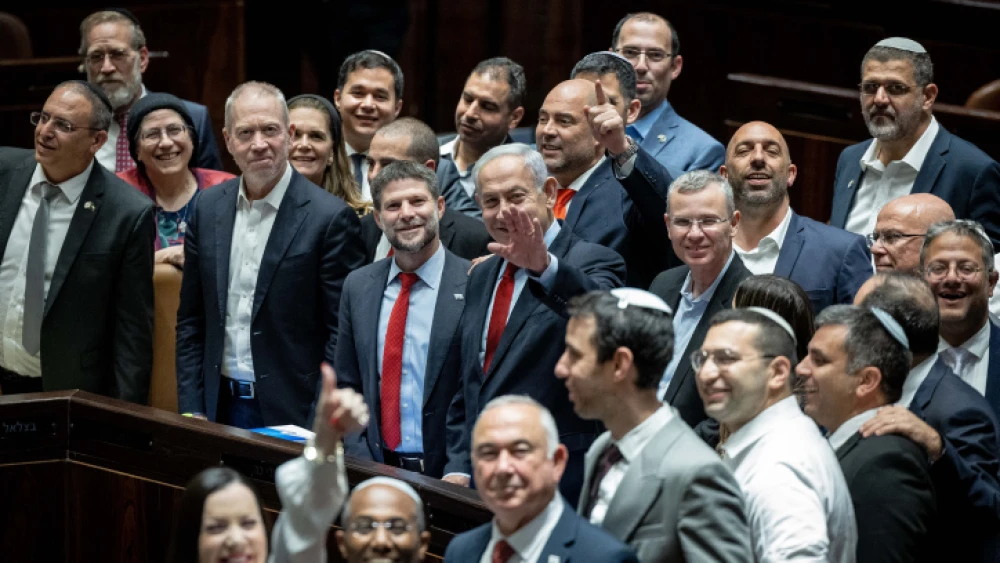
The Knesset on Wednesday was holding a tense vote for two spots reserved for lawmakers on a nine-member Judicial Selection Committee. At the time of the voting, it was unclear whether any candidates would be approved, as the coalition seeks to delay the appointments by 30 days.
The panel is responsible for appointing judges at all levels of Israel’s civil court system. Traditionally, one coalition candidate and one opposition candidate are chosen to fill the seats reserved for parliamentarians.
Netanyahu reportedly favors maintaining the status quo, fearing that submitting two coalition candidates, as some coalition partners demand, would undermine judicial reform talks and reignite mass protests.
The opposition had selected Yesh Atid Knesset member Karine Elharrar as its lone candidate.
Prime Minister Benjamin Netanyahu had promised the coalition’s spot on the Judicial Selection Committee to Itamar Ben-Gvir’s Otzma Yehudit Party as part of their coalition agreement. Otzma’s candidate was MK Yizhak Kroyzer.
In addition to Kroyzer, eight other coalition members had advanced their candidacy. In order to guarantee votes in favor of Elharrar and Kroyzer, Netanyahu had ordered other coalition members vying for the position to withdraw their candidacy ahead of the vote.
Yet Tali Gottlieb, a member of Netanyahu’s own Likud Party, refused to withdraw, remaining adamant that she would retain her candidacy.
As the Judicial Selection Committee vote is by secret ballot, Netanyahu could not enforce coalition discipline and guarantee that both Elharrar and Kroyzer would be selected.
Netanyahu, therefore, changed tack and attempted to use a legal technicality to delay the appointments. He asked Kroyzer to withdraw his candidacy, leaving only Elharrar and Gottlieb on the ballot. Then Netanyahu instructed coalition members to vote against both candidates, ensuring neither would receive the required Knesset majority.
According to Knesset bylaws, if two candidates are not selected in the secret ballot, a new vote takes place thirty days later.
Members of the opposition had threatened to halt negotiations over the coalition’s proposed judicial reforms, and return to mass protests against the government if Elharrar’s candidacy was not approved and two members of the coalition were appointed instead.
By forcing a delay in the vote, Netanyahu was able to prevent two coalition members from being appointed for now, but he also increased doubts over whether he would ultimately be able to meet opposition members’ demands and guarantee Elharrar’s appointment.
Opposition leader Yair Lapid on Wednesday accused Netanyahu of “crushing Israeli democracy, the economy, security and the unity of the people.
“He broke his commitment to the president and is causing the talks to end,” Lapid, the chairman of the Yesh Atid Party, said.
National Unity Party leader Benny Gantz also said that his party would quit the reform negotiations being conducted under the auspices of President Isaac Herzog.
Protest organizers threatened on Wednesday to send thousands into the streets if an opposition candidate wasn’t chosen.
In a video posted to Twitter Wednesday, Netanyahu urged the opposition to compromise.
“Gantz said yesterday that if the coalition elected two representatives to the Judicial Selection Committee, he would blow up the reform talks. Well, that didn’t happen, but he continues to threaten,” said the premier.
“So, I say to the opposition: Stop the threats, stop the excuses after three months of rejecting every proposal we bring; Sit down with us seriously, enter into a real dialogue and we will finally reach agreements.”
גנץ אמר אתמול שאם הקואליציה תבחר שני נציגים לועדה לבחירת שופטים, הוא יפוצץ את השיחות. טוב, זה לא קרה, אבל הוא ממשיך לאיים. אז אני אומר לאופוזיציה: תפסיקו עם האיומים, תפסיקו עם התירוצים, אחרי שלושה חודשים שאתם דוחים כל הצעת פשרה שאנחנו מביאים - שבו איתנו ברצינות, כנסו להידברות… pic.twitter.com/HJnroa0c5d
— Benjamin Netanyahu - בנימין נתניהו (@netanyahu) June 14, 2023



