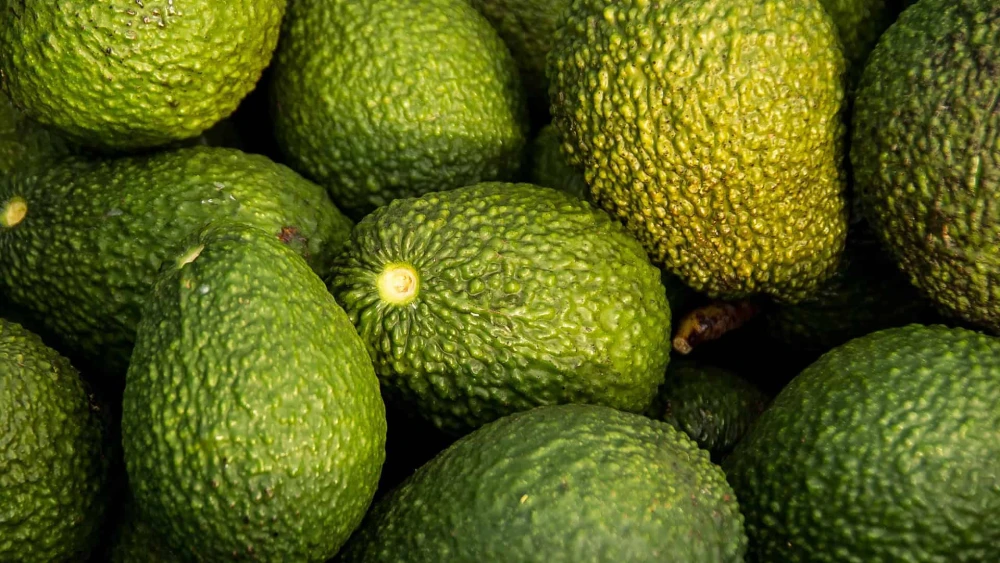

The Democratic Party has developed a dangerous reflex for shrinking every serious national question down to the size of a grocery receipt. When U.S. President Donald Trump used tariffs to pressure Mexico over issues of profound national interest such as the border and the cartels, Senate Minority Leader Chuck Schumer solemnly warned Americans about the price of guacamole at Thanksgiving time and for their upcoming Super Bowl parties.
When America and Israel struck Iran’s nuclear program in February, the national conversation on the left became a conversation about the price of a gallon of gas. I called it the “Guacamole Doctrine.” And I described it as demagoguery by infantilization—speaking to voters as appetites, rather than as intellectually mature citizens.
Within hours of the midterm results, Schumer told reporters, “We are going to end the war” and triumphantly reminded everyone that Congress holds the power of the purse. Rep. Hakeem Jeffries (D-N.Y.) said the administration shouldn’t even wait until the new Congress is sworn in on Jan. 3 to end what he called a “reckless and costly war of choice.”
Progressive groups are already pressing Democrats to use the Dec. 11 funding deadline to starve the operation of money before the new majority is even seated. The talking points have been rehearsed all year: It is a war of choice! It is a dangerous adventure! It is a foolish gambit launched without an exit strategy! It is at the root of our affordability issues!
Every one of these breathless and meritless phrases serves the same purpose, which is to persuade Americans that there is nothing to see in Tehran, nothing worth the cost and nothing that could not have been handled by a more sophisticated man with a pen.
That more sophisticated man still believes that he had it handled. In June, former President Barack Obama told NBC that America is “worse off” for this war and repeated that under his 2015 nuclear deal, “Iran had agreed not to develop nuclear weapons.”
He has spent years smugly smiling at Trump as the impulsive amateur who tore up a grown-up agreement. But the Joint Comprehensive Plan of Action was never a solution. It was a schedule.
Its core restrictions on centrifuges, enrichment levels and uranium stockpiles were written to expire after 10 to 15 years, at which point Iran would emerge not as a rogue state caught cheating but as a recognized threshold nuclear power, enriching on an industrial scale with the world’s signature on its permission slip.
In 2018, Obama warned that abandoning his deal would leave America with a choice between living with an Iranian threat and going to war to prevent it. What he has never admitted is that his deal guaranteed the very same choice, merely on a later date and on terms far more favorable to Tehran. Obama did not stop the Iranian bomb. He scheduled it—and then he asked us to applaud the shrewd delay.
The regime in Tehran counted on Western impatience and pettiness from the beginning.
Now consider what Democrats are asking Americans to accept on the far side of that timeline. If Iran builds a bomb and uses it, the conversation about affordability ends because there is no grocery bill in a city hit by a nuclear weapon or decimated by a dirty bomb.
The more likely scenario is nearly as dangerous, and Democrats never talk about it. A nuclear Iran does not need to detonate anything; it only needs to possess it. Roughly one-fifth of the world’s oil passes through the Strait of Hormuz. A regime shielded by a nuclear deterrent could close that strait, threaten the Gulf producers and arm its proxies with impunity since no one would dare respond to a nuclear power the way they respond to an ordinary aggressor.
Gas and good prices in America are high, and Democrats are calling that a crisis. Under Iranian nuclear blackmail, these prices would look like the good old days, and the affordability crisis Democrats campaigned on would be vastly and devastatingly eclipsed by one they invited with such dilettantish abandon.
As for the charge that this war was launched without an imminent threat and without an exit strategy, it’s worth asking what exit strategy President Franklin Delano Roosevelt brought into the World War II. Hitler had no fleet capable of crossing the Atlantic and no army poised to land in New Jersey; still, Roosevelt and Churchill agreed to defeat Germany first because they understood that a Europe ruled by Nazism would eventually become America’s problem on far worse terms.
At Casablanca in 1943, Roosevelt announced that the only acceptable end was unconditional surrender. That was not an exit strategy. It was a victory condition. Serious nations decide what must not be allowed to happen and then pay what it costs to prevent it. They do not wait to ask whether the threat has reached their shoreline because by the time it has, the price has multiplied many times over.
The absurd demand for an “imminent threat” is the “Guacamole Doctrine” in its purest form. It asks voters to judge a nuclear program the way they judge a price tag—by what it costs them this week. A threat that will arrive in 10 years is treated as no threat at all, which is exactly the logic that the sunset clauses were designed to exploit.
The regime in Tehran counted on Western impatience and pettiness from the beginning. The incoming Democratic majority in January is now valiantly offering to prove it right.
None of this means that the price of war is imaginary or that Americans who feel pain at the supermarket or the pump are foolish. They are not. Republicans lost this election in part because they failed to explain why those costs were worth bearing, and that failure belongs to them.
But a failure of persuasion doesn’t change the arithmetic. A Congress that cuts off funding in December before Iran’s nuclear ambitions have actually been dismantled will not end this war. It will pause it on Tehran’s terms and hand the regime the one thing it has always needed: time. And it will leave the next president facing the same choice that Obama once warned about—between a nuclear Iran and a far larger and bloodier war.
Churchill told the British people he had nothing to offer but blood, toil, tears and sweat, and they trusted him precisely because he told the unvarnished truth to the best in them.
Today’s Democratic leadership offers the varnished spin to the lowest in them. Get cheaper guacamole now and an impossible bill that comes due later, paid somehow by someone else’s children.
Even if many voted from their frustrations, adults deserve better than a party that treats them as appetites. If the new majority uses its power of the purse to buy Iran time, then the price will not be measured at the pump. It will be measured in seismic affordability crises, in lives and in the core security of every American city—and the guacamole will not taste any better for it.