


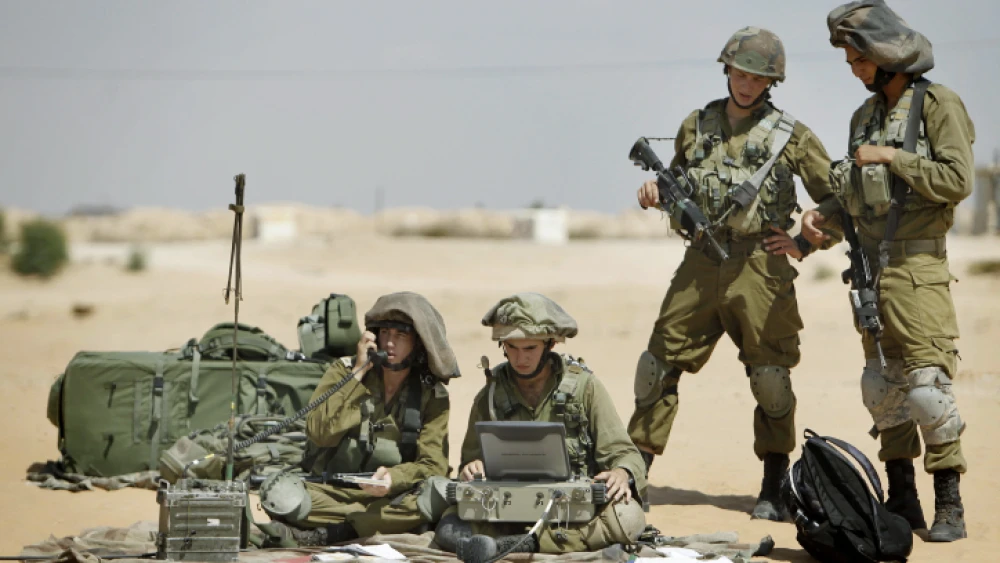
A report released by the Stockholm International Peace Research Institute (SIPRI) showed that Israel was the world’s eighth largest arms exporter in 2018.
According to the institute, which researches armament, arms control, disarmament and conflict, Israel accounts for 3.1 percent of the global arms trade, but was knocked down a notch from the seventh-place spot in 2017.
Despite its high ranking on the list of arms exporters, the world’s top five militarily industrious countries—the United States, Russia, France, Germany and China—made up a collective 75 percent of all arms exports around the world.
Israel’s exports have increased markedly in the last 10 years, reaching 60 percent. In contrast, Russia’s arms exports have decreased by 17 percent.
Israel made $9.2 billion from arms in 2017, more than 20 percent of which came from a $2 billion missile-systems deal between Israel Aerospace Industries and India.
Israel’s Elbit Systems was the weapons manufacturer to make the most money in the Jewish state for 2017, ranking 28th on a list of the top 100 military export countries worldwide. Israel Aerospace Industries also made the list at 41st place, followed by Rafael Advanced Defense Systems at 45th.
Saudi Arabia, India and Egypt were the largest importers of weapons from 2014-18. Israel was the 15th largest importer in the same period. Of those arms, 64 percent were supplied by the United States.



