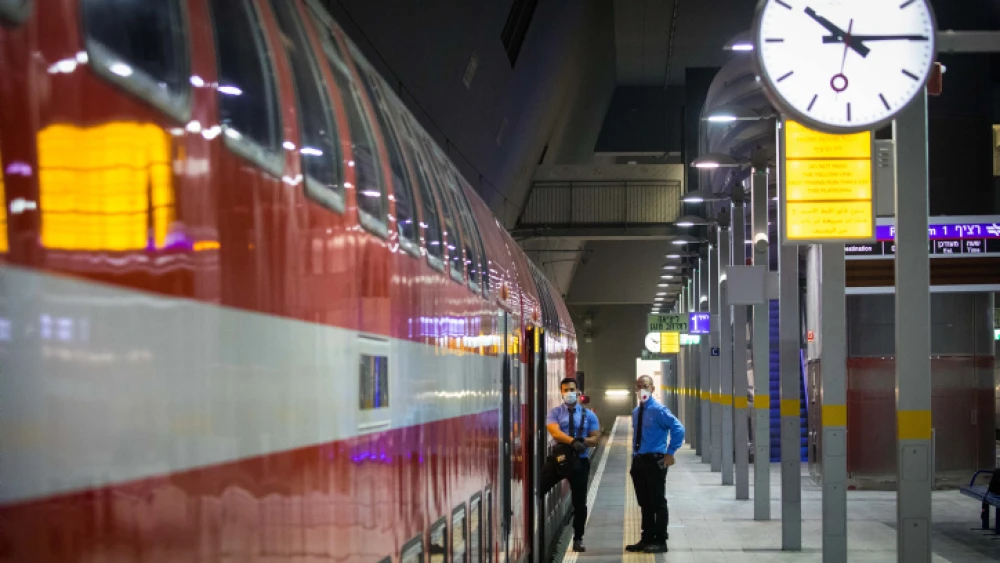
Train service partially resumed in Israel on Monday after being shut down for 89 days due to the coronavirus pandemic.
However, railway officials said that by 6 a.m. only 38,000 tickets had been sold, compared to 250,000 on a regular Monday morning, reported Ynet. Among the contributing factors to the low number was the fact that the Israel Defense Forces is not yet allowing soldiers to travel by train, according to the report.
According to the new regulations, each train can only carry up to 500 passengers, half of their maximum capacity. All passengers must wear face masks and are not allowed to eat or drink while on the train.
Passengers are also required to purchase tickets in advance on the Israeli Railways website or mobile app in order to reduce crowding, the report said.
Separately, the government has approved the construction of a rail line to the city of Eilat in the country’s south, Globes reported on Sunday. The new line is estimated to be completed by 2030, after which 18 to 30 trains will run to the southern Israeli city per day, according to the report, which added that there are questions being raised about the economic viability of the route.
Planners predict there will be around 5.2 million passengers using the route per year, in addition to cargo trains. The plan also would involve moving the current Dimona station to the city center.