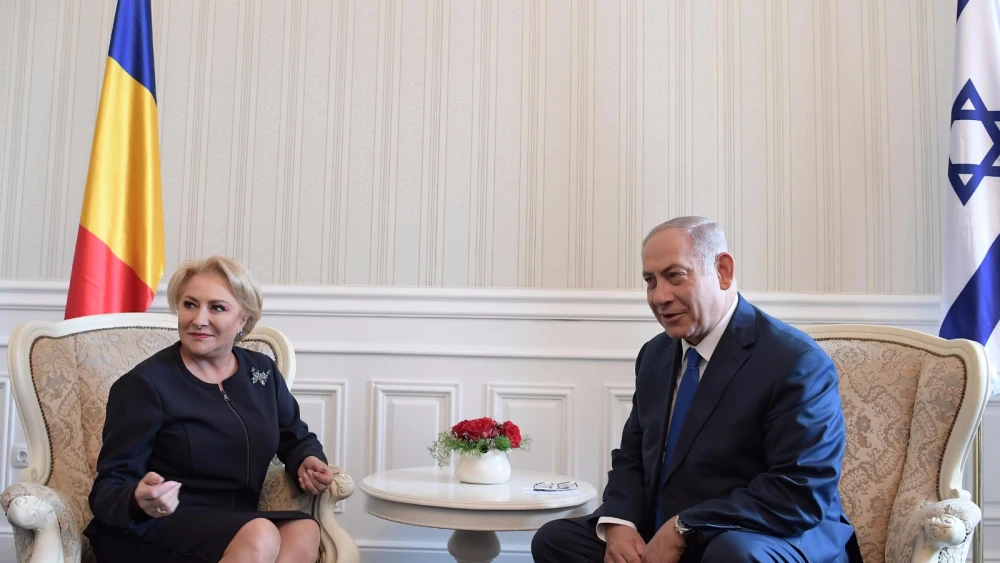
Israeli Prime Minister Benjamin Netanyahu met with the leaders of Bulgaria and Romania on Friday to strengthen ties between them and Israel.
At the summit meeting of the Craiova State Forum in Bulgaria, where Netanyahu was the guest of honor, the Israeli prime minister met with Romanian Prime Minister Viorica Dăncilă and Bulgarian Prime Minister Boyko Borisov, whom Netanyahu spoke with on Wednesday evening.
The two discussed cooperation in matters related to security, the economy and technology, according to the prime minister’s office.
Netanyahu and Dăncilă consulted on how to increase trade and investment, in addition to promoting security and counterterrorism cooperation. They also focused on energy and other issues.
“So you’re close neighbors and good neighbors,” said Netanyahu. “Well, we have a different neighborhood, although our relations with our Arab neighbors are changing dramatically for the better.”
Netanyahu also met with Serbian President Aleksandar Vučić and Greek Prime Minister Alexis Tsipras.
“I am here at the summit of four countries—Bulgaria, Greece, Serbia and Romania—and this is the first time that they have invited a leader outside these four countries to participate with them,” said the Israeli premier. “This is a great honor for Israel. It reflects the raising status of Israel in the world.”
He continued, saying “specifically, each one of them promised me that they would improve their voting on issues that concern us both in the European Union and in the U.N., and on the other hand, everyone wants to promote the pipeline from Leviathan to Europe and the Balkans. They very much want Israeli gas, they very much want Israeli technology, and they very much want Israel’s friendship. That’s a good sign.”