


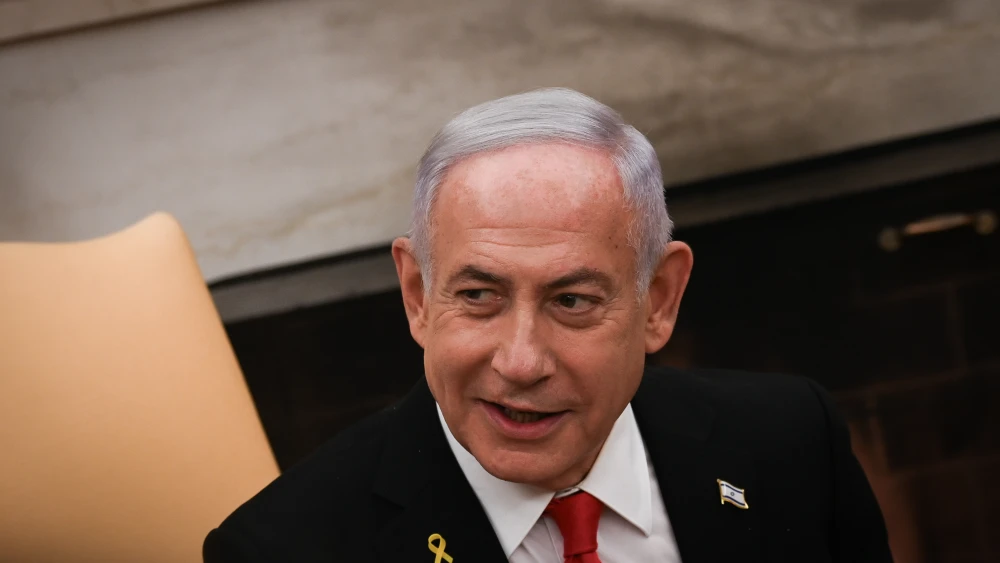
Hamas will no longer receive “free lunches,” Israeli Prime Minister Benjamin Netanyahu declared on Sunday, threatening further consequences if the terrorist group refuses to release hostages.
“Hamas currently controls all of the supplies and goods that are being sent to the Gaza Strip,” the premier reiterated in remarks ahead of the weekly Cabinet meeting in Jerusalem. The Islamist organization “is abusing the Gazan population that is trying to receive the aid, it is shooting at them, and is turning the humanitarian aid into a budget for terrorism directed against us.”
If Hamas continues its opposition to a ceasefire and hostage release deal during Ramadan and Passover, as proposed by Washington and accepted by Jerusalem, “there will be additional consequences, which I will not detail here,” said Netanyahu.
The premier said that according to the latest figures, “Hamas is currently holding 59 hostages: up to 24 are alive and at least 35 are deceased. We are not giving up on anyone and we are determined to bring them all back home.”
Jerusalem “is not in violation [of the truce terms], while Hamas has repeatedly violated the agreement on Phase 1,” Netanyahu said, stressing that, according to the terms of the deal, the Israeli army “Israel can return to fighting after the 42nd day if it has gained the impression that the negotiations have been ineffective.
“But even so, we agreed to the Witkoff framework because we are committed to returning all of our hostages,” he explained.
“While Israel has agreed to the Witkoff framework, Hamas has so far clung to its refusal and has not agreed to the framework,” the prime minister emphasized, noting that “If Hamas changes its position, Israel will immediately enter into negotiations on implementing the framework.”
The 42-day Phase 1 of the ceasefire in the Gaza Strip, which went into effect on Jan. 19, expired at midnight on Saturday.
Jerusalem announced on Sunday morning that it had suspended all humanitarian aid to Gaza after the Hamas terrorist group rejected U.S. Middle East envoy Witkoff’s proposal.
Netanyahu announced that no goods or supplies would enter Gaza until further notice, reaffirming that Jerusalem will not agree to a ceasefire without the release of the remaining hostages held by Hamas.
Hamas insists on moving to Phase 2 of the ceasefire, which calls for talks on a “permanent” end to hostilities in Gaza, a full IDF military withdrawal from the enclave, reconstruction and a prisoner-hostage exchange.


