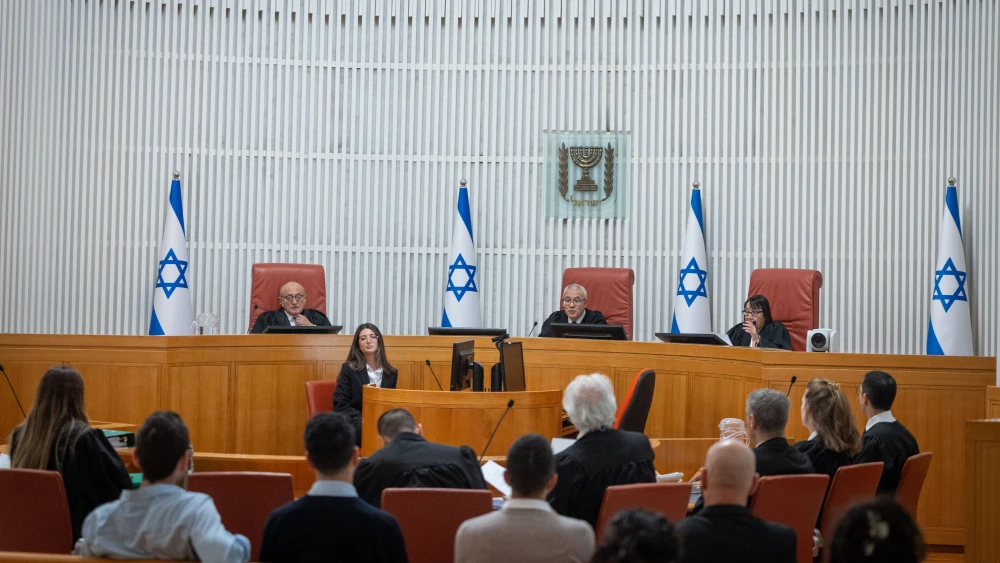
Israel’s High Court of Justice on Monday rejected a petition filed by an umbrella organization of international non-governmental aid organizations operating in Gaza and Judea and Samaria, after the organizations refused to provide Israel with a required list of their local employees for security screening.
The petition, filed by the Association of International Development Agencies (AIDA), challenged an Israeli framework established in 2024 following revelations that Hamas and Palestinian Islamic Jihad had exploited international aid organizations operating in the region.
“The information requirement... is a limited and proportionate measure, deriving from the State’s fundamental duty to protect its security and the security of its residents, while enabling the continued humanitarian activity of international aid organizations,” the ruling said.
The justices emphasized that security screening “falls within core sovereign powers of the State and cannot be replaced by self-assessments.”
The court also described the procedure as a preliminary domestic screening process intended to ensure that entities do not pose a risk to state security.
The panel of justices, headed by Chief Justice Yitzhak Amit, gave the 19 non-governmental organizations (NGOs) 30 days to comply with the government. NGOs that fail to comply must cease operations in Gaza, Judea and Samaria.
The NGOs argued that providing lists of employees would expose staff to potential retaliation and set a precedent that could have a chilling effect on humanitarian relief.
According to government data, as of March 2026, 129 registration applications had been submitted to an inter-ministerial vetting team overseeing NGO personnel. Of those, 30 were approved, 19 were denied, and 47 remain under review. Another 34 organizations have yet to begin the registration process.
In one notable case, Israel’s Diaspora Affairs and Combating Antisemitism Ministry terminated the activities of Médecins Sans Frontières (Doctors Without Borders, MSF) in February 2026 for failing to submit required lists of local employees. In 2024, the Israel Defense Forces released photos of Palestinian Islamic Jihad rocket specialist Fadi al-Wadiya wearing the terror group’s uniform after MSF confirmed he was a staffer but denied he was a terrorist.
Israeli Minister for Diaspora Affairs and Combating Antisemitism Amichai Chikli welcomed the ruling. “The rejection of the petition sends a clear and unequivocal message: the State of Israel will not allow terrorist activity to operate under the guise of humanitarian aid.”
Originally published by TPS-IL.