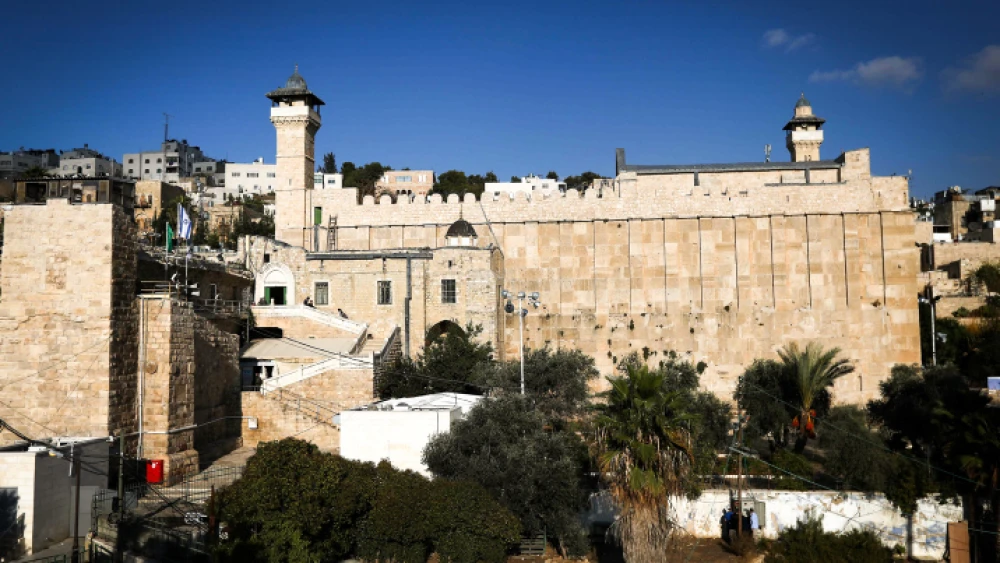
Israeli Finance Minister Bezalel Smotrich said on Tuesday that Jerusalem had canceled the civil planning provisions of the 1997 Hebron Protocol, transferring planning authority for the Jewish community of Hebron and surrounding holy sites from the Palestinian Authority to Israeli control.
Israel’s Ministry of Foreign Affairs disputed Smotrich’s claim of a cancellation, saying the Hebron Protocol had not been scrapped.
Smotrich announced the completion of the process during a ceremony marking the establishment of the new community of Doran in Judea’s Hebron Hills.
“For many years, one of the most absurd clauses of Oslo remained in place, when powers relating to the Jewish community in Hebron and the holy places were dependent on the Hebron municipality,” said Smotrich.
“Yesterday, we put an end to that. This is much more than a planning step; this is a historical amendment. We continue to strengthen governance and deepen Israeli sovereignty in Judea and Samaria.”
In a statement, a Foreign Ministry spokesperson wrote: “Contrary to the Finance Minister’s statement, the Hebron Agreement has not been canceled. Several months ago, the Security Cabinet adopted a decision that specifically concerns jurisdictions in the field of planning and construction with regard to the Jewish community in Hebron and Jewish heritage sites. This decision was made following years of a complete lack of cooperation on these matters by the Hebron Municipality. Beyond that, no changes have been made.”
The decision, initially approved in February by the Security Cabinet at Smotrich’s initiative, was finalized overnight by the Israeli Defense Ministry’s Supreme Planning Council.
The Supreme Planning Council is the top civil administration planning authority responsible for approving construction and infrastructure projects in areas of Judea and Samaria under Israeli control.
According to officials, the change will centralize all civil planning approvals for construction, preservation and infrastructure in Israeli hands, and is expected to streamline the advancement of projects in the Jewish enclave and adjacent religious sites. This includes the Tomb of the Patriarchs, the Tomb of Abner Ben-Ner and adjacent historic Jewish cemeteries.
The Hebron Protocol, signed in 1997 as part of the Oslo Accords, divided the city between H1, under Palestinian Authority control, and H2, where Israel retained security responsibility due to the presence of the Jewish community and key holy sites. While Israel maintained security control in H2, certain civil planning and construction authorities remained with the Palestinian-run Hebron Municipality for nearly three decades.
Responsibility for municipal services in Hebron’s Jewish community will shift from the Palestinian municipality to Israeli authorities and the Israel Defense Forces.
“For years, powers concerning the Jewish settlement and holy sites were dependent on the terror municipality of Hebron. This is a historic correction,” said Smotrich.
Israeli Prime Minister Benjamin Netanyahu’s government has led an unprecedented drive to expand Jerusalem’s control of Judea and Samaria, having approved tens of thousands of homes and dozens of new communities in the past three-and-a-half years.
This is an edited version of an article that first appeared on TPS-IL.