Newsletter
Newsletter Support JNS

US targets Hezbollah-linked Lebanese officials in first sanctions since Iran MoU

Treasury will “hold accountable those who enable the group to undermine the Lebanese state and threaten prospects for lasting peace,” the U.S. treasury secretary said.

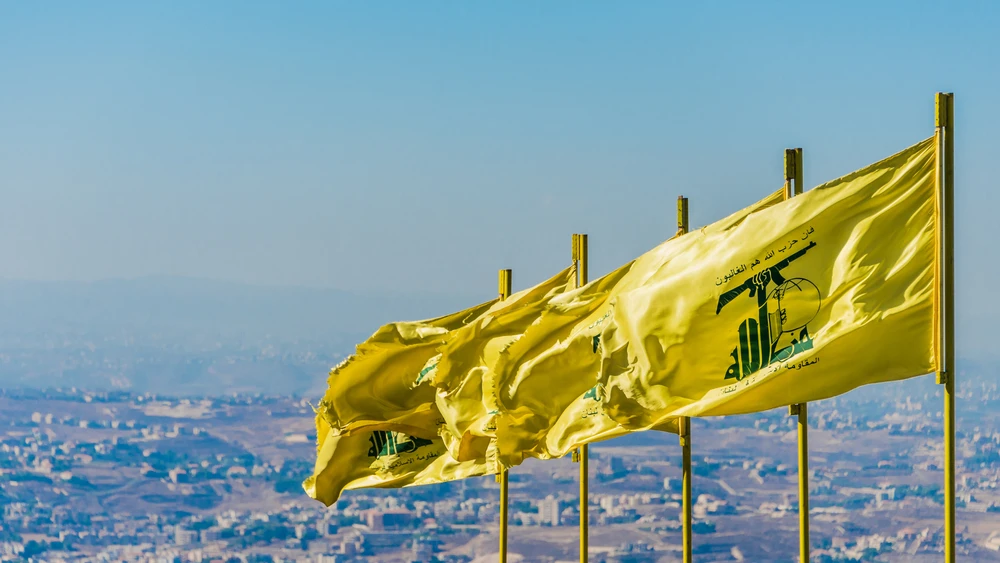
Hezbollah flags fly over southern Lebanon. Credit: John Grummitt/Shutterstock.
Hezbollah flags fly over Southern Lebanon. Credit: John Grummitt/Shutterstock.

The Trump administration issued sanctions on Thursday against Lebanese officials aligned with Hezbollah, the Iran-backed terror group that controls Southern Lebanon, marking the first such action since the signing of an agreement between Washington and Tehran.

The move came ahead of another round of direct Israel-Lebanon security talks in Washington, D.C., as Jerusalem and Beirut seek ways to remove Hezbollah forces from areas within striking range of Israel’s northern border.

“Hezbollah must disarm for Lebanon to achieve a secure and prosperous future,” Scott Bessent, U.S. treasury secretary, said. “Treasury will continue to target Hezbollah’s financial networks and hold accountable those who enable the group to undermine the Lebanese state and threaten prospects for lasting peace.”

Those sanctioned include Sleiman Antoine Frangie, leader of the Lebanese Marada Movement. The Treasury Department said Frangie “has used his strategic alliance with Hezbollah to benefit his own political ambitions,” including by accepting financial support from the terror group in exchange for helping it challenge more moderate members of parliament for their seats.

Mahmoud Qamati, deputy head of Hezbollah’s political council, was also designated for coordinating cash smuggling from Iran.

The sanctions also targeted members of a Hezbollah-linked business network overseen by Alaa Hassan Hamieh, largely for financial ties to previously designated individuals and companies.

The network includes companies and associates operating across Lebanon, Syria, Iraq and Oman, with activities tied to real estate, insurance and technology sectors, including dealings with the regime of since-deposed Syrian dictator Bashar al-Assad.

Mike Wagenheim is a Washington-based correspondent for JNS, primarily covering the U.S. State Department and Congress. He is the senior U.S. correspondent at the Israel-based i24NEWS TV network.
An FBI affidavit alleges that Jordan Nicholas Hadley made the interstate threat against Atlanta-based Flock Safety, whose tech is used by Jewish institutions and law enforcement nationwide.
Federal prosecutors say the group planned to use drones, explosives and snipers to kill government officials and other “high-value targets,” including U.S. President Donald Trump, Israeli Prime Minister Benjamin Netanyahu and Elon Musk at the June 14 event.
Ana María Archila was reportedly set to meet with Amir-Saeid Iravani before the meeting was canceled following a State Department intervention.
“The Islamic Republic of Iran has asked us to continue ‘talks,’” the U.S. president stated. “We have agreed to do so, but the United States has stated to them, in no uncertain terms, that the ceasefire is over.”
“If your intro professor talks about how evil capitalism is and how America is a colonial project and how Zionism is part of that colonial project, you repeat that stuff because that’s part of getting a good grade,” report author Jay Greene told JNS.
“There’s the great myth of peaceful coexistence of Jews in the Arab countries, which is a staple of Palestinian propaganda,” Lyn Julius, cofounder of a group focused on Jews of the Middle East and North Africa, told JNS.